

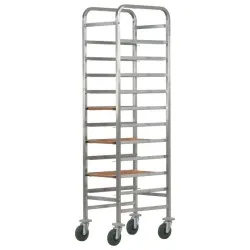
Article number: CA1451R
A heavy-duty trolley built to transport ten full-size gastronorm trays through a busy kitchen withou..
Is available
322.50€
with VAT: 390.23€
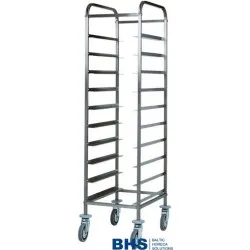
Article number: CA1450
Move 10 trays at once with the FORCAR CA1450 trolley, built for efficiency in busy kitchens. The ope..
Is available
329.00€
with VAT: 398.09€
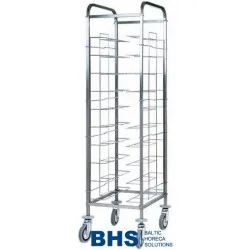
Article number: CA1455
A mobile storage and transport unit designed to hold ten Gastronorm trays in a single vertical stack..
Is available
329.00€
with VAT: 398.09€
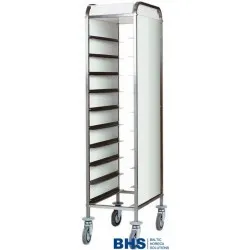
Article number: CA1450P
A mobile trolley keeps Gastronorm trays organised between preparation, cooking and service. The unit..
Is available
349.00€
with VAT: 422.29€
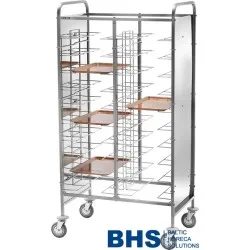
Article number: CA1455P
A mobile worktop that carries ten full-size Gastronorm trays from kitchen to servery or from prepara..
Is available
359.00€
with VAT: 434.39€
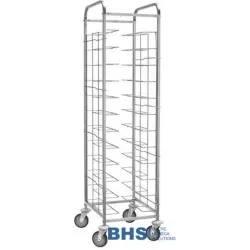
Article number: CA1455V12
A mobile base for twelve Gastronorm trays keeps ingredients, prepared dishes or clean crockery organ..
Is available
359.00€
with VAT: 434.39€
Article number: CA1451RP
A reinforced stainless steel trolley organises hot or chilled GN1/1 trays between the oven, blast ch..
Is available
360.00€
with VAT: 435.60€
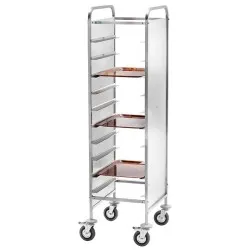
Article number: CA1451RPI
The FORCAR CA1451RPI is a reinforced trolley designed for professional use. Its construction feature..
Is available
397.50€
with VAT: 480.98€
Article number: CA1450PI
A mobile rack that organises ten Gastronorm trays in a single vertical stack, letting kitchen staff ..
Is available
399.00€
with VAT: 482.79€
Article number: CA1450PW
A mobile trolley keeps up to ten Gastronorm trays organised and accessible while they move between k..
Is available
399.00€
with VAT: 482.79€
Article number: CA1455PI
The FORCAR CA1455PI is a universal trolley designed for the organisation and transport of food trays..
Is available
449.00€
with VAT: 543.29€
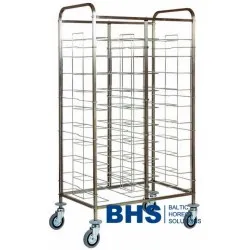
Article number: CA1465
This FORCAR CA1465 trolley is built to transport up to twenty trays efficiently in a professional ki..
Is available
459.00€
with VAT: 555.39€
-250x250w.webp "Tray trolley FORCAR CA1461R")
Article number: CA1461R
A reinforced stainless steel trolley carries twenty full-size gastronorm trays through a busy kitche..
Is available
495.00€
with VAT: 598.95€
Article number: CA1465P
A mobile storage and transport unit designed to hold up to twenty Gastronorm trays keeps ingredients..
Is available
509.00€
with VAT: 615.89€
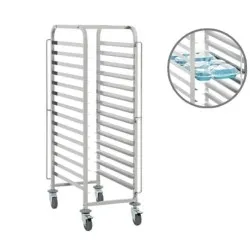
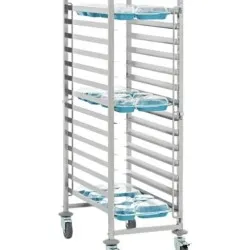
Article number: AR61224
A mobile stacking unit organises used trays in dining halls, canteens and self-service lines so that..
Is available
526.99€
with VAT: 637.66€
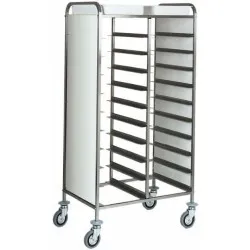
Article number: CA1461RP
A heavy-duty stainless steel trolley organises up to twenty GN1/1 gastronorm trays in a single mobil..
Is available
532.50€
with VAT: 644.33€
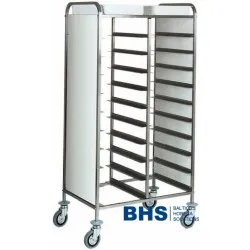
Article number: CA1460P
The FORCAR CA1460P is a trolley designed for the organised movement and storage of catering trays. T..
Is available
539.00€
with VAT: 652.19€
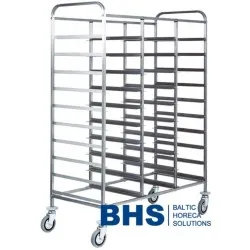
Article number: CA1470
A mobile rack that organises thirty GN 1/1 gastronorm trays in a single column, letting kitchen staf..
Is available
539.00€
with VAT: 652.19€
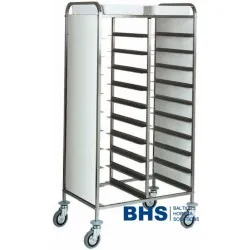
Article number: CA1460PW
A mobile workstation that carries twenty Gastronorm trays through a professional kitchen, the FORCAR..
Is available
549.00€
with VAT: 664.29€
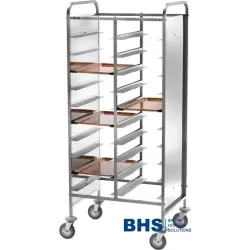
Article number: CA1460PI
This trolley provides mobile storage for up to twenty trays, allowing staff to transport ingredients..
Is available
559.00€
with VAT: 676.39€
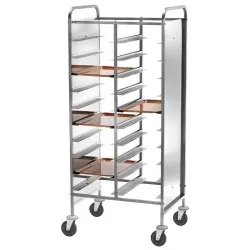
Article number: CA1461RPI
The trolley's structure is built from 25 × 25 mm stainless steel tubes, welded into a sturdy frame. ..
Is available
570.00€
with VAT: 689.70€
Article number: CA1465PI
This mobile unit is built to hold twenty trays individually, ensuring each remains easily reachable ..
Is available
609.00€
with VAT: 736.89€
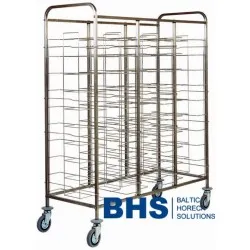
Article number: CA1475
This FORCAR trolley provides a mobile solution for storing and transporting up to thirty trays. Vert..
Is available
609.00€
with VAT: 736.89€
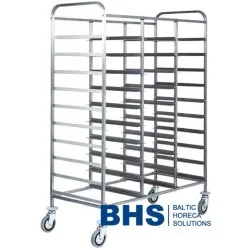
Article number: CA1470P
A mobile storage and transport unit designed to hold thirty full-size catering trays, the FORCAR CA1..
Is available
619.00€
with VAT: 748.99€
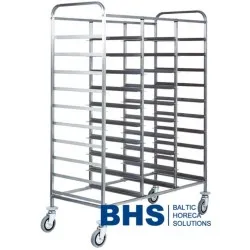
Article number: CA1470PI
A mobile storage and transport unit designed to hold thirty full-size catering trays securely while ..
Is available
629.00€
with VAT: 761.09€
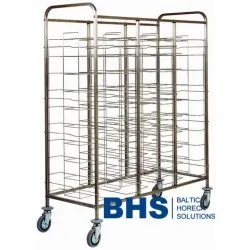
Article number: CA1475P
A mobile storage and transport unit built to hold thirty full-size catering trays without sagging or..
Is available
669.00€
with VAT: 809.49€
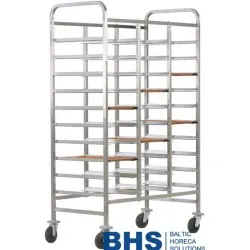
Article number: CA1471R
A reinforced tray trolley carries up to thirty full trays between kitchen stations, storage and serv..
Is available
679.00€
with VAT: 821.59€
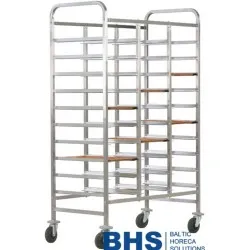
Article number: CA1471RP
A reinforced trolley moves large batches of plated dishes, sheet pans or gastronorm trays between pr..
Is available
719.00€
with VAT: 869.99€
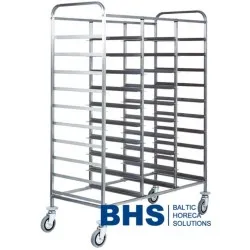
Article number: CA1470PW
A mobile enclosure for thirty full-size gastronorm trays, this FORCAR CA1470PW trolley keeps food se..
Is available
759.00€
with VAT: 918.39€
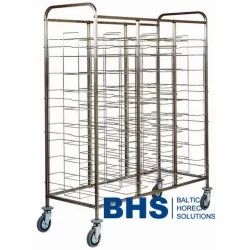
Article number: CA1475PI
A mobile storage and transport unit built to carry thirty Gastronorm trays without stacking, the FOR..
Is available
769.00€
with VAT: 930.49€
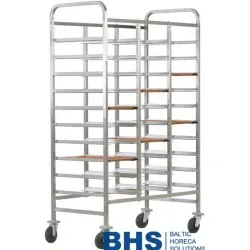
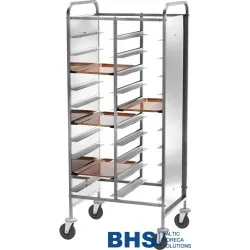
Article number: CA1471RPI
A reinforced trolley carries thirty full-size catering trays through a working kitchen without sag o..
Is available
789.00€
with VAT: 954.69€
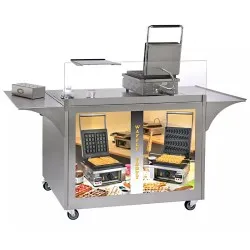
Article number: MG-02
A mobile workstation for waffle production and service, the Roller-grill MG-02 trolley brings the ap..
Is available
959.00€
with VAT: 1,160.39€
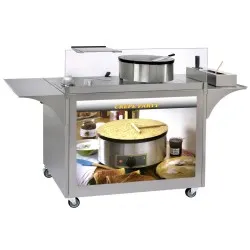
Article number: MC-03
A mobile workstation for serving crepes, pancakes and galettes directly to customers, the Roller-gri..
Is available
979.00€
with VAT: 1,184.59€
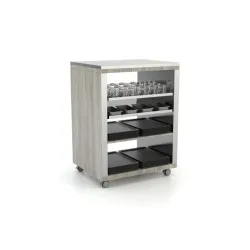
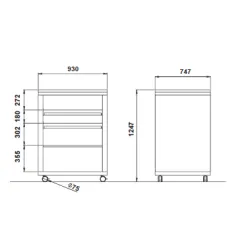
Article number: 010MOATHPV
A self-service station at the start of a meal distribution line keeps trays, plates, cutlery and gla..
Is available
1,279.00€
with VAT: 1,547.59€
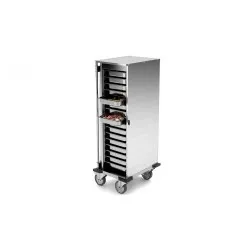
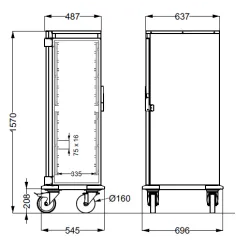
Article number: 039NE1/1C16
A mobile storage cabinet designed to hold sixteen full-size gastronorm pans, keeping ingredients or ..
Is available
1,659.00€
with VAT: 2,007.39€
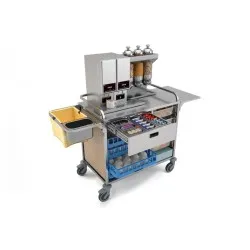
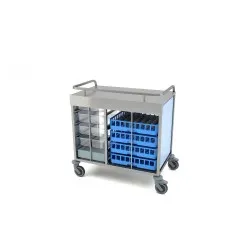
Article number: 042INCARE/A
The ROCAM A-CARE is a breakfast distribution trolley designed for service and sales.
This trolley fe..
Is available
1,779.00€
with VAT: 2,152.59€
-250x250w.webp "Serving and retail trolley ROCAM 042INCARE/B")
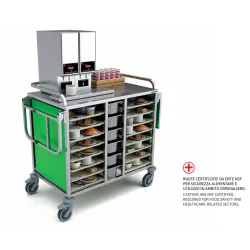
Article number: 042INCARE/B
The ROCAM B-CARE is a breakfast distribution trolley with article number 042INCARE/B. It has a fully..
Is available
1,799.00€
with VAT: 2,176.79€
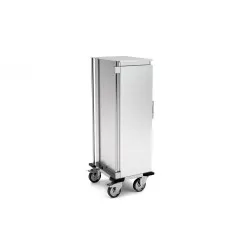
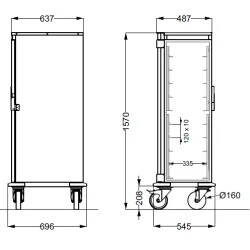
Article number: 039NE1/1L10
A mobile storage cabinet on wheels designed to hold ten gastronorm 1/1 containers, keeping ingredien..
Is available
1,879.00€
with VAT: 2,273.59€
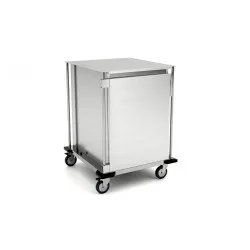
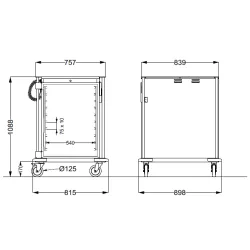
Article number: 039NE2/1C10
This mobile cabinet is designed to maintain the temperature of prepared food or chilled items during..
Is available
1,899.00€
with VAT: 2,297.79€
Article number: 039NE2/1L10
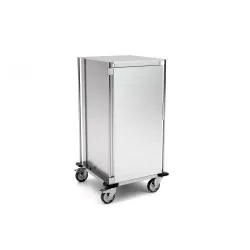
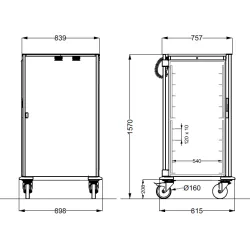
This mobile stainless steel cabinet is built to store gastronorm containers, helping keep ingredient..
Is available
2,139.00€
with VAT: 2,588.19€

Article number: 042INCARE/TH
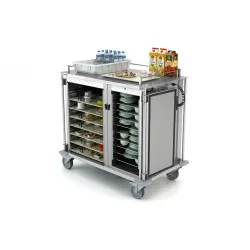
This trolley features two distinct compartments: one heated for maintaining meal temperatures and on..
Is available
2,699.00€
with VAT: 3,265.79€
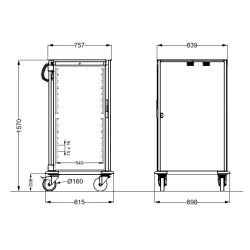
Article number: 039NE2/1C16
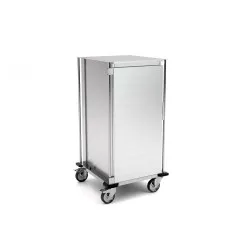
This mobile stainless steel cabinet is built to hold and transport gastronorm containers without tem..
Is available
3,369.00€
with VAT: 4,076.49€