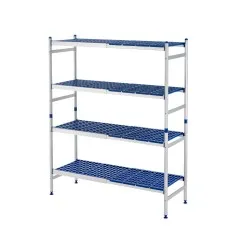
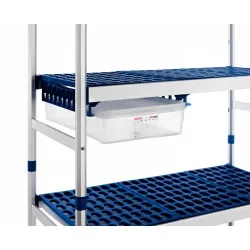
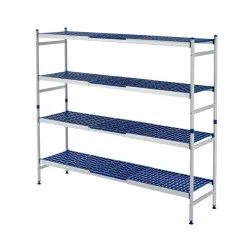
Stainless steel shelves differ from ordinary metal or plastic shelves by their higher corrosion resistance and compliance with hygiene standards required in food production and processing areas. They are easy to clean and resistant to moisture and high temperatures. The range includes various types of shelves, each with its own advantages according to the specific storage environment and load requirements.
Metal shelf range
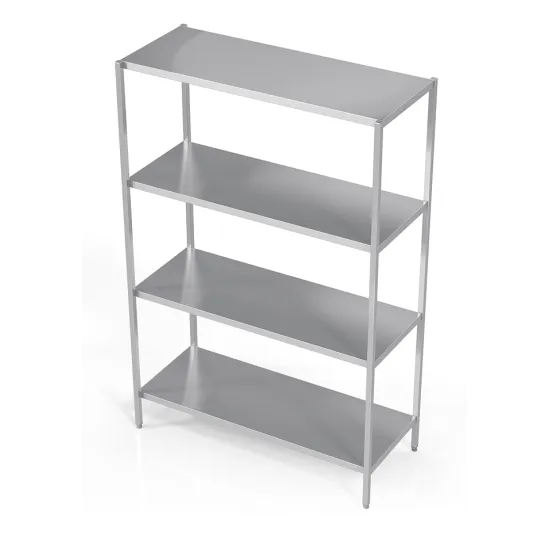
Stainless steel metal shelves are the most common type of shelving in professional kitchens and warehouses, providing a durable and hygienic storage solution. They are available in various widths — metal shelves width 400 mm are a popular option for narrow spaces or storing smaller items. The solid surface of metal shelves provides stable support for heavy products, tableware and equipment. Compliance with HACCP requirements and resistance to food industry chemicals make metal shelves a reliable choice for businesses.
Metal grid shelves
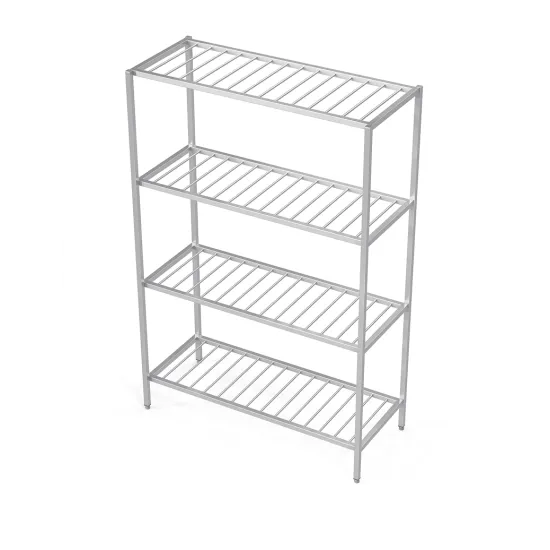
Metal grid shelves ensure good air circulation for stored products — ventilation prevents condensation from forming on the underside of products and slows biological degradation during storage. The grid structure reduces dirt accumulation on the shelf surface and facilitates regular cleaning. Moisture drains through the grid openings, preventing liquid accumulation, which is especially important in freezers and cooling rooms. Metal grid shelves are recommended for storing frozen and fresh products, where air circulation directly affects product quality.
Modular shelving systems
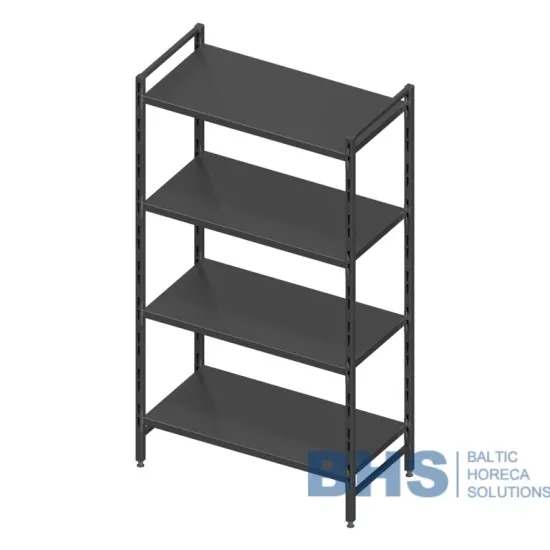
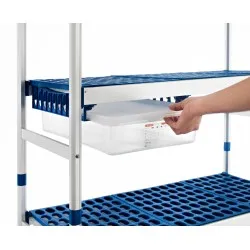
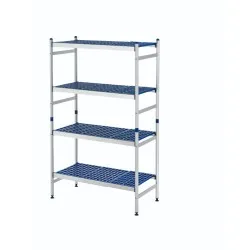
Modular shelving systems allow flexible adjustment of shelf height and configuration according to changing storage needs. The height of each shelf in a modular system is adjustable, allowing space optimisation according to the size of stored products and container height. The advantage of modular shelving is its expandability — additional shelf elements can be added to the existing system or the configuration changed without complete replacement. This adaptability is important for kitchens with variable product volumes or periodic assortment changes.
Perforated shelves
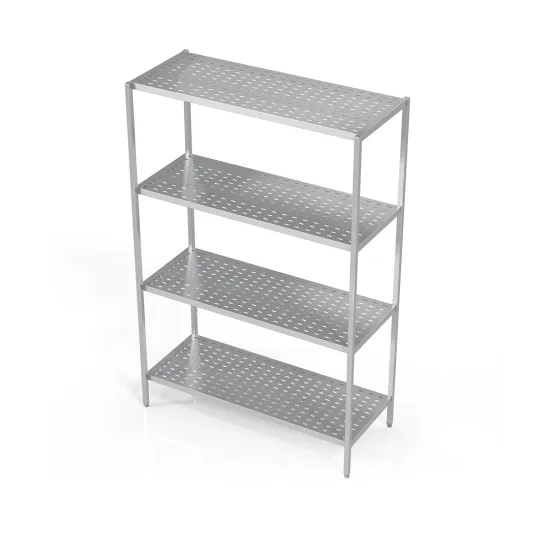
Perforated shelves combine the durability of metal shelves with improved air circulation compared to solid shelves. Perforation reduces the overall weight of the shelf while maintaining the necessary structural rigidity and load capacity. Perforated shelves are a popular solution in warm rooms and kitchens, where air circulation affects the quality and safety of stored products. Shelf perforation also facilitates cleaning — water and detergent flow freely through the openings, preventing liquid accumulation on the surface.
Shelf accessories
Shelf accessories allow optimisation of the existing shelving system and improve its functionality without complete replacement. Side guards prevent products from falling off the shelf, while additional fasteners provide stability for unstable items. All accessories are made of stainless steel, ensuring a uniform hygiene standard for the entire shelving system.
Choosing shelves according to load
Each shelf model has a specified maximum load per shelf and for the entire shelving system, which must not be exceeded during daily use. Exceeding load capacity can cause structural deformation or collapse, creating safety risks for staff and damage to stored products. Before purchasing shelves, determine the average storage load and maximum possible load to select the appropriate model category. For storing meat, canned goods or heavy equipment, reinforced shelves with greater capacity are required.
Hygiene requirements for shelves
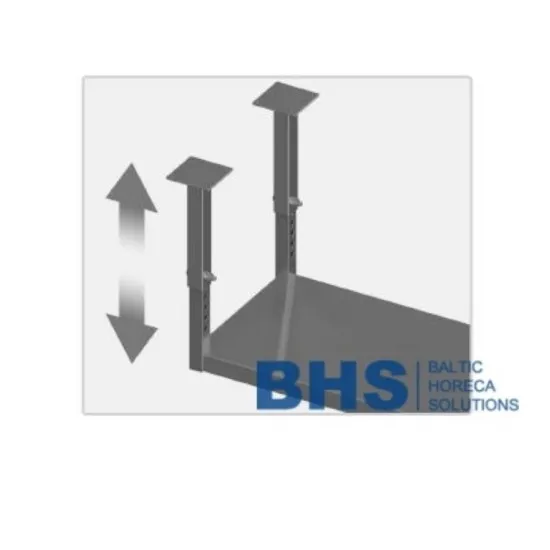
In food processing and storage areas, shelves must meet strict hygiene requirements according to HACCP principles. Stainless steel is an optimal material that can withstand frequent disinfection with aggressive chemicals without surface damage or corrosion. Shelf leg adjustment feet ensure stability on any floor and facilitate leg cleaning. Installation height must comply with hygiene standards — the minimum distance from the floor allows cleaning the space under the shelves.
Installation and setup
Stainless steel shelf installation is simple and usually does not require specialised tools or additional equipment. Modular shelves are assembled manually by connecting legs with shelf elements without tools or with a minimal tool set. Wall mounting systems provide a stable stationary structure for high-load shelves or unstable conditions. Proper installation begins with adjusting legs horizontally to ensure complete stability on any floor.
Space planning for shelves
Shelf layout planning in a space affects staff efficiency, product accessibility and fire safety compliance. Aisles between shelf rows must be wide enough for free staff movement and, if necessary, equipment trolley use. Shelf placement should be planned so that frequently used products are easily accessible, while less frequently used items are on higher shelves.
Maintenance and cleaning
Stainless steel shelf maintenance includes regular disinfection, visual inspection and leg adjustment element checks. Daily cleaning with water and regular disinfection with approved food industry disinfectants ensures a consistent hygiene standard. Shelf leg adjustment elements should be checked periodically to ensure stability after intensive cleaning. Thorough cleaning prevents dirt accumulation in structural joints and leg adjustment elements.
Shelf use in different spaces
Stainless steel shelves are used in various professional spaces — kitchens, warehouses, freezers, preparation rooms and utility areas. Shelf selection differs in each space according to temperature regime, humidity level and type of stored products. In freezers, shelves with increased corrosion resistance and structural ability to withstand temperature fluctuations are required. BHS helps choose the appropriate shelving system for each specific space and storage requirements.
Stainless steel durability
Stainless steel ensures long-lasting shelf service without corrosion or wear even under intensive use and frequent washing. High-quality stainless steel shelves maintain full functionality and aesthetic appearance for many years without repair or surface renewal. Investment in quality stainless steel shelves pays off with reduced replacement costs and a stable hygiene standard in HoReCa businesses.
Frequently asked questions
What is the maximum load limit per shelf?
The maximum load depends on the specific model and configuration. BHS specifies load parameters for each shelf model and helps select the appropriate capacity.
Is shelf height adjustable after installation?
BHS advises on the adjustment options for the specific model.
Why choose BHS?
BHS – Baltic HoReCa Solutions supplies professional equipment for restaurants, cafés, hotels and canteens: more than 20,000 products from many manufacturers. Our specialists help you choose the right equipment and spare parts for your kitchen or bar.
Delivery
We deliver across the European Union. Delivery time and cost depend on the order volume and destination — contact the BHS team for an exact price and lead time.