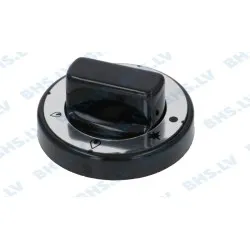
Replacing control buttons restores the equipment’s ergonomic controllability and ensures precise temperature, time, and other parameter regulation in professional kitchens, bars, and catering businesses. Timely replacement also prevents the risk of a worn or broken control button causing inaccurate parameter settings, which can affect the quality of food or drink preparation or even create safety issues.
Types of control buttons
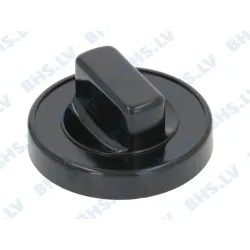
Rotary (turning) buttons are the most common control element for temperature and time adjustment in convection ovens, grills, fryers, and other equipment. These elements wear out easily during intensive commercial use — the plastic or metal surface deteriorates, and the mechanism loses precision.
Push buttons are the simplest type of button, used for on/off and cycle-starting functions. In dishwashers, coffee machines, and automatic equipment, push buttons are a frequently used basic element. A damaged push button may fail to respond to pressing or, conversely, remain stuck in the pressed position.
Digital control panel buttons in modern equipment differ from mechanical ones — they are often not replaceable individually without replacing the entire panel, but in simpler digital panels, buttons can be ordered as separate spare parts.
How to know when a control button needs replacing
Key signs indicating control button wear: the button turns or presses with increased friction or, conversely, with excessive ease without resistance; precise settings are not achieved (temperature or time differs from the set value); the button is physically damaged — cracked, chipped, or with a damaged scale.
Visual damage does not always indicate a functional problem, but a transparent button with damaged markings can make reading numbers difficult and increase the risk of errors for staff.
Original or universal spare parts
For some equipment models, only original manufacturer control buttons are available — these ensure precise compatibility with the equipment’s specifications. Universal control buttons are suitable for older models where original parts are no longer in the manufacturer’s range. The BHS range includes both original and universal control buttons for various kitchen and bar equipment models.
Installation and replacement process
Replacing a control button is usually a simple process — the button is pulled off the mechanism’s shaft or pushed out from the panel opening. If replacement is needed for equipment with a more complex control panel or integrated electronics, it is advisable to contact a professional servicing provider. BHS service specialists maintain kitchen and bar equipment.
Preventive maintenance and button inspection
Regular control button inspection is part of equipment preventive maintenance. It is recommended to manually check each button’s precision and mechanical resistance every two to three weeks — early detection of wear allows planning replacement during maintenance, rather than waiting for the button to fail completely during operation. Preventive replacement is much less costly than equipment downtime.
Safety considerations
A damaged control button can create safety issues — a temperature control button stuck in the maximum position can lead to equipment overheating or food burning. A timer that inaccurately shows the set time can result in serving underprocessed food. Timely replacement of worn buttons is a safety requirement, not just a matter of comfort.
Spare parts inventory
Intensively operating HoReCa businesses can keep a small stock of spare buttons for frequently failing equipment. A few extra rotary buttons for a coffee machine or fryer ensure that critical equipment can be quickly restored without waiting for delivery. The BHS range offers spare parts for various equipment models, and small parts can be ordered regularly.
Documentation and equipment maintenance records
Professional HoReCa businesses maintain equipment service documentation — recording replacements made, parts used, and maintenance dates. Such documentation helps predict when the next replacement may be needed and plan spare parts orders in advance. The HACCP system also includes equipment maintenance records.
Availability of spare parts for older models
Control buttons for older equipment may be harder to find, as the manufacturer may no longer produce the model or has changed part standards. Universal control buttons often fit in these cases if the mechanical mechanism matches — size, shaft diameter, and notch depth. BHS can help find suitable control buttons for older models using an extensive international supplier network.
Equipment manufacturer compatibility
Control buttons in equipment from different manufacturers may vary by shaft diameter, turning angle, and scale markings. Before ordering a replacement button, the specific equipment model and original button parameters must be known. The manufacturer’s serial number is usually found on the equipment’s nameplate, and it can be used to identify the correct spare part.
Planning replacement timing
Control button replacement is ideally performed during scheduled equipment maintenance — this minimises downtime. If a button fails during operation, replacement usually takes only 5–15 minutes — which is why it is important to have the necessary parts available immediately, rather than waiting for delivery.
Staff training
Kitchen staff who work daily with equipment should be trained to recognise signs of control button wear and report them promptly to management or maintenance personnel. Early reporting of issues prevents situations where a damaged button is used, leading to inaccurate food preparation parameters. Informing staff about proper equipment use extends its service life.
Why choose BHS?
BHS – Baltic HoReCa Solutions supplies professional equipment for restaurants, cafés, hotels and canteens: more than 20,000 products from many manufacturers. Our specialists help you choose the right equipment and spare parts for your kitchen or bar.
Delivery
We deliver across the European Union. Delivery time and cost depend on the order volume and destination — contact the BHS team for an exact price and lead time.


/C011161_BHS.LV-250x250h.webp "Knob, fi Stalgast C011161")
/205235v-250x250w.webp "Handwheel for electric fryers HENDI 205235")