

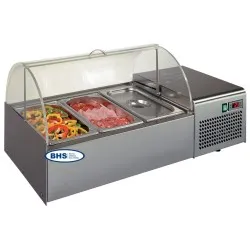
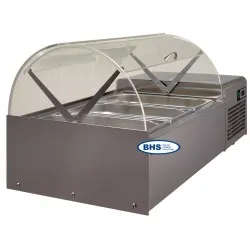
Article number: 1020110
The UNIS COOL RHEIN 1000 is a refrigerated counter for professional use.
This appliance uses static ..
Is available
1,059.00€
with VAT: 1,281.39€
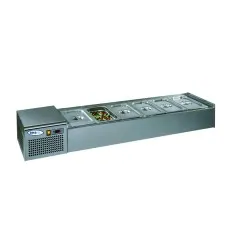
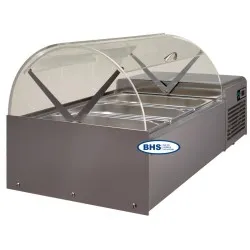
Article number: 1020120
The UNIS COOL RHEIN 1400 is a refrigerated counter designed for professional use. This unit employs ..
Is available
1,199.00€
with VAT: 1,450.79€
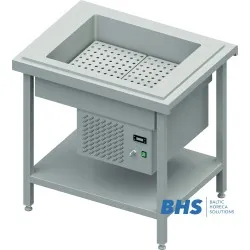
Article number: BHS107091
A chafing dish keeps prepared food at serving temperature without cooking it further. This unit hold..
Is available
1,779.00€
with VAT: 2,152.59€
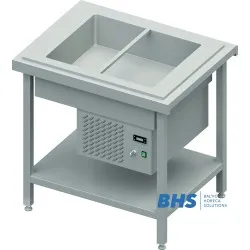
Article number: BHS104091
A cooling well keeps prepared food chilled without freezing, using a refrigeration circuit that circ..
Is available
1,783.50€
with VAT: 2,158.04€
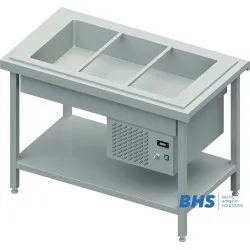
Article number: BHS105121
A chafing dish with a spacer keeps prepared food at serving temperature without overcooking or dryin..
Is available
1,829.00€
with VAT: 2,213.09€
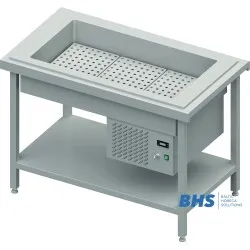
Article number: BHS108121
This Stalgast chafing dish, article BHS108121, is designed for maintaining food at specific temperat..
Is available
1,899.00€
with VAT: 2,297.79€
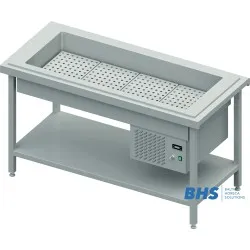
Article number: BHS109151
This stainless-steel chafing unit gently circulates warm air around four full-size Gastronorm pans, ..
Is available
1,989.00€
with VAT: 2,406.69€
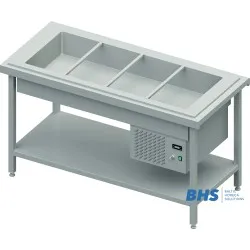
Article number: BHS106151
A chafing dish with a spacer keeps prepared food at serving temperature without direct heat on the p..
Is available
2,239.00€
with VAT: 2,709.19€
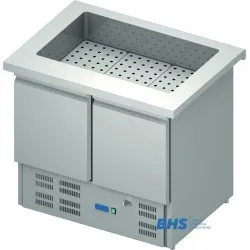
Article number: ST208101
A cold chafing dish with an integrated refrigerator keeps prepared dishes chilled and ready for buff..
Is available
2,279.00€
with VAT: 2,757.59€
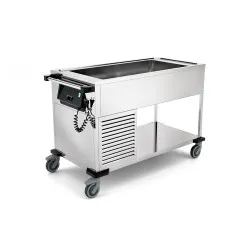
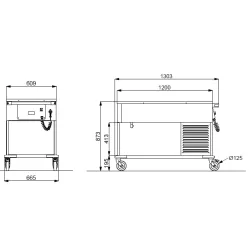
Article number: 02000COMP3R
The ROCAM COMPASS 3 REF is a refrigerated trolley designed for professional use.
This trolley operat..
Is available
2,499.00€
with VAT: 3,023.79€
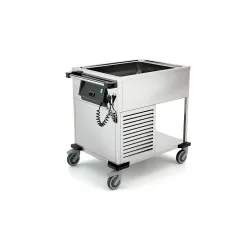
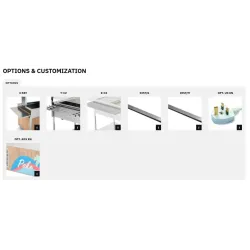
Article number: 02000COMP2R
A refrigerated trolley keeps prepared ingredients or plated dishes chilled while they move between k..
Is available
2,529.00€
with VAT: 3,060.09€
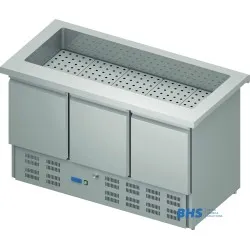
Article number: ST209151
A cold chafing dish keeps prepared dishes chilled and ready for service on a buffet line without bre..
Is available
2,799.00€
with VAT: 3,386.79€
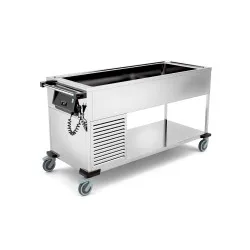
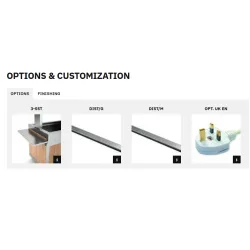
Article number: 02000COMP4R
This refrigerated trolley maintains chilled temperatures for ingredients or plated dishes during tra..
Is available
3,099.00€
with VAT: 3,749.79€
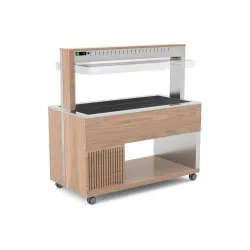

Article number: 01000ATH3FRE
A refrigerated buffet unit keeps prepared dishes chilled while presenting them openly for self-servi..
Is available
3,539.00€
with VAT: 4,282.19€
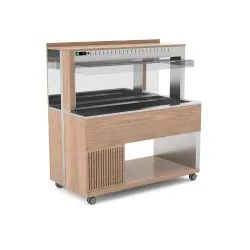
Article number: 01000ATH3FREW
The ROCAM ATHENA 3R/W is a refrigerated buffet designed for self-service display. Its construction f..
Is available
3,829.00€
with VAT: 4,633.09€
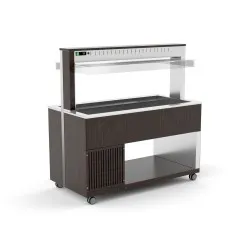
Article number: 01000ATH4FRE
A refrigerated buffet keeps prepared dishes chilled while presenting them openly for self-service. T..
Is available
3,959.00€
with VAT: 4,790.39€
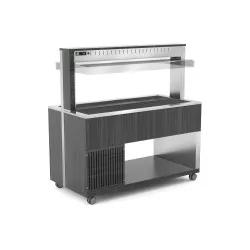
Article number: 01000ATH3MRE
A refrigerated buffet unit keeps prepared dishes chilled while presenting them openly for self-servi..
Is available
3,999.00€
with VAT: 4,838.79€
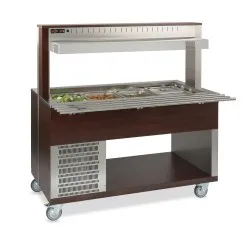
Article number: 01000ATH5FRE
A refrigerated buffet unit keeps prepared dishes chilled while presenting them openly for self-servi..
Is available
4,169.00€
with VAT: 5,044.49€
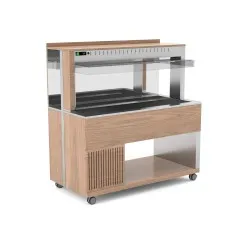
Article number: 01000ATH4FREW
The ROCAM ATHENA 4 R/W is a refrigerated buffet designed for self-service display.
This type of appl..
Is available
4,199.00€
with VAT: 5,080.79€
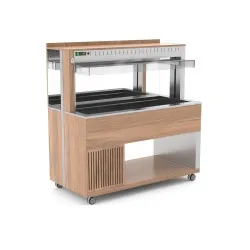
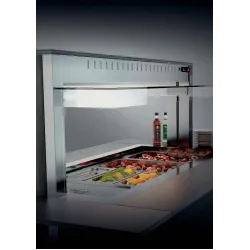
Article number: 01000ATH3MRVEW
This refrigerated buffet preserves the freshness of prepared dishes by circulating chilled air evenl..
Is available
4,299.00€
with VAT: 5,201.79€
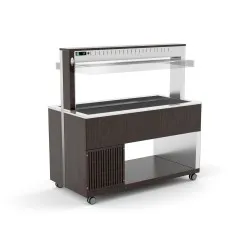
Article number: 01000ATH4MRE
A refrigerated buffet keeps prepared dishes chilled while presenting them openly to customers. The A..
Is available
4,299.00€
with VAT: 5,201.79€
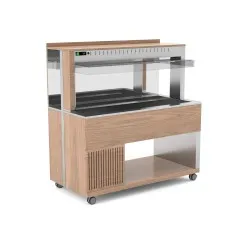
Article number: 01000ATH5FREW
A refrigerated buffet keeps prepared dishes chilled while presenting them openly to customers. The A..
Is available
4,369.00€
with VAT: 5,286.49€
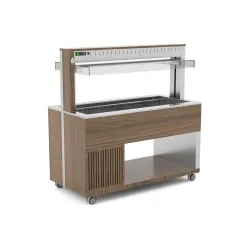
Article number: 01000ATH3MRV
A fan-assisted refrigerated buffet maintains chilled temperatures for prepared dishes while allowing..
Is available
4,389.00€
with VAT: 5,310.69€
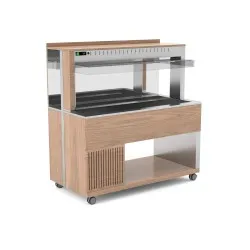
Article number: 01000ATH6FREW
A refrigerated buffet unit designed to hold and display chilled food safely while maintaining an org..
Is available
4,389.00€
with VAT: 5,310.69€
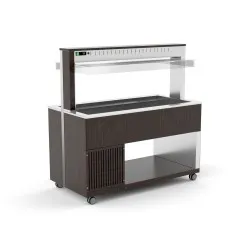
Article number: 01000ATH6FRE
A refrigerated buffet unit keeps prepared dishes chilled while presenting them for self-service. The..
Is available
4,489.00€
with VAT: 5,431.69€
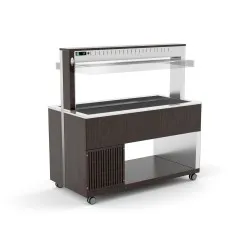
Article number: 01000ATH6MRE
The ROCAM ATHENA 6 R/M is a refrigerated buffet designed for self-service display in canteens. Its s..
Is available
4,849.00€
with VAT: 5,867.29€
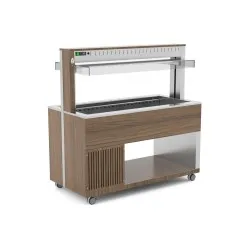
Article number: 01000ATH5MRV
A fan-assisted refrigerated buffet maintains chilled food at serving temperature by circulating cold..
Is available
5,089.00€
with VAT: 6,157.69€
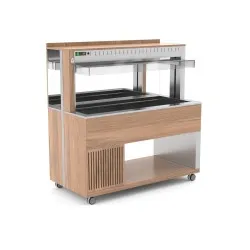
Article number: 01000ATH5MRVEW
This refrigerated buffet uses a fan to circulate cold air evenly, maintaining a consistent temperatu..
Is available
5,229.00€
with VAT: 6,327.09€