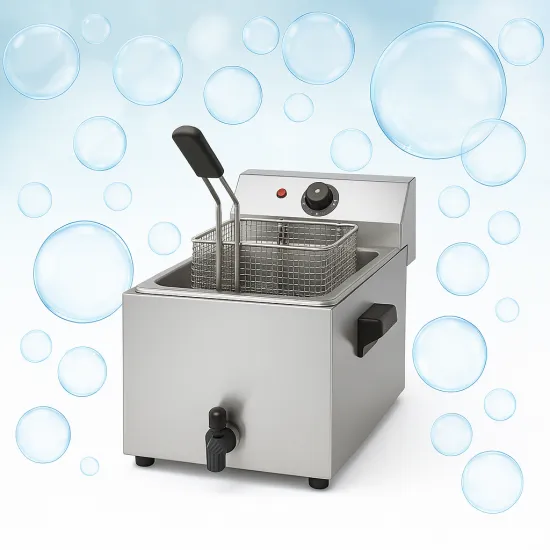
Proper cleaning of kitchen equipment with professional cleaning chemicals is a mandatory requirement for food safety and equipment longevity. Specialised cleaning agents are formulated for specific types of equipment and types of soiling — grease, oil residues, coffee residues, limescale deposits and burnt-on food residues require different chemical compounds and treatment methods. In professional kitchens, HACCP standards require regular equipment disinfection and documentation of cleaning protocols, where an important role is played by manufacturer-approved cleaning agents.
Chemicals for fryers
Cleaning chemicals for fryers are formulated to remove heavily burnt-on grease and carbon deposits from the fryer vat and heating elements. Regular fryer cleaning is important for maintaining oil quality and preventing the formation of burnt deposits, which impair the taste of fried products and accelerate oil degradation.
Professional fryer cleaning chemicals also significantly simplify even the most labor-intensive task — the fryer cleaning process. Alkaline-based products with thermal activation break down grease deposits more effectively than mechanical scrubbing alone.
Chemicals for coffee machines
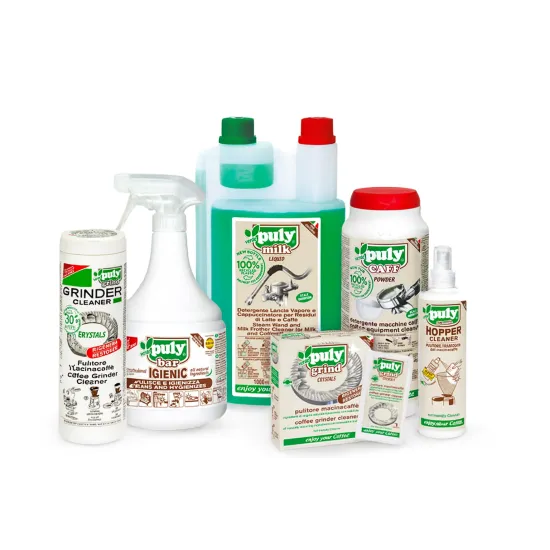
Cleaning chemicals for coffee machines include descaling products and milk system cleaners. Limescale deposits are the main cause of performance issues in coffee machines and espresso machines — regular descaling maintains heating element efficiency and prevents premature wear. Specialized milk system cleaners prevent bacterial growth in milk pathways.
Chemicals for grills and ovens
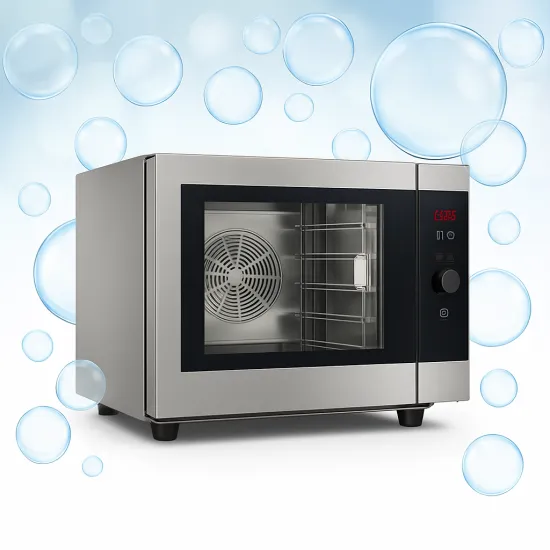
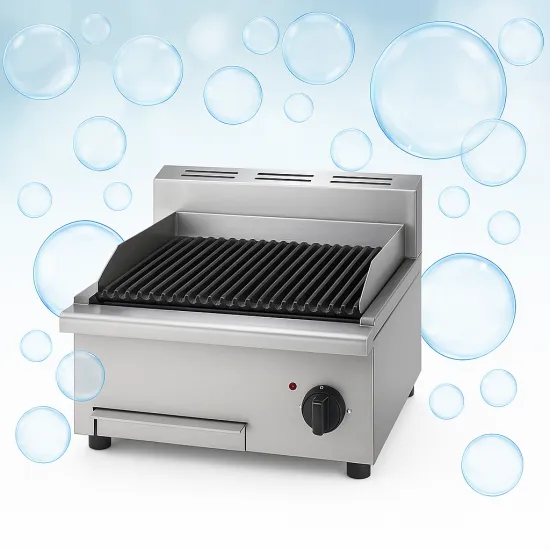
Cleaning chemicals for grills are designed to remove burnt-on grease and carbon deposits from grates and the equipment body. Strongly alkaline formulas with high penetration power ensure more effective cleaning with less time and labor. Cleaning chemicals for convection ovens are adapted for high-temperature contamination inside the oven and on the door glass.
Chemicals for dishwashers
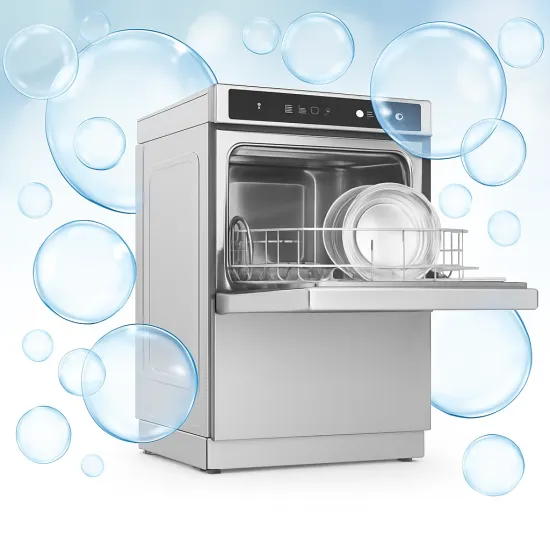
Dishwashing chemicals include three components — detergent, rinse aid and disinfectant. Proper dosing ensures hygienically clean dishes in accordance with sanitary standards and reduces the formation of limescale deposits on dish surfaces and inside the machine.
HACCP requirements and cleaning protocols
HACCP system requires documented cleaning and disinfection protocols for all kitchen equipment. The protocol specifies cleaning frequency, chemicals used, concentration and procedure. Food safety inspections check this documentation in businesses — non-compliance can result in administrative penalties. Professional cleaning products with precise dosing instructions facilitate protocol compliance.
Correct dosing of chemical concentrations
Chemical effectiveness depends on correct concentration — excessive chemicals are economically inefficient and may leave residues on surfaces, while too little does not ensure the required cleaning quality. Professional dispensers and measuring cups help accurately dose chemicals for each cleaning task. Following the manufacturer's specified concentration is important for both effectiveness and safety.
Cleaning frequency and schedules
Different equipment requires different cleaning frequencies — fryers should be cleaned after each shift, coffee machines daily, and dishwashers should be descaled once a month. Regular cleaning schedules, followed by all staff, ensure consistent hygiene standards. Developing and adhering to a cleaning schedule reduces the risk of equipment damage.
Maintenance of stainless steel surfaces
Stainless steel is the main material in professional kitchens, but it requires special care. Improper use of chlorine-containing products can cause corrosion marks even on AISI 304 grade steel. Specialized stainless steel cleaning and polishing products maintain the appearance of stainless steel and prevent premature corrosion.
Staff training in cleaning procedures
Proper use of chemicals requires staff training — incorrect concentration or mixing of chemicals can create safety hazards. New employees must be provided with instructions on the use of each chemical and personal protective equipment. Regular competence updates ensure consistent hygiene standards across all shifts.
Chemical storage and safety requirements
Professional cleaning chemicals must be stored in a separate, locked storage area — away from food products and staff rest areas. Storage must comply with temperature limits and ensure ventilation. Chemical containers must be labeled according to regulations, and staff must have access to safety data sheets for each chemical.
Regular delivery and inventory planning
Planning the inventory of professional cleaning chemicals is important to ensure uninterrupted compliance with cleaning protocols. A shortage of chemicals can lead to violations of hygiene protocols, which jeopardizes food safety standards.
Choosing chemicals for specific water hardness
Water hardness varies in different regions, and this affects the effectiveness and required frequency of descaling chemicals. In areas with harder water, more intensive descaling is needed — more frequently or at higher concentrations. The BHS team helps select the most suitable products for a specific region and water hardness.
Chemicals for food production businesses
Food production businesses use professional cleaning chemicals not only for kitchen equipment but also for production lines, conveyor systems and food contact surfaces. Sanitary requirements in production are higher than in the HoReCa sector — more frequent cleaning, stricter documentation and broader use of disinfectants. BHS offers specialized chemicals that meet the elevated hygiene requirements of production businesses.
Regular ordering and inventory management of chemicals
Cleaning chemicals are everyday consumables, and a shortage directly jeopardizes compliance with hygiene protocols. It is recommended to maintain a chemical inventory for 2–4 weeks of consumption to ensure uninterrupted cleaning even in case of delivery delays.
Why choose BHS?
BHS – Baltic HoReCa Solutions supplies professional equipment for restaurants, cafés, hotels and canteens: more than 20,000 products from many manufacturers. Our specialists help you choose the right equipment and spare parts for your kitchen or bar.
Delivery
We deliver across the European Union. Delivery time and cost depend on the order volume and destination — contact the BHS team for an exact price and lead time.