Serving bowls are an indispensable element in any dining establishment’s tableware range — they are used for serving salads, soups, meats, side dishes and other foods or presenting larger portions to several people. In restaurants, hotels and canteens, bowls serve both as individual serving dishes and as central elements of buffet service.
Salad bowls
Salad bowls are larger and deeper, designed for serving salads to multiple guests or in a buffet area. They are typically available in various sizes — from 15–18 cm (individual portion) to 30–40 cm (shared table service). Buffet salad bowls are often equipped with a lid or designed for ice-cooling systems to maintain product temperature over a longer period.
Soup bowls with handles
Soup bowls, or tureens with two handles, are individual porcelain or ceramic bowls often available as part of a set with a matching underplate. This format is popular in upscale restaurants, where each course is presented with appropriate tableware. Handles allow servers to safely bring hot soup, ensuring an ergonomic grip and preventing burns.
Materials
Porcelain and ceramic are traditional materials for serving bowls — a white glazed surface is hygienic, easy to clean and aesthetically universal. Professional-grade porcelain is thicker with reinforced glaze, which withstands intensive dishwasher cycles even at high temperatures.
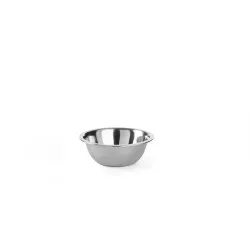
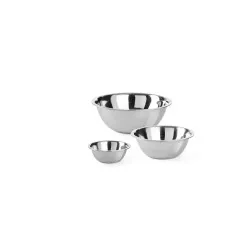
Stainless steel is the primary material for buffet service bowls — hygienic, resistant to temperature fluctuations and easy to disinfect. Metal bowls with double walls retain food temperature longer. Glass is suitable for aesthetically appealing salad and dessert serving, where the transparent surface enhances the visual presentation of the food.
Sizes and capacity
The size of serving bowls is chosen according to the serving format and portion size. Individual portion bowls are typically 12–18 cm in diameter, shared table service bowls — 25–35 cm, and buffet bowls — 35–50 cm. Depth affects capacity — deeper bowls hold more liquid without the risk of spilling.
Capacity in litres is an important parameter in buffet planning. If a buffet bowl holds 2 litres of salad and the restaurant serves 100 guests per service, the refill frequency must be calculated and an adequate number of bowls reserved.
Bowls in buffet organisation
Buffet bowls are often placed on special buffet tables with heating elements — hot food bowls maintain the correct temperature without constant supervision. For cold salads and desserts, ice-cooling systems are available — a bowl with double walls and an ice insert prevents salads from wilting or desserts from melting at room temperature.
For large buffet events, it is recommended to use a standardised bowl size series to simplify replacement and refilling. Uniform design bowls for the entire buffet table create a professional and organised impression.
Bowls for different cuisines
In Asian cuisine restaurants, bowls are the central dish — large ramen or pho bowls with a depth of 12–15 cm are designed for serving broths and noodle soups. In traditions, bowls are more commonly used as salad or side dish containers, placed at the centre of the table for shared service. Both styles require different bowl profiles and sizes, which must be considered when creating tableware inventory.
Hygiene and maintenance
Serving bowls must be washed in a dishwasher or manually with hot water and detergent after each use. Buffet bowls with long display times should be emptied and replaced at least every 2–4 hours in accordance with HACCP requirements. Empty bowls should never be refilled on top of existing food — this can increase bacterial load.
Dessert bowls
Dessert bowls are smaller, deeper bowls with a capacity of 150–300 ml, used for serving puddings, frozen yoghurt, sorbet or other desserts. Glass dessert bowls are visually appealing, as the transparent surface allows the dessert’s layered composition to be seen. Porcelain dessert bowls with elegant edges are suitable for upscale restaurants. Sometimes dessert bowls are also used for serving appetisers — carpaccio or ceviche.
Bowls for hot food
Hot food bowls require additional heat retention properties. Porcelain and ceramic bowls with thicker walls retain heat better than thin-walled glass alternatives. Heated buffet bowls with water heating systems or electric warming ensure that hot food temperature remains within the correct range during long display times at events and banquets.
Bowls for event catering
In event catering, bowls play a key role in buffet organisation. For outdoor wedding banquets, conference buffets and corporate dining, each dish requires an appropriate bowl. Event caterers typically work with easily transportable bowls that withstand handling and transport without damage. Stainless steel bowls with lids are the most popular choice for catering companies in high-turnover operations.
Bowls and porcelain series
Major porcelain manufacturers offer bowls as part of broader service series, where each piece visually matches the forms and design of the rest of the tableware. Plates, bowls, saucers and sugar bowls from the same series together create a harmonious table setting, reflecting attention to detail and professionalism. Choosing a series simplifies ordering replacements when individual pieces break or wear out.
Bowl care and storage
Serving bowls should be stored so they do not touch each other without protection. Stacked bowls in cabinets should be separated with padded or fabric layers, especially for glass or delicate porcelain. Bowls must be completely dried before storage after washing, as moisture accumulation in stacks can cause mould or unpleasant odours.
Why choose BHS?
BHS – Baltic HoReCa Solutions supplies professional equipment for restaurants, cafés, hotels and canteens: more than 20,000 products from many manufacturers. Our specialists help you choose the right equipment and spare parts for your kitchen or bar.
Delivery
We deliver across the European Union. Delivery time and cost depend on the order volume and destination — contact the BHS team for an exact price and lead time.