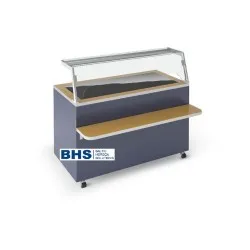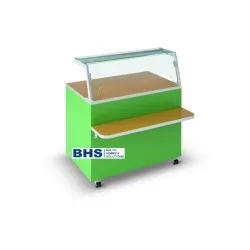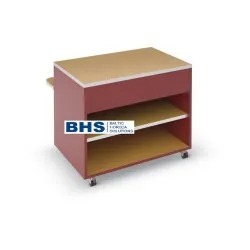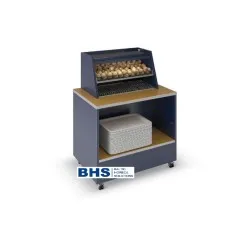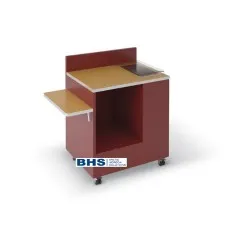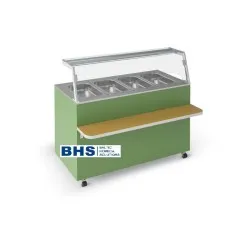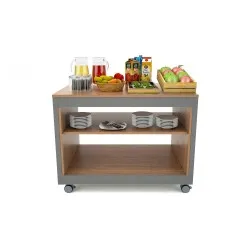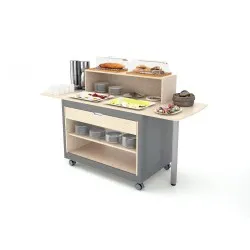
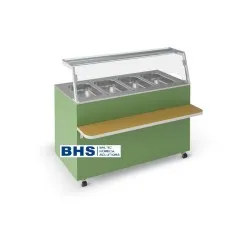
Mobile modules for canteens provide a flexible approach to canteen layout — modules can be rearranged or moved to meet changing needs, seasonal demand or space reorganisation. These modules are particularly suitable for large canteens, school and company dining halls where a flexible distribution and serving system is required. Modularity allows the canteen to operate in both regular daily mode and for special events without rebuilding the stationary infrastructure. BHS offers mobile modules as part of the Canteen Equipment range and helps select and configure the optimal module system for each canteen based on space parameters, flow requirements and budget options. Mobile modules are a long-term investment in canteen infrastructure — they provide flexibility for both daily operations and event organisation, reducing the need for additional stationary equipment installation.
Mobile modules for canteens allow canteen operators to quickly adapt the serving area configuration to different visitor flow scenarios. The mobile concept reduces the need for stationary infrastructure and makes space cleaning easier. Suitable for school canteens, company cafeterias and public catering establishments.
What are mobile modules for canteens
Mobile modules for canteens are standardised distribution units equipped with wheels and connectable in various configurations. They can include hot distribution modules, cold distribution counters, beverage dispensing stations or cashier modules. The modular system allows for both linear distribution lines and island or U-shaped configurations to suit space dimensions and visitor flow.
Flexibility and reconfiguration
The main advantage of mobile modules is the ability to change the canteen configuration without engineering work. On a daily basis, modules can be arranged in one configuration, but for large events they can be rearranged or expanded. In school canteens, a smaller distribution line can be used for daily lunch service, while for events a wider layout can be created. This flexibility significantly increases space versatility.
In school canteens
In school canteens, mobile modules are especially practical — during breaks, modules can be quickly rearranged to ensure efficient distribution to a large number of students in a short time. Mobile carts with braked wheels provide stable positioning during the distribution process. The canteen space can be freed up for other activities after lunchtime.
In company canteens
In company canteens, mobile modules allow flexible adaptation to corporate event needs. On a standard workday, the canteen operates in regular mode, but for corporate events, the distribution line can be reconfigured in a short time. In company canteens, fast visitor throughput is important — the module configuration is adapted for maximum efficiency during peak hours.
Hot and cold distribution modules
Professional mobile modules include both hot distribution units with heating functions and cold distribution counters with refrigeration. Hot distribution modules maintain food at the correct temperature throughout the distribution process. Cold counters ensure salads and desserts are kept at the proper storage temperature. BHS helps canteens choose the right module combination.
HACCP and food safety
HACCP requirements set strict temperature control standards for both hot and cold meals during the distribution process. Modules with integrated thermometers and temperature control systems facilitate monitoring of HACCP compliance. Stainless steel surfaces on the modules are easy to disinfect. Regular cleaning of modules between shifts is mandatory under HACCP requirements.
Frequently asked questions
How quickly can a distribution module be reconfigured?
Reconfiguration usually takes 15–30 minutes. BHS provides advice on models.
Are modules compatible between different manufacturers?
This depends on size standardisation. BHS helps check compatibility.
Maintenance and service life
High-quality mobile modules with regular maintenance last many years in intensive canteen use. Regular inspection of wheels and mechanisms ensures safe movement. Daily cleaning of stainless steel surfaces maintains hygiene in accordance with HACCP requirements. Maintenance of heating and cooling elements ensures effective temperature control. BHS provides consultations on module maintenance. Contact BHS for advice on purchasing mobile modules for canteens.
Mobility technical solutions
Commercial mobile modules are equipped with high-quality wheels that withstand heavy loads and ensure smooth movement on various floor coverings. Braked wheels lock the module in the selected position during the distribution process, preventing unintended movement due to visitor crowds or staff activity. Adjustable feet or levelling mechanisms ensure a horizontal position on uneven floors. Regular inspection of wheels and brakes is essential for safe and effective daily use.
Configuration planning
An effective canteen module configuration must be planned according to space dimensions, visitor flow and distribution process logic. A linear distribution line is suitable for kitchens with a narrow, elongated space. An island configuration with access from multiple sides speeds up service in large canteens with ample space. The minimum corridor width around modules is 1200–1500 mm to ensure free access for both staff and visitors. BHS helps canteens develop the optimal module layout.
Energy efficiency and operating costs
Modern hot distribution and refrigeration modules are designed with improved energy efficiency — better insulation and more advanced heating and cooling elements reduce electricity consumption. Energy costs should be considered in the purchasing decision — in the long term, energy savings can offset a higher purchase price. Efficient module operation, including not overloading refrigeration containers and regular maintenance, ensures optimal energy consumption.
Order planning and investment justification
Purchasing a mobile module system is a long-term investment in canteen efficiency and flexibility. Compared to the costs of installing a stationary distribution line, a modular system is often more economical with lower installation costs and greater flexibility for the future. Canteens planning expansion or space changes can move the module system to a new location without additional investment. BHS provides advice on the cost-benefit assessment of module systems.
Staff training and workflow optimisation
Introducing a new mobile module system requires staff training for effective use. Employees must be trained in module movement, distribution process organisation and hygiene requirement compliance. Proper staff instruction on temperature control and HACCP documentation ensures appropriate food safety. Optimal workflow procedures with mobile modules reduce service time and increase canteen capacity. BHS provides advice on the effective use of modules in canteens.
Why choose BHS?
BHS – Baltic HoReCa Solutions supplies professional equipment for restaurants, cafés, hotels and canteens: more than 20,000 products from many manufacturers. Our specialists help you choose the right equipment and spare parts for your kitchen or bar.
Delivery
We deliver across the European Union. Delivery time and cost depend on the order volume and destination — contact the BHS team for an exact price and lead time.