

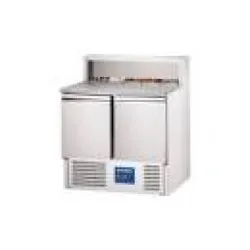
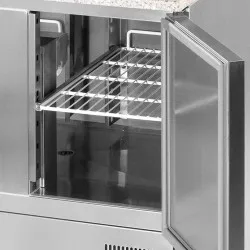
Article number: 833029
A refrigerated pizza counter keeps freshly baked pizzas at serving temperature without drying them o..
Is available
772.88€
with VAT: 935.18€
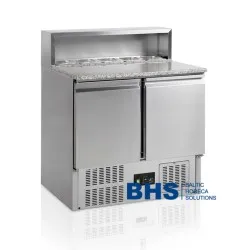

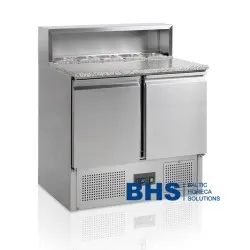
Article number: GP92
The TEFCOLD Pizza counter GP92 is a refrigerated preparation unit designed for pizza making.
This co..
Is available
789.00€
with VAT: 954.69€
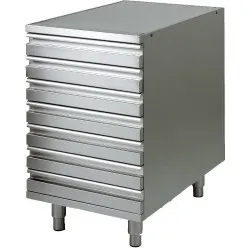
Article number: CAS7
A pizza drawer keeps prepared pizzas at serving temperature while freeing worktop space. The unit ho..
Is available
829.00€
with VAT: 1,003.09€
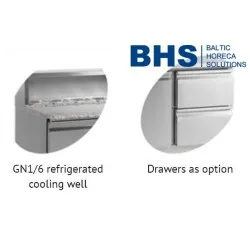
Article number: PT920
Cold air circulates evenly across the shelves, eliminating hot spots and condensation build-up insid..
Is available
839.00€
with VAT: 1,015.19€
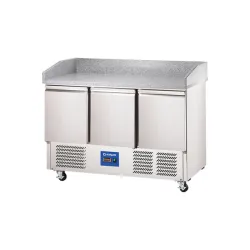
Article number: 833031
The Stalgast ST 3 is a table refrigerator designed for pizza preparation.
This appliance maintains a..
Is available
1,059.75€
with VAT: 1,282.30€
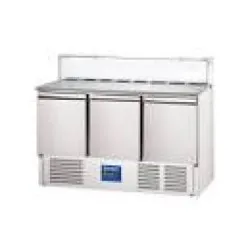
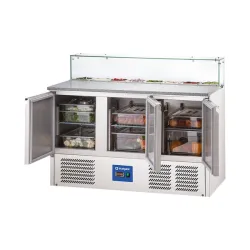
Article number: 833037
This Stalgast pizza counter, article 833037, is a refrigerated unit featuring an integrated display ..
Is available
1,079.33€
with VAT: 1,305.99€
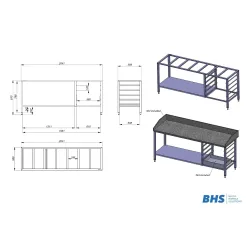
Article number: NN89
A pizza table provides a dedicated worktop for rolling, shaping and dressing pizza bases while keepi..
Is available
1,099.00€
with VAT: 1,329.79€
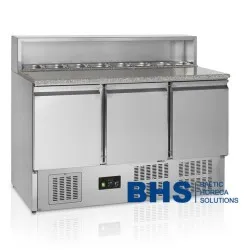
Article number: GP93
The TEFCOLD GP93 is a pizza counter designed for professional food service environments. This unit o..
Is available
1,299.00€
with VAT: 1,571.79€
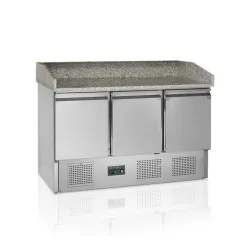
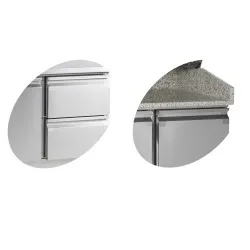
Article number: PT1365
The TEFCOLD PT1365 is a pizza table designed for professional food preparation. This unit operates u..
Is available
1,369.00€
with VAT: 1,656.49€
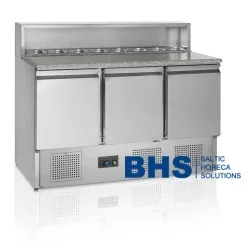
Article number: PT930
The TEFCOLD PT930 is a professional pizza table designed for food preparation.
This appliance operat..
Is available
1,379.00€
with VAT: 1,668.59€
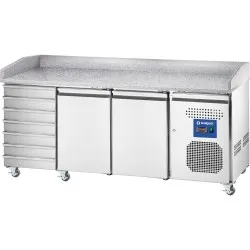
Article number: 833271
A refrigerated pizza counter keeps prepared pizzas chilled while displaying them under a smooth gran..
Is available
1,586.25€
with VAT: 1,919.36€
-3%
-3%
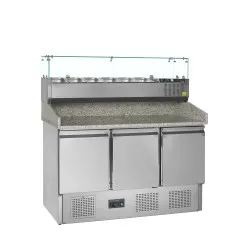
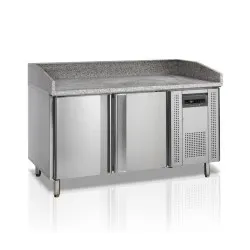
Article number: PT1365+GVC33-140
A refrigerated pizza table keeps prepared toppings chilled while displaying them under a clear glass..
Is available
1,759.00€ 1,809.00€
with VAT: 2,128.39€
Article number: PT1200
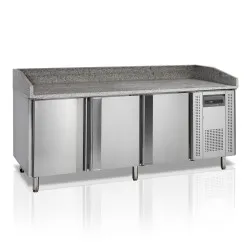
The TEFCOLD PT1200 is a pizza table designed for professional kitchens. This unit is constructed fro..
Is available
1,799.00€
with VAT: 2,176.79€
Article number: PT1300
A ventilated pizza table keeps dough and toppings chilled while the granite worktop stays at room te..
Is available
1,929.00€
with VAT: 2,334.09€
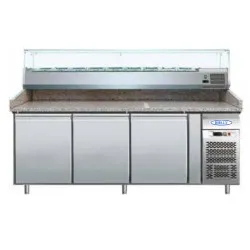
Article number: PZ3600TN38
A pizza table that keeps toppings chilled while the dough is rolled and dressed. The refrigerated sh..
Is available
2,019.00€
with VAT: 2,442.99€
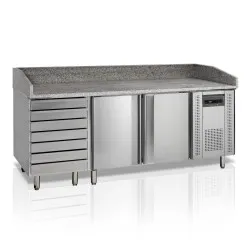
Article number: PT1310
A pizza table keeps prepared pizzas within reach while maintaining a consistent chill. The PT1310 us..
Is available
2,049.00€
with VAT: 2,479.29€
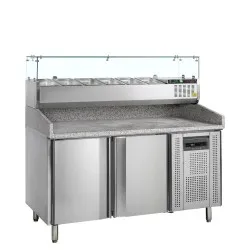
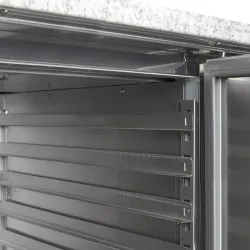
Article number: PT1200 + GVC38-150
A refrigerated pizza table keeps prepared pizzas chilled while displaying them under a clear glass c..
Is available
2,279.00€
with VAT: 2,757.59€
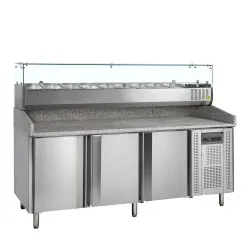
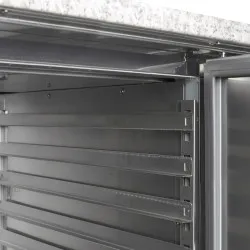
Article number: PT1300 + GVC38-200
A refrigerated pizza table keeps dough and toppings chilled while displaying finished pizzas under a..
Is available
2,459.00€
with VAT: 2,975.39€
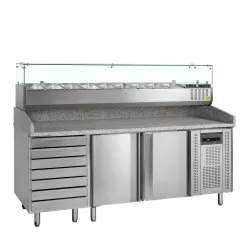
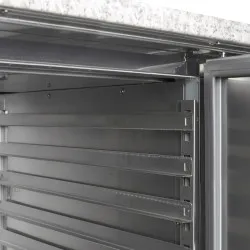
Article number: PT1310+VGVC38-200
A refrigerated pizza table keeps prepared pizzas chilled while displaying them under a clear glass f..
Is available
2,519.00€
with VAT: 3,047.99€
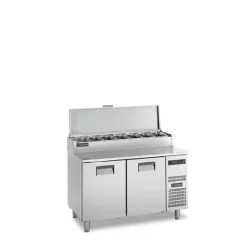
Article number: 20800930
A refrigerated pizza counter keeps prepared pizzas and toppings chilled while providing a worktop fo..
Is available
2,639.00€
with VAT: 3,193.19€
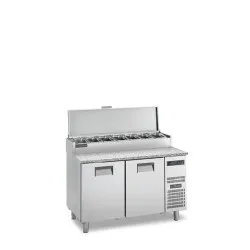
Article number: 20800935
This professional pizza counter chills prepared ingredients while offering a dedicated work surface ..
Is available
2,689.00€
with VAT: 3,253.69€
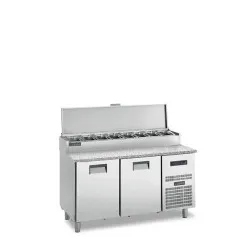
Article number: 20800965
A refrigerated pizza counter keeps prepared pizzas and other chilled dishes at serving temperature w..
Is available
2,759.00€
with VAT: 3,338.39€
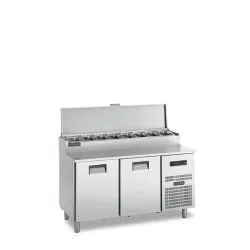
Article number: 20800960
A refrigerated pizza counter keeps prepared pizzas, toppings and dough at safe serving temperatures ..
Is available
2,789.00€
with VAT: 3,374.69€
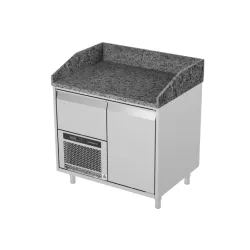
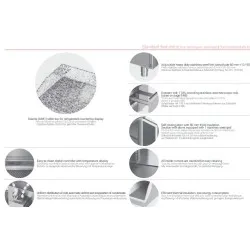
Article number: FM0-E101-94/70/90
A refrigerated worktable with a granite surface combines a durable preparation area with a chilled s..
Is available
2,812.00€
with VAT: 3,402.52€
-250x250w.webp "Pizza table FAGOR 19104297")
Article number: 19104297
A refrigerated pizza table keeps ingredients chilled while providing a solid worktop for rolling dou..
Is available
2,869.00€
with VAT: 3,471.49€
-250x250.webp "Pizza table GEMM 20800900")
Article number: 20800900
A refrigerated pizza counter keeps prepared pizzas, toppings and dough at a steady low temperature w..
Is available
2,959.00€
with VAT: 3,580.39€
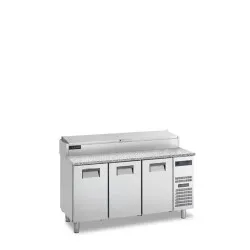
Article number: 20800945
A refrigerated pizza counter keeps prepared ingredients chilled while providing a solid work surface..
Is available
2,969.00€
with VAT: 3,592.49€
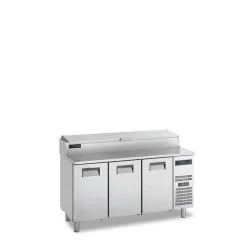
Article number: 20800940
This GEMM SFF/716I is a refrigerated pizza counter designed for professional kitchens. The unit is c..
Is available
2,999.00€
with VAT: 3,628.79€
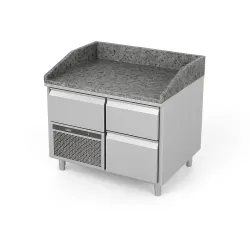
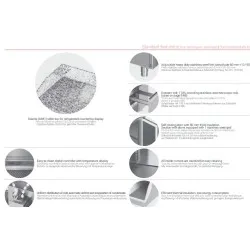
Article number: FM0-E111-94/70/90
A refrigerated worktable with a granite top combines a durable preparation surface with a cooling co..
Is available
3,005.80€
with VAT: 3,637.02€
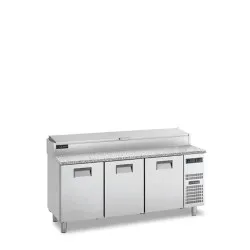
Article number: 20800975
A refrigerated pizza counter keeps prepared pizzas, toppings and chilled ingredients at serving temp..
Is available
3,099.00€
with VAT: 3,749.79€
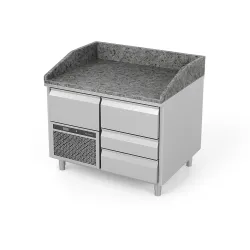
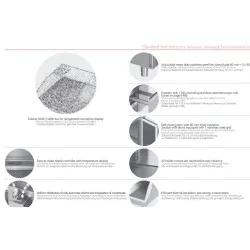
Article number: FM0-E121-94/70/90
The Novameta P121 is a cooling counter featuring a polished granite slab as its work surface. The ar..
Is available
3,103.60€
with VAT: 3,755.36€
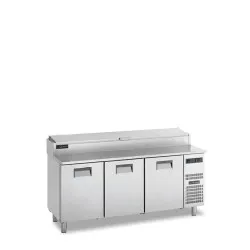
Article number: 20800970
A refrigerated pizza counter keeps prepared pizzas at serving temperature without drying them out or..
Is available
3,179.00€
with VAT: 3,846.59€
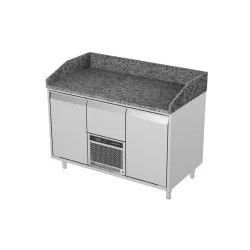
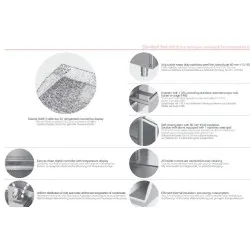
Article number: FM0-E202-130/70/90
This Novameta P202 cooling counter has a granite table top and a stainless steel body. The unit is C..
Is available
3,281.20€
with VAT: 3,970.25€
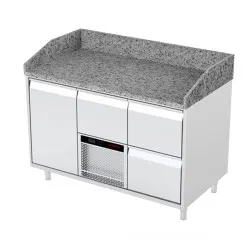
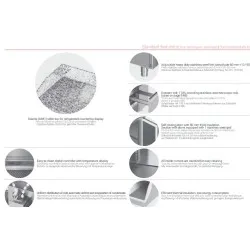
Article number: FM0-E230-130/70/90
A refrigerated worktop with a granite surface merges a durable preparation area and chilled storage ..
Is available
3,474.40€
with VAT: 4,204.02€
-250x250.webp "Pizza table GEMM 20800905")
Article number: 20800905
A refrigerated pizza counter keeps prepared pizzas, toppings and dough at serving temperature withou..
Is available
3,479.00€
with VAT: 4,209.59€
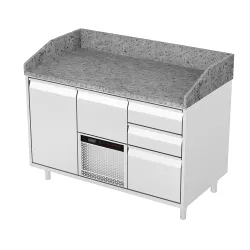
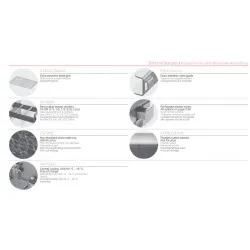
Article number: FM0-E240-130/70/90
A refrigerated worktable with a granite top combines a durable preparation surface with a chilled st..
Is available
3,571.60€
with VAT: 4,321.64€
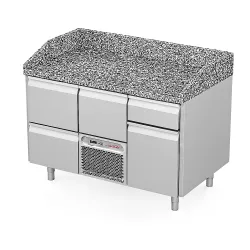
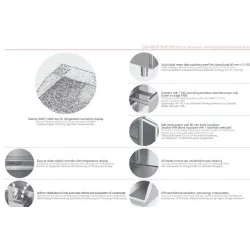
Article number: FM0-E212-130/70/90
This Novameta cooling counter, model P212, offers a practical refrigerated workspace with its granit..
Is available
3,668.20€
with VAT: 4,438.52€
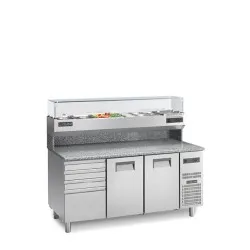
Article number: 20800910
A refrigerated pizza counter keeps prepared pizzas, toppings and dough at a steady low temperature w..
Is available
3,729.00€
with VAT: 4,512.09€
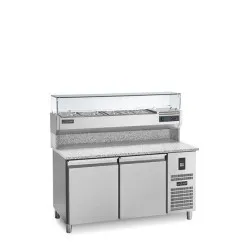
Article number: 20800420
A refrigerated pizza counter keeps dough, toppings and finished pizzas chilled while they wait for t..
Is available
3,829.00€
with VAT: 4,633.09€
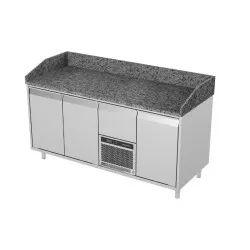
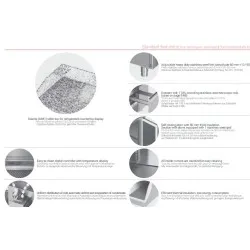
Article number: FM0-E303-172/70/90
A refrigerated worktable with a granite top merges a chilled storage area with a sturdy work surface..
Is available
3,836.40€
with VAT: 4,642.04€
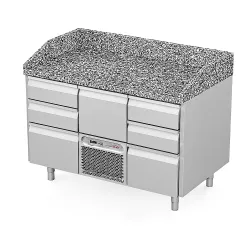
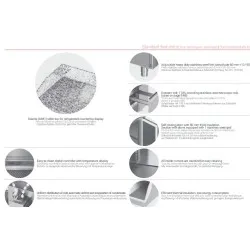
Article number: FM0-E222-130/70/90
A refrigerated worktable with a granite top combines a durable preparation surface with a chilled st..
Is available
3,862.00€
with VAT: 4,673.02€
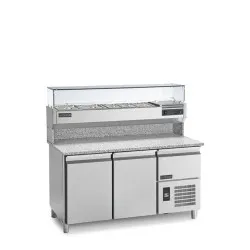
Article number: 20800425
A refrigerated pizza counter keeps dough and toppings chilled while providing a work surface for ass..
Is available
3,999.00€
with VAT: 4,838.79€
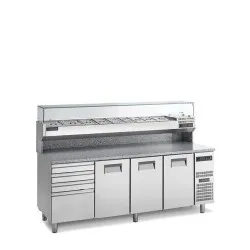
Article number: 20800915
A refrigerated pizza counter keeps ingredients chilled while providing a visible display and an orga..
Is available
3,999.00€
with VAT: 4,838.79€
-250x250.webp "Refrigerated table with granite top Novameta FM0-E332-172/70/90")
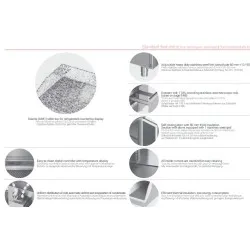
Article number: FM0-E332-172/70/90
A refrigerated worktable with a granite top combines a durable preparation surface with a chilled st..
Is available
4,030.20€
with VAT: 4,876.54€
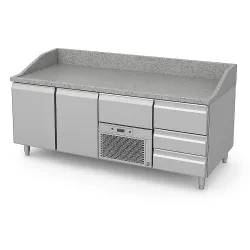
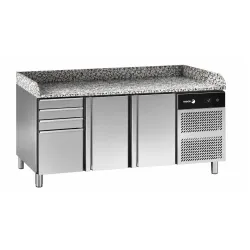
Article number: FM0-E342-172/70/90
This Novameta cooling counter, article P342, is a refrigerated workstation featuring a granite work ..
Is available
4,128.00€
with VAT: 4,994.88€
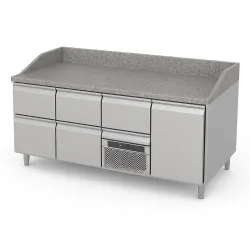
Article number: 19102722
A refrigerated pizza table keeps ingredients chilled while providing a solid worktop for rolling dou..
Is available
4,189.00€
with VAT: 5,068.69€
Article number: FM0-E335-172/70/90
This Novameta P335 is a cooling counter, article number FM0-E335-172/70/90. It features a polished g..
Is available
4,223.40€
with VAT: 5,110.31€
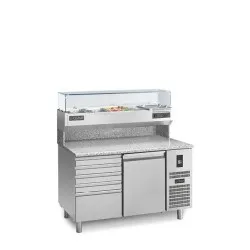
Article number: 20800415
A refrigerated pizza counter keeps prepared dough, toppings and finished pizzas chilled while they w..
Is available
4,279.00€
with VAT: 5,177.59€
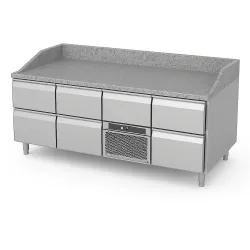
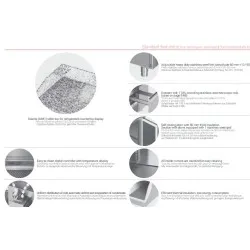
Article number: FM0-E313-172/70/90
This Novameta P313 is a cooling counter designed for professional kitchens, featuring a granite tabl..
Is available
4,417.20€
with VAT: 5,344.81€
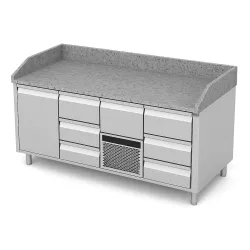
Article number: FM0-E345-172/70/90
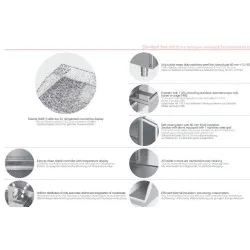
This Novameta cooling counter, article number FM0-E345-172/70/90, provides refrigerated storage bene..
Is available
4,417.20€
with VAT: 5,344.81€
Article number: 19102754
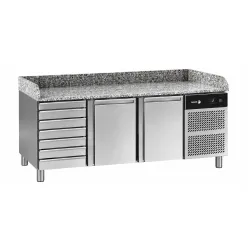
A refrigerated pizza table keeps ingredients chilled under a solid work surface while the chef prepa..
Is available
4,449.00€
with VAT: 5,383.29€
Article number: Z-PIZZA-101/85/120
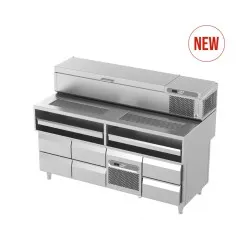
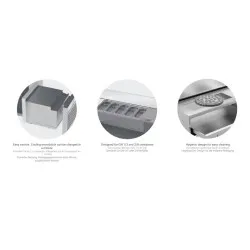
A pizza preparation table keeps ingredients chilled while providing a spacious worktop for assemblin..
Is available
4,579.00€
with VAT: 5,540.59€
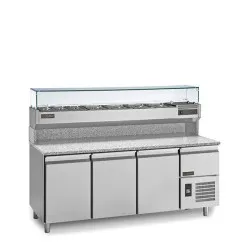
Article number: 20800450
A refrigerated pizza counter keeps prepared dough, toppings and finished pizzas chilled while they w..
Is available
4,599.00€
with VAT: 5,564.79€
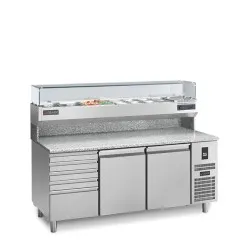
Article number: 20800430
A refrigerated pizza counter keeps dough and toppings chilled while providing a stable work surface ..
Is available
4,669.00€
with VAT: 5,649.49€
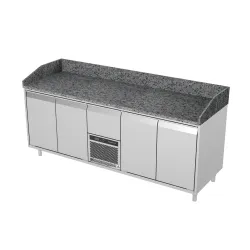
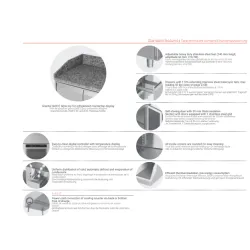
Article number: FM0-E404-213/70/90
A refrigerated worktable with a granite surface combines a chilled storage compartment beneath a sol..
Is available
4,679.60€
with VAT: 5,662.32€
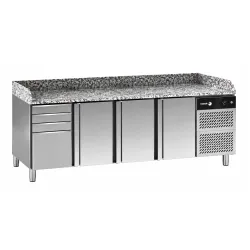
Article number: FM0-E323-172/70/90
A refrigerated worktable with a granite top combines a durable preparation surface with a cooling co..
Is available
4,708.20€
with VAT: 5,696.92€
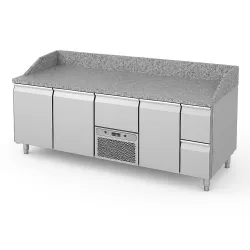
Article number: 19102759
A refrigerated pizza table keeps dough, toppings and finished pizzas chilled while providing a hard ..
Is available
4,869.00€
with VAT: 5,891.49€
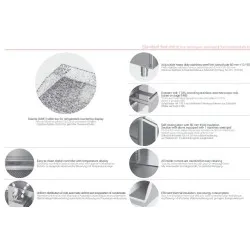
Article number: BHS-FM0-E433-213/70/90
A refrigerated worktable with a granite top combines a solid preparation surface and a chilled stora..
Is available
4,874.00€
with VAT: 5,897.54€
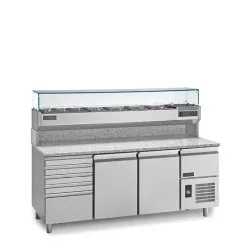
Article number: 20800445
A refrigerated pizza counter keeps prepared dough, toppings and finished pizzas chilled while they w..
Is available
4,879.00€
with VAT: 5,903.59€
Article number: BHS-Z-PIZZA-130/85/120
The Novameta BHS-Z-PIZZA-130/85/120 is a pizza preparation table. This unit functions as a low cooli..
Is available
4,959.00€
with VAT: 6,000.39€
Article number: BHS-Z-PIZZA-94/85/120
This Novameta BHS-Z-PIZZA-94/85/120 is a pizza preparation table. It functions as a low cooling coun..
Is available
4,959.00€
with VAT: 6,000.39€
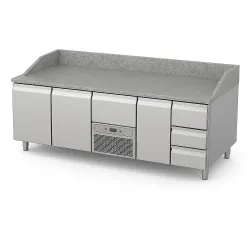
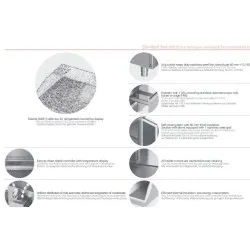
Article number: BHS-FM0-E443-213/70/90
A refrigerated worktable with a granite top combines a chilled storage compartment beneath a solid w..
Is available
4,971.20€
with VAT: 6,015.15€
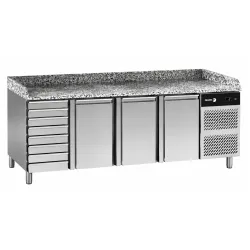
Article number: 19102782
A refrigerated pizza table keeps ingredients chilled while providing a solid worktop for rolling dou..
Is available
4,999.00€
with VAT: 6,048.79€
-250x250.webp "Refrigerated table with granite top Novameta FM0-E436-213/70/90")
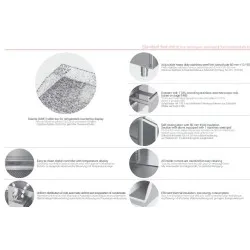
Article number: FM0-E436-213/70/90
A refrigerated worktable with a granite top combines a durable preparation surface with a chilled st..
Is available
5,067.20€
with VAT: 6,131.31€
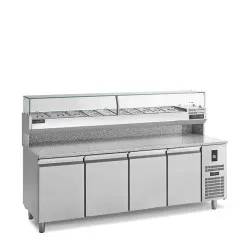
Article number: 20800460
A refrigerated pizza counter keeps prepared dough, toppings and finished pizzas chilled while they w..
Is available
5,099.00€
with VAT: 6,169.79€
-250x250.webp "Refrigerated table with granite top Novameta FM0-E438-213/70/90")
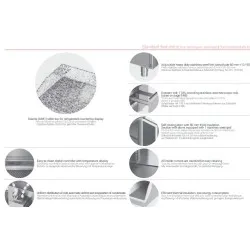
Article number: FM0-E438-213/70/90
This Novameta P438 is a cooling counter designed for professional kitchens, featuring a polished gra..
Is available
5,261.00€
with VAT: 6,365.81€
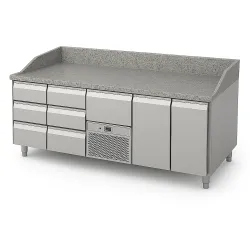
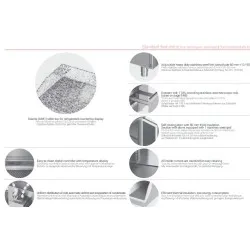
Article number: FM0-E446-213/70/90
A refrigerated worktable with a granite top combines a stable, cool surface for dough preparation an..
Is available
5,261.00€
with VAT: 6,365.81€
Article number: BHS-Z-PIZZA-146/85/120
The Novameta BHS-Z-PIZZA-146/85/120 is a pizza preparation table.
This appliance functions as a low ..
Is available
5,329.00€
with VAT: 6,448.09€
Article number: BHS-Z-PIZZA-172/85/120
A pizza preparation table organises the workspace where dough is rolled, toppings are portioned and ..
Is available
5,399.00€
with VAT: 6,532.79€
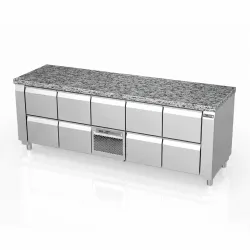
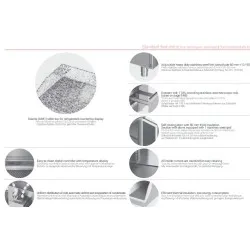
Article number: FM0-E414-213/70/90
This Novameta cooling counter, article number FM0-E414-213/70/90, provides a refrigerated workspace ..
Is available
5,454.80€
with VAT: 6,600.31€
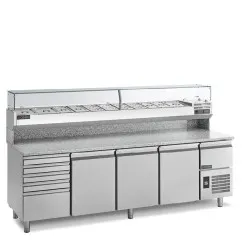
Article number: 20800455
This professional refrigerated pizza counter maintains dough, toppings, and finished pizzas at a con..
Is available
5,479.00€
with VAT: 6,629.59€
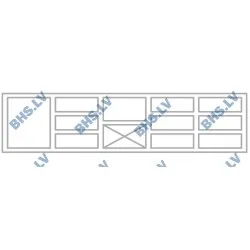
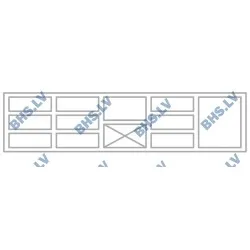
Article number: FM0-E448-213/70/90
This Novameta cooling counter, article number FM0-E448-213/70/90, is designed for professional kitch..
Is available
5,550.80€
with VAT: 6,716.47€
Article number: BHS-Z-PIZZA-196/85/120
A pizza preparation table keeps ingredients chilled at worktop height while providing space for doug..
Is available
5,799.00€
with VAT: 7,016.79€
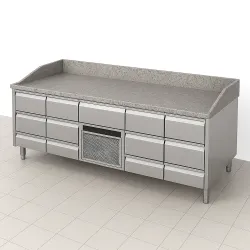
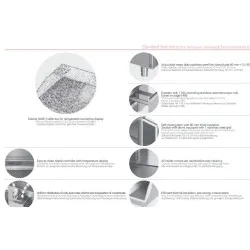
Article number: FM0-E424-213/70/90
A refrigerated worktable with a granite top combines a durable preparation surface with a chilled st..
Is available
5,841.80€
with VAT: 7,068.58€
Article number: BHS-Z-PIZZA-213/85/120
A pizza preparation table organises the worktop into zones for dough, toppings and finished pies. Th..
Is available
5,999.00€
with VAT: 7,258.79€