

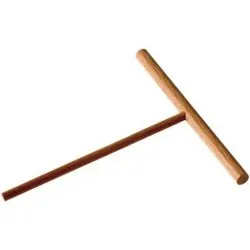
Article number: 772289
A wooden spreader smooths pancake batter into an even layer across the hot surface of a griddle or f..
Is available
1.99€
with VAT: 2.41€
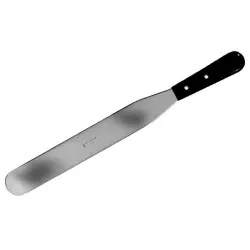
Article number: L00-90095
A crepe turner slides under thin, delicate batters without tearing them, then flips the disc in one ..
Is available
43.88€
with VAT: 53.09€
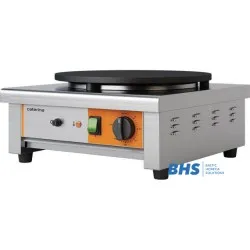
Article number: 772284
This electric pancake pan features a flat, shallow cooking surface with an embedded heating element...
Is available
232.20€
with VAT: 280.96€
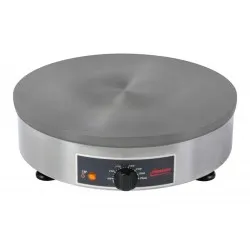
Article number: L05-40965
A pancake pan designed for continuous, even heat across a 400 mm cast iron plate, ensuring consisten..
Is available
566.28€
with VAT: 685.20€
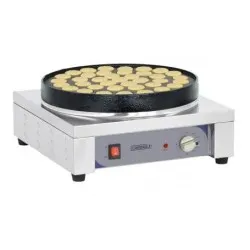
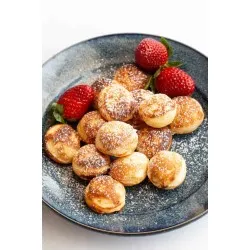
Article number: CAPF
A poffertje maker bakes small, fluffy Dutch pancakes by pouring batter into shallow circular recesse..
Is available
599.00€
with VAT: 724.79€
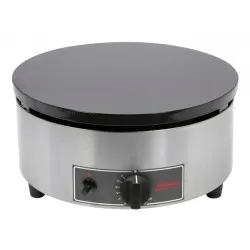
Article number: L05-40964
The Neumarker Gas pancake pan ECONOMIC (Article: L05-40964) is a professional-grade pancake pan desi..
Is available
687.96€
with VAT: 832.43€
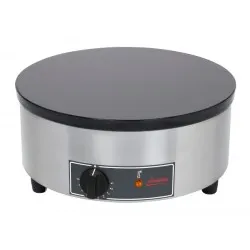
Article number: L05-40966
This professional pancake pan is built for high-volume production of thin, uniform crêpes. Heat is d..
Is available
694.98€
with VAT: 840.93€
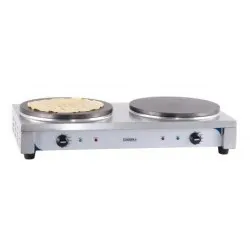
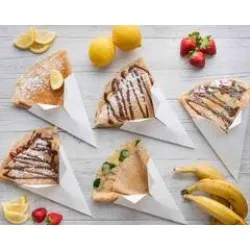
Article number: CCD35E
The Casselin CCD35E is a double electric crepe maker designed for preparing crepes. This appliance f..
Is available
829.00€
with VAT: 1,003.09€
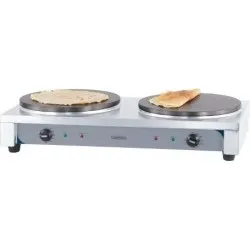
Article number: CCD40E
The Casselin CCD40E is a double electric crepe maker designed for professional use. This appliance f..
Is available
889.00€
with VAT: 1,075.69€
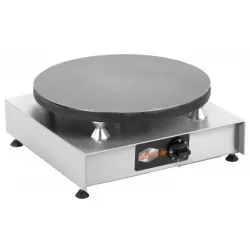
Article number: L12-40905
A pancake pan heats a flat, heavy baking plate to an even temperature across its entire surface. The..
Is available
892.71€
with VAT: 1,080.18€
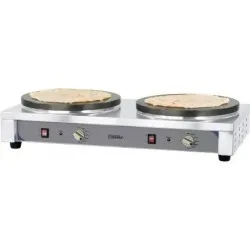
Article number: CCD40EP
This professional double electric crêpe maker features two heated cast iron plates, allowing simulta..
Is available
979.00€
with VAT: 1,184.59€
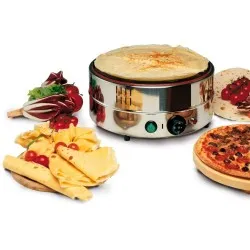
Article number: CR2082
This VEMA CR2082 is a ceramic crepes machine. It is listed in the catalogue under grills.
A crepes m..
Is available
1,089.00€
with VAT: 1,317.69€
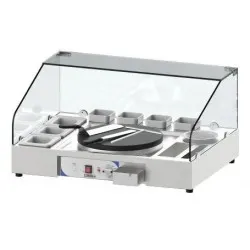
Article number: CPACC40E
This mobile crepe station integrates an electric griddle with essential serving tools in one stainle..
Is available
1,279.00€
with VAT: 1,547.59€
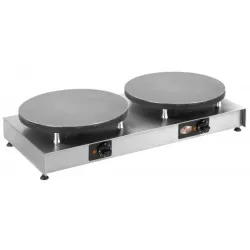
Article number: L12-40906
A pancake pan of the continuous-contact type, the Neumarker ACTIVE II transfers heat directly from t..
Is available
1,641.51€
with VAT: 1,986.23€
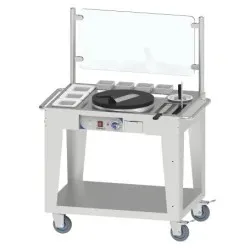
Article number: CSAC
The Casselin CSAC is a mobile stand crepe maker designed for professional use. This unit is construc..
Is available
1,699.00€
with VAT: 2,055.79€
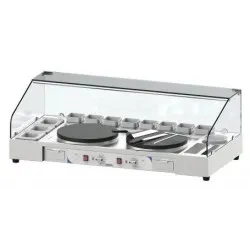
Article number: CPACCD40E
A double crepe maker serving station combines two electric crepe pans on a single worktop, allowing ..
Is available
1,729.00€
with VAT: 2,092.09€
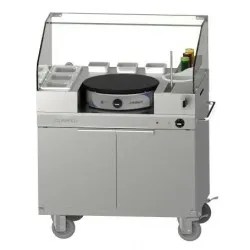
Article number: CCHCR40EA
A mobile creperie station on four wheels, this electric crepe maker trolley brings a complete workto..
Is available
1,789.00€
with VAT: 2,164.69€
-250x250w.webp "Serving and retail trolley ROCAM 042INCARE/B")
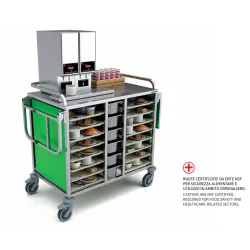
Article number: 042INCARE/B
The ROCAM B-CARE is a breakfast distribution trolley with article number 042INCARE/B. It has a fully..
Is available
1,799.00€
with VAT: 2,176.79€
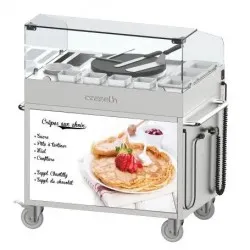
Article number: CCHCC40E
A mobile creperie workstation that rolls into place and begins service within minutes. The built-in ..
Is available
1,979.00€
with VAT: 2,394.59€
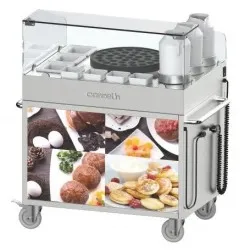
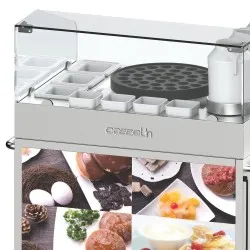
Article number: CCHPF
The Casselin CCHPF is a poffertje trolley for preparing and serving Dutch mini-pancakes.
This trolle..
Is available
2,059.00€
with VAT: 2,491.39€
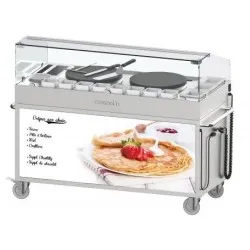
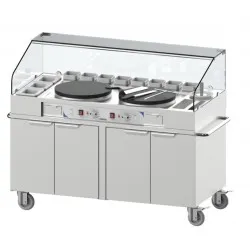
Article number: CCHCCD40E
A double electric crepe maker on a mobile trolley brings two 400 mm crepe pans directly to the work ..
Is available
2,779.00€
with VAT: 3,362.59€
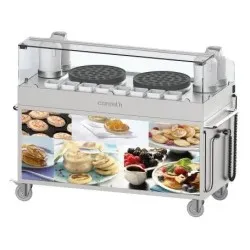
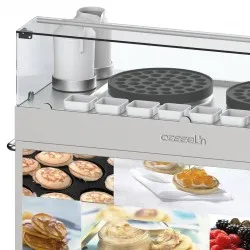
Article number: CCHPFD
A double poffertjes trolley brings two electric poffertjes pans together on a mobile stainless-steel..
Is available
3,179.00€
with VAT: 3,846.59€
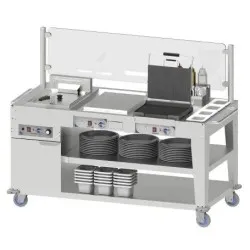
Article number: CCHMS
The Casselin multi-snack trolley, article CCHMS, is a piece of catering equipment designed for prepa..
Is available
4,999.00€
with VAT: 6,048.79€