


Kitchen accessories · Pots
Professional pots: boiling, stocks and sauces without scorching
A pot looks like the simplest thing in the kitchen until a sauce scorches, a stock turns cloudy or 50 litres of soup have to be carried across the kitchen. This article covers how to choose the shape, capacity and base of a pot for each job, how to boil, reduce and hold sauces, and why the right pot saves both energy and the chef's time.
- Which pot for which job
- How a pot conducts heat: base, material, shape
- Capacity: how many litres you need
- Boiling methods: from blanching to stock
- Sauces: mother sauces, reduction, emulsions
- Safety, hygiene and HACCP
- Pots in different kitchens
- Choosing and costing
- Pot and hob: setup and workstation
- Day to day: care, mistakes and one typical evening
- BHS service, maintenance and spare parts
- Models in our range
- Frequently asked questions
01 Which pot for which job
There is no "universal" pot in a professional kitchen. Each job has its own shape: a small pot with a long handle for sauce, a tall pot for stock, a low wide pot for braising and reducing, a pot with a tap for clear stock. The short answer, by type of work:
02 How a pot conducts heat: base, material, shape
The biggest difference between a cheap pot and a professional one is the base. A thin steel base heats in patches: right above the flame or induction coil the sauce scorches while the edges are still cold. A multi-layer encapsulated base (steel – aluminium – steel) spreads the heat across the whole area, and that is what all LUX, GREDIL and saucepans in our range have.
- Stainless steel AISI 304 (18/10) — neutral to acid and salt, easy to clean, dishwasher-safe; conducts heat poorly on its own, so it needs a multi-layer base; Best for: all jobs, HACCP kitchens
- Aluminium — heats fast and evenly, light; reacts with acidic food (tomatoes, wine, lemons), does not work on induction without a steel plate; Best for: pasta, potatoes, boiling water
- Copper — best heat conductivity and precise control; expensive, needs care; Best for: delicate sauces, pastry
- Enamelled steel or cast iron — holds heat, neutral surface; enamel can chip if knocked; Best for: stews, slow cooking
Induction: the magnet test and base diameter
An induction hob heats the pot base itself, so the base needs a ferromagnetic layer. The simplest test: a magnet sticks to the base. The second condition is diameter: if the base is smaller than the hob's minimum pan diameter (often around 12 cm), the hob does not "see" the pot. The smallest pots, such as Ø 120 mm, work best on a small zone or on gas. Our induction hobs range from 2 to 3.5 kW countertop models.
Shape: tall versus low
Capacity follows the formula V = π × r² × h. For example, Ø 240 mm and 200 mm high: 3.14 × 12² × 20 = 9,048 cm³ ≈ 9 l — exactly the LUX 9 l pot. Water evaporates more slowly in a tall pot, so it suits stock and long boiling. A low pot has a large evaporation surface: 1,018 cm² for Ø 360 mm versus 314 cm² for Ø 200 mm, i.e. 3.2 times more. A sauce reduces correspondingly faster.
03 Capacity: how many litres you need
Never fill a pot to the brim — you need room for foam and stirring. A practical guide: usable capacity ≈ 75–80 % of the nominal volume.
3.3 l
4.4 l
6.3 l
5 l
7.2 l
9 l
8 l
11.1 l
15.4 l
12.9 l
16.1 l
20.9 l
18.3 l
22.4 l
36.6 l
31.4 l
37.7 l
50.3 l
The table shows LUX range capacities. The largest pots are Ø 450 mm (57.3 and 71.6 l) and Ø 500 mm (62.8 and 98.2 l).
Portion guide
- Soup: 250–300 ml per portion. 120 portions need 36 l; at 80 % fill that means a pot of at least 45 l, i.e. 50.3 l.
- Sauce: 50–80 ml per portion. 100 portions need 8 l, but two 5 l pots are better — one held warm, one cooking.
- Pasta: 1 l of water per 100 g of pasta and about 10 g of salt per litre. 1 kg of pasta needs at least 10 l of water and a 12–15 l pot.
- Stock: bones and vegetables take up to half the pot, so 20 l of stock needs a 30–36 l pot.
04 Boiling methods: from blanching to stock
- Rapid boil — water moves and transfers heat fast; Temperature: about +100 °C; Pot: tall, lid on until boiling
- Simmer — only a few bubbles on the surface, stock stays clear; Temperature: +85…+95 °C; Pot: tall or with tap
- Blanching — briefly in boiling water, then iced water; Temperature: +100 °C; Pot: large pot, plenty of water
- Steaming — food above the water in an insert; Temperature: +100 °C steam; Pot: pot with colander insert and lid
- Braising — food partly covered in liquid, under a lid; Temperature: +85…+95 °C; Pot: low braising pot
- Reduction — liquid evaporates, flavour concentrates; Temperature: boiling; Pot: low, wide
- Bain-marie — gentle heat without direct flame; Temperature: +45…+65 °C; Pot: pot in a pot or bain-marie pan
Stock times
| Stock | Approximate time |
|---|---|
| Fish | 20–30 min — longer turns it bitter |
| Vegetable | 45–60 min |
| Chicken | 3–4 h |
| Beef or veal | 6–8 h; for a brown stock roast the bones in the oven first |
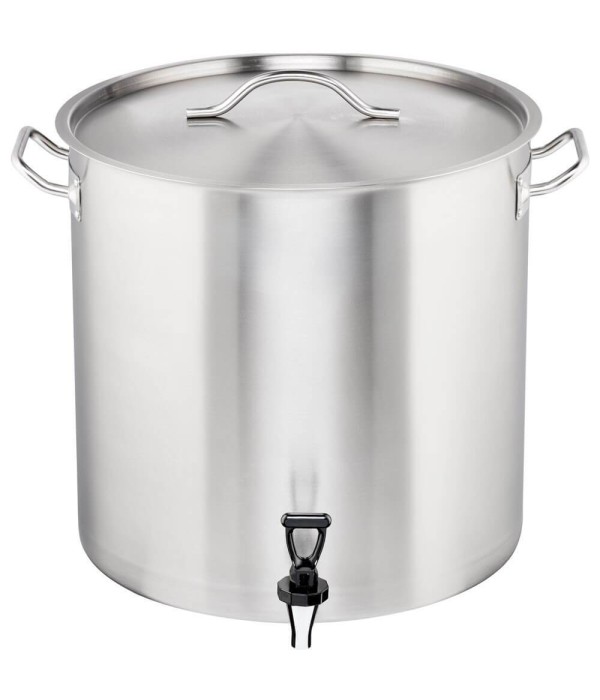
Start stock in cold water, bring it up slowly and skim the foam. After that, simmer only: a hard boil emulsifies fat and proteins and the stock turns cloudy. This is where a pot with a tap helps — clear stock is drawn off from the bottom without lifting the pot or stirring up sediment.
Pasta and vegetables with an insert
The Ø 30 cm pasta insert (4 sections) fits the LUX Ø 320 mm pot: each section can cook a different portion and be lifted out without draining the water. The water stays hot and the next portion boils in minutes. For large volumes use colanders with handles.
05 Sauces: mother sauces, reduction, emulsions
Classical cuisine has five mother sauces from which dozens of others are derived. Each needs its own pot and its own heat.
- Béchamel — milk + white roux (butter and flour 1:1); Pot: heavy-based saucepan, 2–5 l
- Velouté — light stock + blond roux; Pot: saucepan 3–5 l
- Espagnole / demi-glace — brown stock + brown roux, long reduction; Pot: tall pot for stock, low pot for reduction
- Tomato — tomatoes, vegetables, slow simmering; Pot: stainless steel only — acid reacts with aluminium
- Hollandaise — egg yolks + butter, an emulsion; Pot: bain-marie +60…+65 °C
Roux and scorching
Roux and milk sauces are the first to scorch. Two rules: a heavy multi-layer base and medium heat. Add hot roux to cool milk or the other way round — that way no lumps form. Stir with a flat wooden or silicone spatula that reaches the corner of the pot, where sauce scorches most often.
Reduction: width is speed
Evaporation is proportional to surface area. Reducing 2 litres of wine and stock to 0.5 l can take an hour in a Ø 200 mm pot, but about 20 minutes in a Ø 360 mm braising pot, because the surface is 3.2 times larger. No lid, even heat.
Emulsions and chocolate
Hollandaise and béarnaise split above +70 °C, so they are made over a bain-marie. Dark chocolate melts at +45…+50 °C — the HENDI 1 l bain-marie pan with water between its walls does this without risk. For a smooth sauce use a fine-mesh conical sieve (chinois), which catches lumps and spice particles.
Chef's recipe: béchamel for 1 litre
1 l of sauce · 15 minutes · allergens: milk, gluten
| Ingredient | Amount |
|---|---|
| Whole milk 3.2 % | 1 l |
| Butter | 60 g |
| Wheat flour | 60 g |
| Salt | ~6 g |
| Nutmeg, white pepper | to taste |
- Warm the milk to about +60 °C (do not boil).
- Melt the butter in a heavy-based saucepan, add the flour and cook for 2–3 minutes, stirring — the roux must not brown.
- Add the warm milk gradually, whisking constantly.
- Simmer for 8–10 minutes on low heat, stirring into the corners, until the floury taste is gone.
- Season and pass through a conical sieve.
06 Safety, hygiene and HACCP
A pot is a food-contact material, so it must be intended for contact with food, as required by the EU regulation on materials and articles in contact with food. All our stainless steel pots are marked as food-safe. Final temperatures and times are set by your HACCP plan; below are guide values used in practice.
In Ireland, food businesses register with the HSE Environmental Health Service, and FSAI publishes the national guidance. Inspectors check that cookware is clean, undamaged and food-safe, and that cooling and hot holding are covered by your food safety management system and actually followed. Pots with a cracked base or chipped enamel must be replaced.
07 Pots in different kitchens
- À la carte restaurant — 4–6 saucepans 0.5–5 l, 1–2 braising pots Ø 360, a 20–36 l tall pot for stock; Tip: one pot per sauce; stock in a pot with tap
- Café, bistro — 2 saucepans, 9–15 l pots for soup, a pasta pot with insert; Tip: GREDIL or LUX with lids — less evaporation
- Canteen, central kitchen — 50–100 l pots or boiling pans, colanders Ø 400–500; Tip: above 50 l a day — consider a boiling pan
- Catering, production — boiling pans 100–300 l, lidded pots for transport; Tip: fast cooling and labelling
When to move to a boiling pan
If you cook more than 50 l of soup, porridge or sauce every day, a boiling pan saves the cook's strength. For example, the GORT 50 l electric boiling pan (9.2 kW, 400 V) heats via a water jacket — milk and porridge do not burn, the tank fills itself with water, and the contents are drained through a 1½″ valve.
08 Choosing and costing
| Criterion | What to check |
|---|---|
| Base | multi-layer encapsulated, thick, flat |
| Hob | for induction — magnet and minimum diameter |
| Capacity | portions × serving ÷ 0.8 |
| Shape | tall for stock; low for braising and reducing |
| Handles | welded or riveted, stay cool; long handle for sauces |
| Lid | included or sold separately; by diameter |
| Cleaning | dishwasher-safe, no gaps at the handles |
A simple calculation: a bistro set
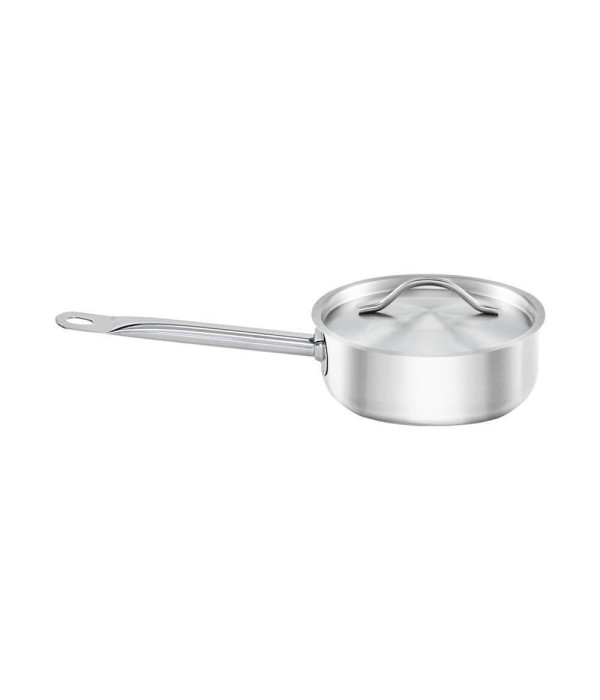
2 × €10.80
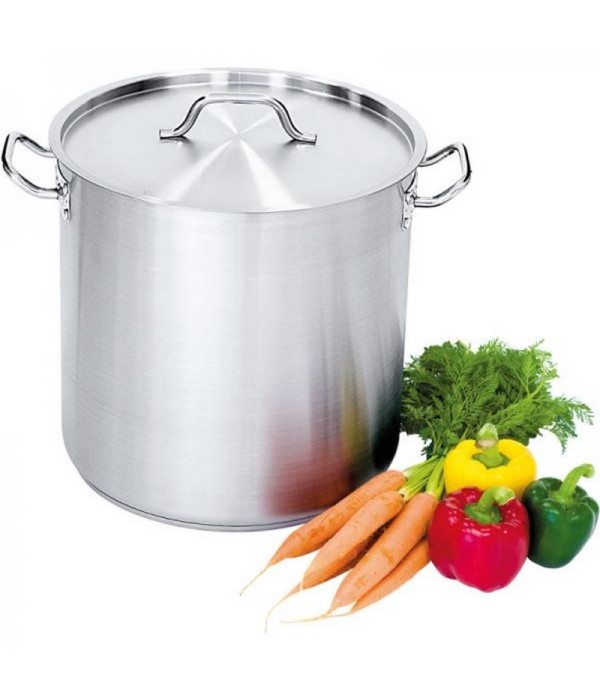
1 × €38.43
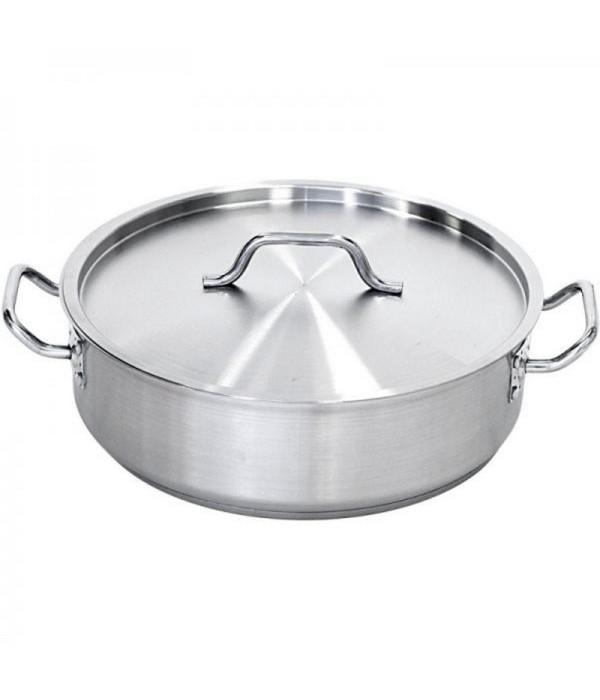
1 × €69.42
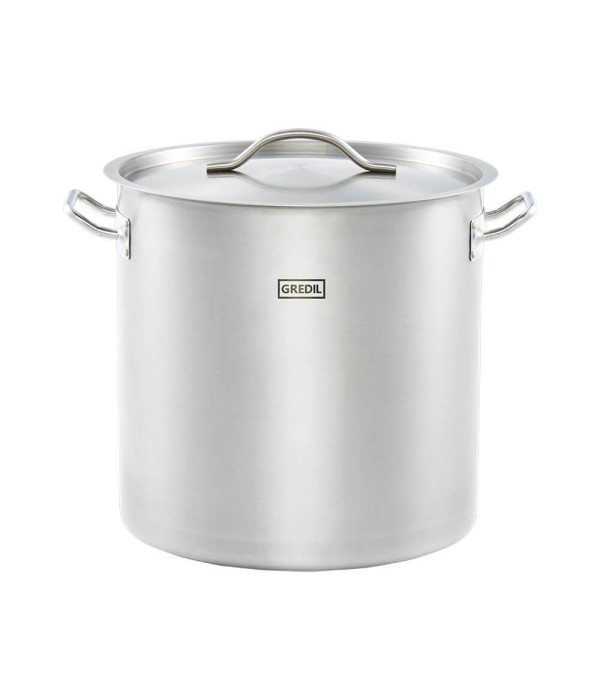
1 × €99.60
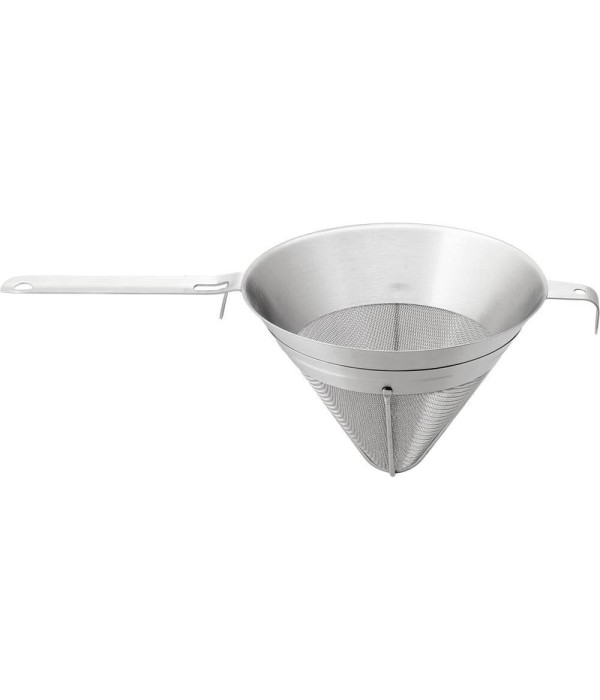
1 × €44.54
How long 20 litres take to boil
Heating 20 l of water from +10 to +100 °C takes 2.09 kWh. On a 3.5 kW induction hob (~85 % efficiency) that is ~42 minutes and ~€0.54 at €0.22/kWh. On a 7 kW gas burner (~40 % efficiency) it is ~45 minutes and ~€0.52 at €0.10/kWh. A lid and a base matched to the zone shorten the time further.
What boiling without a lid costs
Assume a stock simmers 4 hours a day. Without a lid about 1.5 l evaporates per hour, with a lid (ajar) about 0.3 l. Evaporating the extra 1.2 l takes 0.75 kWh per hour, i.e. ~€0.17 an hour and ~€199 a year (300 days). A Ø 360 mm lid at €23.94 pays for itself in ~144 hours — about 36 working days. Calculate with your own tariff.
09 Pot and hob: setup and workstation
- Base = zone. The pot base should match the burner or induction zone. The flame must not reach past the base — it heats the handles and walls, not the food.
- Large pots go low. Put 36–98 l pots on a low stove or a pot stand (400 mm high, welded stainless frame) so nobody has to lift a full pot to shoulder height.
- Power. Bringing 50 l to the boil takes 7–10 kW. A 3.5 kW countertop induction hob suits pots up to ~20 l; for larger ones use a gas stove with a powerful burner or a boiling pan.
- Boiling pan connections. An electric boiling pan needs 400 V, cold and hot water supply (e.g. 2 × G½″) and a floor drain at the outlet valve.
- Ventilation. Boiling produces a lot of steam — place the pot area under an extraction hood.
10 Day to day: care, mistakes and one typical evening
Care
- Before first use, wash with warm water and detergent to remove manufacturing oils.
- Add salt to water that is already boiling — salt grains on a cold base can cause pitting.
- Rainbow discoloration and white limescale spots come off with vinegar or citric acid.
- Do not use steel wool or chlorine-based products — they damage the surface.
- Do not heat an empty pot on induction or plunge a hot pot into cold water — the base can warp.
- Sauce scorches — thin base or too much heat; Solution: multi-layer base, medium heat, stir the corners
- Cloudy stock — boiling too hard, foam not skimmed; Solution: simmer at +85…+95 °C, draw off through the tap
- Metallic taste — acidic food in an aluminium pot; Solution: stainless steel
- Induction does not heat — base not magnetic or too small; Solution: magnet test, correct diameter
- Pasta sticks — too little water; Solution: 1 l per 100 g, a bigger pot
11 BHS service, maintenance and spare parts
Service workshop in Riga, parts across Europe
Pots don't break, but the hobs and boiling pans under them do. BHS has more than 20 years of experience servicing kitchen equipment: certified technicians, repairs in our workshop at Vagonu iela 23, Riga, and a spare parts warehouse in Riga with delivery across the Baltics and Europe.
What BHS service does
Spare parts for the hobs your pots stand on
| When | What to do |
|---|---|
| Daily | wash and dry pots; clean the hob surface |
| Weekly | check handles, lids and bases; on boiling pans check the valve and drain |
| Monthly | descale pots; check burners and flame |
| Once a year | technical service of hobs and boiling pans — easiest with a maintenance contract |
12 Models in our range
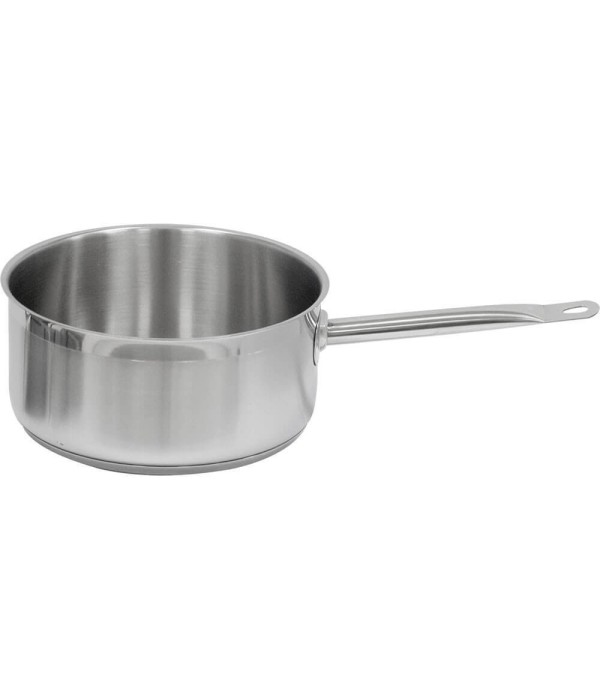 Stalgast saucepan with handle Ø 240 mm, 5 l
Ø 240 × 110 mm, encapsulated base, satin finish, induction
€24.57
Stalgast braising pot Ø 360 mm, 11.2 lØ 360 × 110 mm, low, with lid — for braising and reducing
€69.42
Prices excl. VAT, November 2026. 12-month warranty; after that — BHS service, maintenance contract and spare parts for hobs and boiling pans.
All potsPot lidsColanders and sievesBoiling pans
13 Frequently asked questions
How to tell if a pot works on induction
Hold a magnet to the base — if it sticks, the pot will heat on induction. Also check the hob's minimum pan diameter. Induction suitability is listed on each product page.
The best pot for sauces
A saucepan with a handle and a heavy multi-layer base, 2–5 l, such as the Stalgast Ø 240 mm. For reducing — a low, wide braising pot.
The difference between LUX and GREDIL
Both are stainless steel ranges with multi-layer bases and lids. Choose by the diameter and capacity you need and compare prices in both categories: LUX and GREDIL.
Buying a lid separately
Yes, pot lids are available from Ø 160 to 400 mm. Choose by pot diameter; pots without lids cost less when not every pot needs one.
When a boiling pan pays off
When you cook more than 50 l a day or often boil milk and porridge. A boiling pan heats via a water jacket, does not scorch and makes heavy volumes easier to handle.
Dishwasher-safe pots
Yes, stainless steel pots can go in the dishwasher. Aluminium pots are better washed by hand.
Does BHS repair and service hobs and boiling pans
Yes. BHS service repairs gas, electric and induction hobs and boiling pans in our Riga workshop and offers maintenance contracts. Customer service 24/7: +371 25 522 233.
Spare parts availability
Yes, parts for hobs and other equipment — burners, thermocouples, hot plates, fans — are in our spare parts warehouse in Riga, with delivery across the Baltics and Europe.
Put together the right pots for your kitchen
Tell us how many portions you cook, which sauces you make and on which hob — we will help you choose pots, lids and sieves, and then take care of maintenance, repairs and spare parts.
Temperatures and times are guide values used in practice; final values are set by your HACCP plan. Calculations are illustrative — use your own prices and tariffs. Characters in the story are fictional. Prices excl. VAT, November 2026.