More from this brand
Technical data
| Attributes | |
| ARTICLE | ST225111 |
| POWER | 2.4+1.6 |
| SIZE L/W/H | 1132/ 735/ 880 |
| VOLTAGE | 2x230/50Hz |
| Temperature | cupboard +30/ +70 |
| CAPACITY | 3 GN1/1-200 |
| COMPLETION | SS - stainless steel |
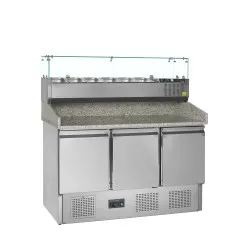
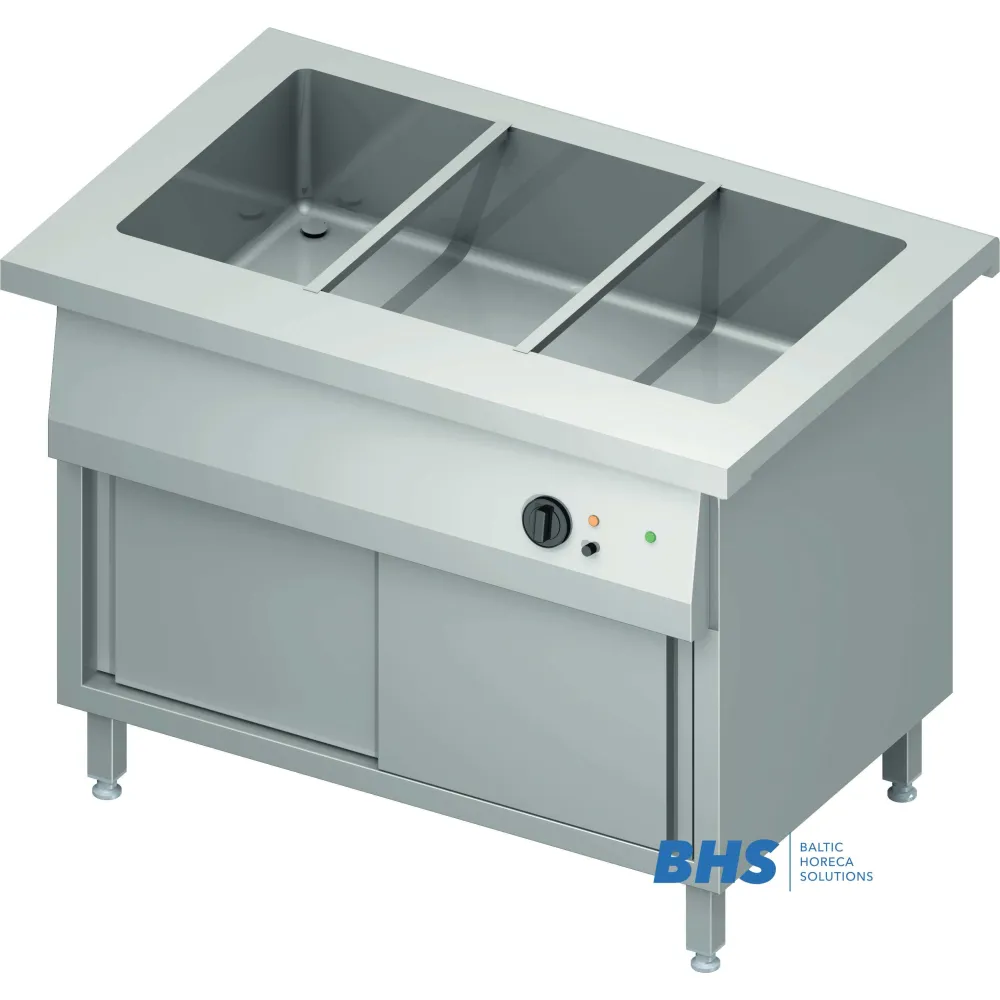
This chafing dish maintains food at safe chilled temperatures while offering a separate heated cupboard for plates or sauces. The refrigerated section circulates cold air around three gastronorm trays, ensuring consistent cooling without freezing. The lower heated cupboard uses a thermostatically controlled element to warm items to the desired serving temperature, reducing condensation and keeping crockery dry.
The operator places three GN1/1-200 trays into the upper refrigerated compartment and sets the holding temperature via the control panel. The refrigeration system activates automatically, regulated by an internal sensor. For the heated cupboard, a temperature between 30 °C and 70 °C is selected, with the element cycling to maintain the setting. Both chambers function independently, allowing simultaneous chilled and warm storage during service.
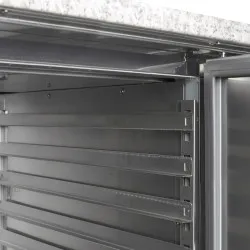
Constructed entirely from stainless steel, the unit includes exterior panels, interior liner, and tray runners. It requires two separate 230 V, 50 Hz electrical circuits—one for refrigeration and one for heating—each with its own protection. The dimensions of 1132 mm wide, 735 mm deep, and 880 mm high ensure compatibility with standard worktop heights and side-by-side placement with other gastronorm equipment.
Controls feature two thermostats: one for the refrigerated chamber and one for the heated cupboard. Each thermostat has a graduated dial marked in degrees Celsius, enabling precise temperature selection within the specified range. An indicator light confirms power to each circuit.
With a capacity of three GN1/1-200 trays, the unit is suitable for holding starters, salads, or desserts, while the heated cupboard provides space for plates or side dishes. The stainless steel construction resists corrosion from food acids and cleaning agents, and the smooth surfaces allow for quick wipe-downs between services.
Cleaning involves removing the trays, wiping the interior with a damp cloth and approved sanitiser, and drying surfaces to prevent water spots. The exterior is maintained with a stainless steel cleaner to preserve appearance and hygiene. Routine cleaning requires no disassembly.