More from this brand
Technical data
| Attributes | |
| ARTICLE | STAMP0TSA03 |
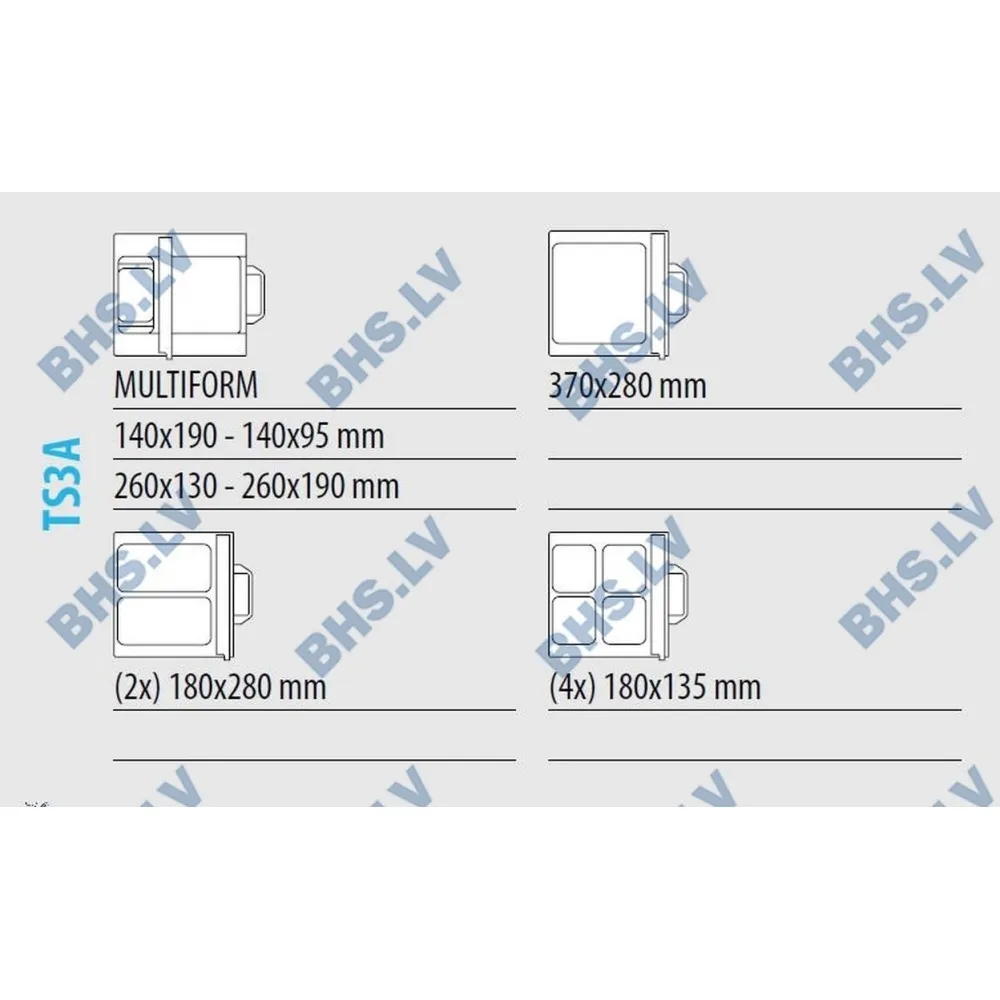
| SIZE L/W/H | 4 impressions: 180x135 |
| NOTES | TS3A |
A stamp mould shapes dough, pastry or confectionery by pressing the material into a rigid cavity. The mould's impressions give each piece a consistent size and pattern, eliminating hand-cutting and ensuring uniformity across batches. Once the material is pressed in, it holds its form during baking or chilling, producing finished items that match in weight, thickness and decoration. The operator places a sheet of dough or pastry over the mould, lowers a matching stamp or roller, and applies even pressure. After a brief dwell time the material takes the shape of the cavity. The operator then lifts the sheet and transfers the formed pieces to a tray or conveyor for the next stage—baking, proofing or freezing. The process repeats without re-cutting, speeding production while reducing waste. This FIMAR mould is constructed as a single block with four impressions, each measuring 180 mm by 135 mm. The block's flat base allows it to sit securely on a worktop or conveyor, and the raised edges of each impression prevent material from spilling over during pressing. Cleaning follows the parts named: the block and its impressions. After each use the mould is wiped to remove loose debris, then washed with warm water and a mild detergent. Stubborn residues are loosened with a soft brush or plastic scraper, avoiding metal tools that could scratch the surface. Once dry, the mould is stored flat to prevent warping and to keep the impressions free of dust. The TS3 A designation indicates the specific pattern and size of the four impressions. This single-cavity design ensures every impression is identical, eliminating the need to adjust settings between batches.