

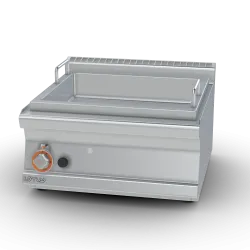
Article number: 16240650
The LOTUS BRT-66G is a professional gas multifunctional braising pan, also known as a bratt pan. It ..
Is available
1,769.00€
with VAT: 2,140.49€
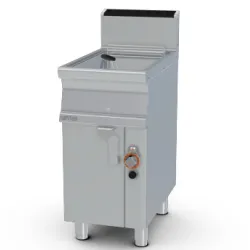
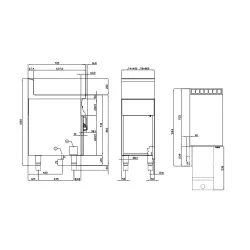
Article number: 08240453
A gas multifunction bratt pan combines the roles of a shallow fryer, griddle, braising pan and stock..
Is available
2,369.00€
with VAT: 2,866.49€
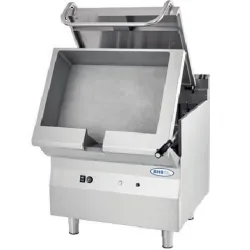
Article number: 9740030
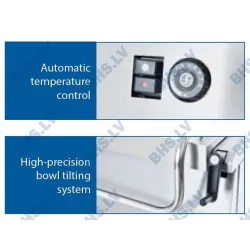
A bratt pan combines the functions of a deep fryer, a tilting skillet and a braising pan in one heav..
Is available
2,395.58€
with VAT: 2,898.65€
Article number: MBRG78A
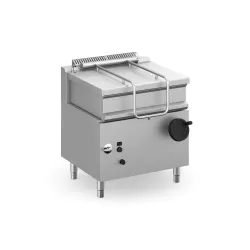
A tilting gas pan heats a shallow stainless-steel tank with a gas burner beneath, spreading heat eve..
Is available
2,888.00€
with VAT: 3,494.48€
/GP2151-080EV+S00(2)-250x250w.webp "Gas deep fryer BHS-G GP2151-080EV+S00")
/GP2151-080EV+S00(4)-250x250w.webp "Gas deep fryer BHS-G GP2151-080EV+S00")
Article number: GP2151-080EV+S00
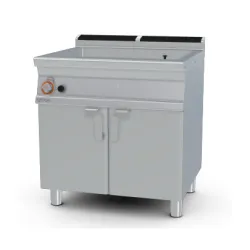
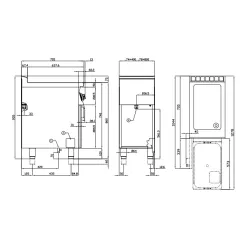
A gas deep pan heats a large volume of oil or liquid evenly across its base and walls, using a burne..
Is available
3,409.00€
with VAT: 4,124.89€
Article number: 08240853
A fixed bratt pan combines a shallow, tilting cooking surface with a powerful gas burner beneath, al..
Is available
3,659.00€
with VAT: 4,427.39€
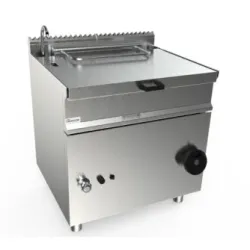
Article number: L7/BRGI50M
The CASTA L7/BRGI50M is a gas bratt pan designed for professional cooking.
A bratt pan operates as a..
Is available
3,689.00€
with VAT: 4,463.69€
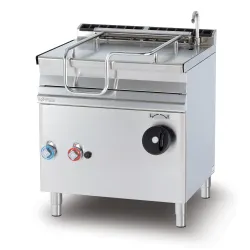
Article number: 08340850
This manual tilting bratt pan offers a deep, heated vessel that pivots for easy transfer of cooked f..
Is available
3,899.00€
with VAT: 4,717.79€
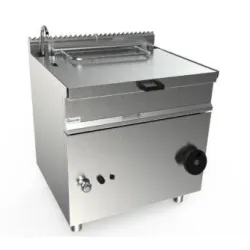
Article number: L9/BRGI80M
This appliance allows for a variety of cooking methods, including frying, braising, and stewing, by ..
Is available
4,099.00€
with VAT: 4,959.79€
Article number: LQ/BRGI80M
A gas tilting bratt pan combines the functions of a range, a fryer and a stockpot in one large, shal..
Is available
4,229.00€
with VAT: 5,117.09€
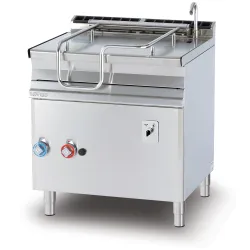
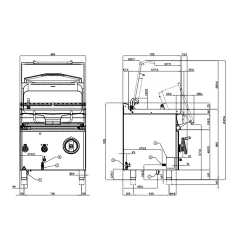
Article number: 08340851
A tilting bratt pan combines the functions of a range-top, a stockpot and a griddle in one heavy-dut..
Is available
4,299.00€
with VAT: 5,201.79€
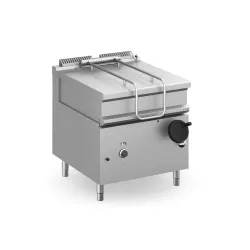
Article number: MBRG98A
The MBM MAGISTRA PLUS 900 is a gas-powered cooking pan with a substantial 80-litre capacity, identif..
Is available
4,329.00€
with VAT: 5,238.09€
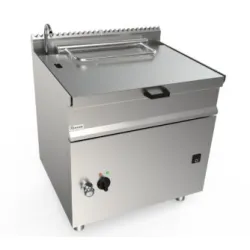
Article number: L7/BREI50A
The CASTA L7/BREI50 A is an electric cooking bratt pan designed for professional kitchens. This appl..
Is available
4,339.00€
with VAT: 5,250.19€
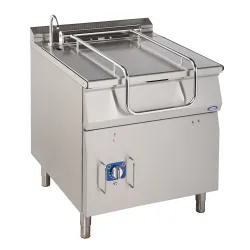
Article number: GP2261-080GV+S00
A gas tilting bratt pan combines the functions of a fryer, braising pan, griddle and stockpot in one..
Is available
4,789.00€
with VAT: 5,794.69€
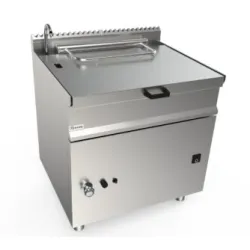
Article number: L7/BRGI50A
The CASTA L7/BRGI50 A is a gas tilting bratt pan from the LADY 700 series, featuring an electric til..
Is available
4,829.00€
with VAT: 5,843.09€
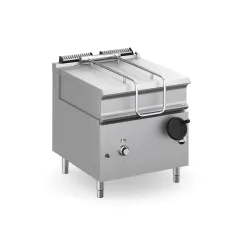
Article number: BRG98A
The MBM DOMINA PRO 900 is a gas pan, article number BRG98 A, from the DOMINA PRO 900 range.
A gas pa..
Is available
4,989.00€
with VAT: 6,036.69€
-250x250w.webp "Gas deep fryer CASTA LQ/BRGI80A")
Article number: LQ/BRGI80A
A tilting bratt pan combines a deep, flat cooking surface with the ability to pour liquids or transf..
Is available
5,099.00€
with VAT: 6,169.79€
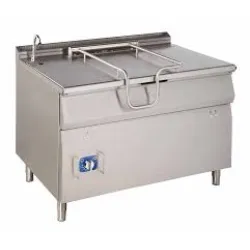
Article number: GP2261-120GV+S00
A tilting bratt pan heats a large, shallow stainless-steel vessel with gas burners beneath the pan f..
Is available
6,079.00€
with VAT: 7,355.59€
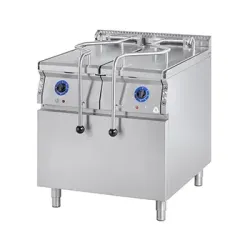
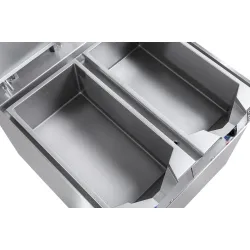
Article number: 20800000.10000
A tilting bratt pan combines the functions of a deep fryer, a braising pan and a stockpot into one l..
Is available
7,999.00€
with VAT: 9,678.79€
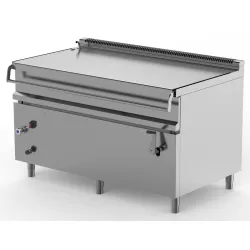
Article number: _BR1G150I
A tilting braising pan heats a large, shallow vat of liquid or fat with gas burners beneath the base..
Is available
8,089.00€
with VAT: 9,787.69€
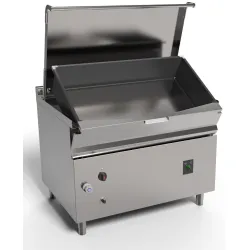
Article number: BR1G150I.M
The LOTUS BR1G150I.M is a 150-litre gas pan equipped with a motor.
A gas pan heats cooking liquid, s..
Is available
9,029.00€
with VAT: 10,925.09€
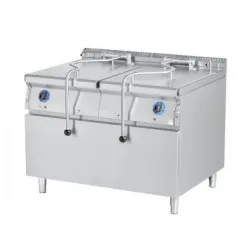
Article number: 20830000.10000
A tilting bratt pan combines the functions of a deep fryer, a braising pan and a stockpot in one hea..
Is available
9,449.00€
with VAT: 11,433.29€
Article number: BR1G200I
A tilting braising pan heats a large, shallow vat of liquid or fat with direct gas burners beneath t..
Is available
12,499.00€
with VAT: 15,123.79€
Article number: BR1G200I.M
A tilting braising pan heats a large, shallow vat of liquid or sauce evenly across its base and side..
Is available
13,259.00€
with VAT: 16,043.39€
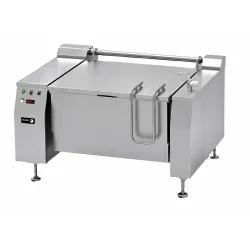
Article number: 19085078
A tilting bratt pan combines a deep, flat cooking surface with the ability to pour liquids or transf..
Is available
14,629.00€
with VAT: 17,701.09€
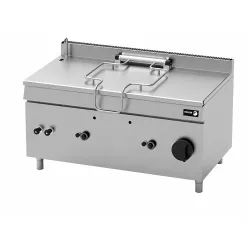
Article number: 19072688
This motorised bratt pan uses an electric actuator to tilt its cooking basin, eliminating manual eff..
Is available
15,289.00€
with VAT: 18,499.69€
Article number: 19079430
This motorised gas bratt pan features a deep, flat cooking surface heated directly by gas burners. T..
Is available
22,349.00€
with VAT: 27,042.29€
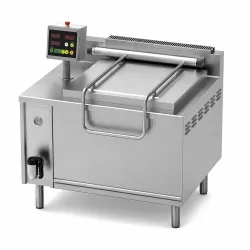
Article number: 19084248
A bratt pan combines a deep, tilting cooking vessel with direct heat to braise, boil, fry or stew la..
Is available
27,889.00€
with VAT: 33,745.69€
Article number: 19084249
A bratt pan tilts and braises in the same vessel, replacing separate hobs and ovens with a single he..
Is available
35,479.00€
with VAT: 42,929.59€
Article number: 19085080
This tilting bratt pan features a deep cooking vessel paired with a hydraulic system, allowing effor..
Is available
40,899.00€
with VAT: 49,487.79€
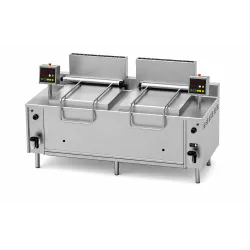
Article number: 19084254
This professional gas bratt pan features two separate 132-litre tanks, enabling the preparation of d..
Is available
53,729.00€
with VAT: 65,012.09€
Article number: 19085082
A tilting bratt pan combines the functions of a fryer, braising pan, griddle and stockpot in a singl..
Is available
56,399.00€
with VAT: 68,242.79€
Article number: 19084255
A bratt pan combines the functions of a tilting braising pan, a shallow fryer and a stock pot in one..
Is available
69,879.00€
with VAT: 84,553.59€
Article number: 19085083
A tilting bratt pan combines a deep, flat cooking surface with the ability to pour liquids or transf..
Is available
71,799.00€
with VAT: 86,876.79€