

-550x550w.webp)

-550x550w.webp)




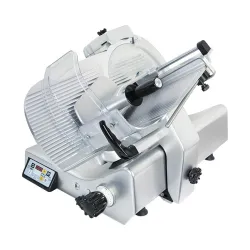
Article number: Kolossal 330 IK SA
A gravity-feed slicer draws each slice downward by its own weight, eliminating the need to press the..
Is available
0.00€
with VAT: 0.00€
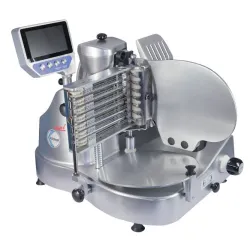
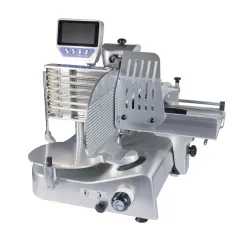
Article number: 330 VK FA DUAL
Slicer 330 VK FA DUAL is a professional fully automatic slicer that can also be operated in manual m..
Is available
0.00€
with VAT: 0.00€
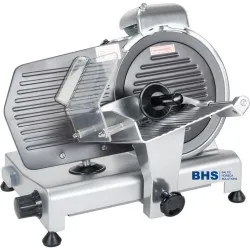

Article number: 722221
A slicing machine divides food into even slices by drawing a blade across the product while it is he..
Is available
418.50€
with VAT: 506.39€
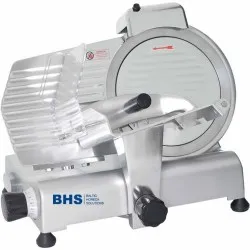

Article number: 722255
The operating principle of a slicing machine involves a rotating blade that cuts food placed on a mo..
Is available
424.58€
with VAT: 513.74€
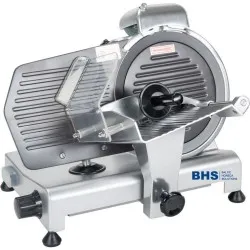

Article number: 722252
A slicing machine drives a circular blade at a steady speed, letting the operator feed food across t..
Is available
442.13€
with VAT: 534.98€
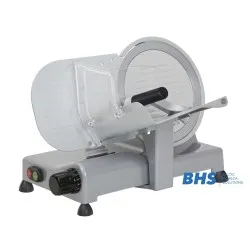
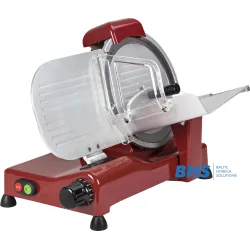
Article number: ECO220
A slicer cuts food into even slices by drawing a blade across the product while it is held steady ag..
Is available
499.00€
with VAT: 603.79€
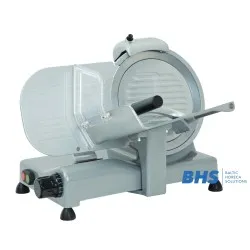
Article number: ECO250
A manual slicer built for controlled, consistent cuts of meats, cheeses and vegetables without motor..
Is available
559.00€
with VAT: 676.39€
Article number: AFG220
A slicer of this type uses a circular blade that spins at a steady speed, driven by an electric moto..
Is available
629.00€
with VAT: 761.09€
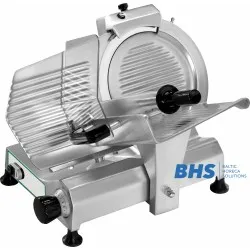
Article number: H220N
A manual food slicer built for controlled, uniform slices from a 220 mm rotating blade. The blade tu..
Is available
639.00€
with VAT: 773.19€
Article number: H250N
The FIMAR Slicer H250N is a type of slicer designed for professional kitchen use.
Slicers operate by..
Is available
759.00€
with VAT: 918.39€
Article number: H275N
This manual food slicer features a rotating circular blade for cutting even slices from meat, cheese..
Is available
799.00€
with VAT: 966.79€
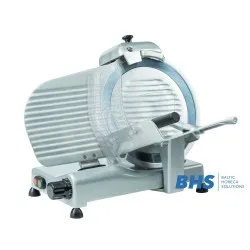
Article number: ECO300
A manual food slicer built for consistent, even slices of meats, cheeses and vegetables without moto..
Is available
819.00€
with VAT: 990.99€
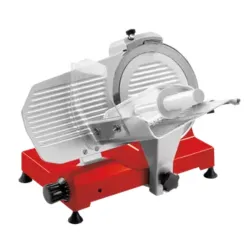
Article number: A14DB01057
It uses a rotating circular blade against the food product, advanced by a carriage. An electric moto..
Is available
839.00€
with VAT: 1,015.19€
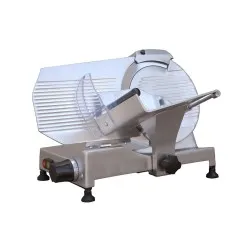
Article number: AFG275
A 275 mm rotary slicer built for continuous service in commercial kitchens, the SAVIOLI AFG275 conve..
Is available
869.00€
with VAT: 1,051.49€
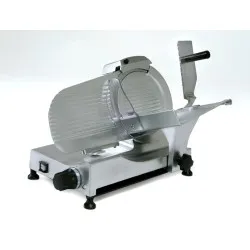
Article number: AFG250
This SAVIOLI slicing machine, article AFG250, is designed for professional food preparation.
The ope..
Is available
879.00€
with VAT: 1,063.59€
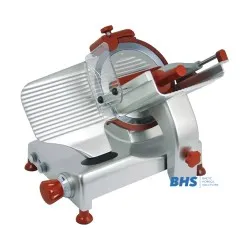
Article number: 250IX
A circular blade of 250 mm diameter slices deli meats, cheeses, vegetables and cooked foods without ..
Is available
899.00€
with VAT: 1,087.79€
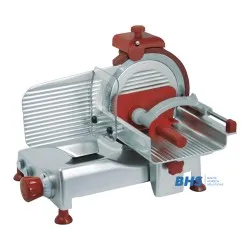
Article number: 250VX-VE
A slicer cuts food into even slices by moving a circular blade against a carriage that holds the pro..
Is available
949.00€
with VAT: 1,148.29€
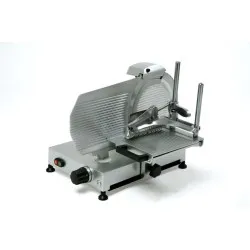
Article number: AFV275
A food slicer drives a circular blade at a steady speed, using a motor and belt to turn the cut into..
Is available
999.00€
with VAT: 1,208.79€
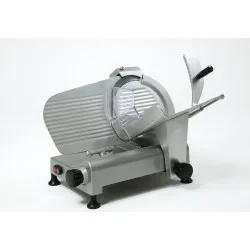
Article number: AFG300
A food slicer drives a circular blade at a steady speed, converting motor power into a clean cut wit..
Is available
1,099.00€
with VAT: 1,329.79€
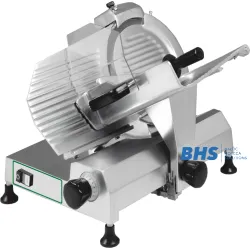
Article number: H300N
A gravity-feed slicer drives the product carriage past a rotating circular blade, letting gravity pr..
Is available
1,119.00€
with VAT: 1,353.99€
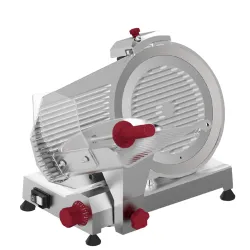
Article number: A14DB01058
The PIZZA GROUP PARMA 300_G is a slicer designed for professional use, specifically listed in the ca..
Is available
1,199.00€
with VAT: 1,450.79€
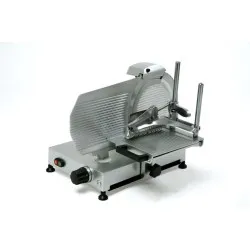
Article number: AFV300
The SAVIOLI AFV300 is a professional slicer designed for food preparation. This machine features an ..
Is available
1,209.00€
with VAT: 1,462.89€
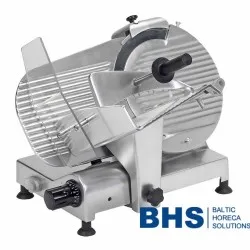
Article number: AFG330
A gravity slicer uses the weight of the food itself to press it against a spinning circular blade. T..
Is available
1,252.00€
with VAT: 1,514.92€
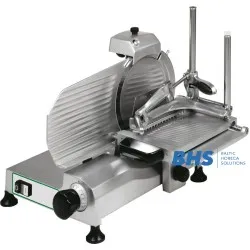
Article number: V250
A vertical slicer uses a rotating circular blade to cut food held against a vertical carriage. The b..
Is available
1,259.00€
with VAT: 1,523.39€
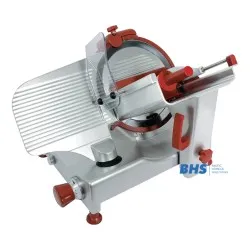
Article number: 300IX
The MANCONI Slicer 300IX is a professional-grade slicer designed for a variety of food preparation t..
Is available
1,279.00€
with VAT: 1,547.59€
Article number: VR300
A vertical slicer uses a circular blade rotating at high speed to cut through food placed against a ..
Is available
1,359.00€
with VAT: 1,644.39€
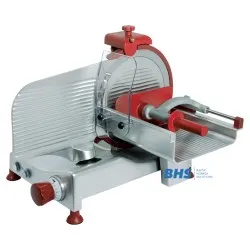
Article number: 300VX-VE
The MANCONI Slicer 300VX-VE is a professional slicer designed for the precise cutting of fresh meat...
Is available
1,369.00€
with VAT: 1,656.49€
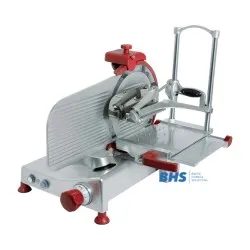
Article number: 300VX-BVC
The MANCONI 300VX-BVC is a professional slicer designed for food preparation.
This type of slicer op..
Is available
1,459.00€
with VAT: 1,765.39€
Article number: H330
A gravity-feed slicer uses a circular blade to cut through meat, cheese, vegetables and bread withou..
Is available
1,539.00€
with VAT: 1,862.19€
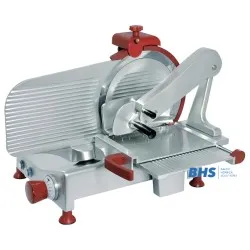
Article number: 300VX-BV
The MANCONI Slicer 300VX-BV is a type of slicer designed for professional food preparation.
This app..
Is available
1,549.00€
with VAT: 1,874.29€
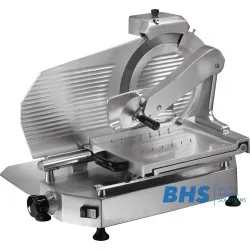
Article number: K300
A gravity-feed slicer cuts whole joints, cured meats and firm vegetables by drawing the product acro..
Is available
1,629.00€
with VAT: 1,971.09€
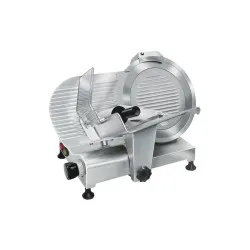
Article number: AFG350
A motor-driven circular blade slices food by rotating at a steady speed against an adjustable fence...
Is available
1,655.00€
with VAT: 2,002.55€
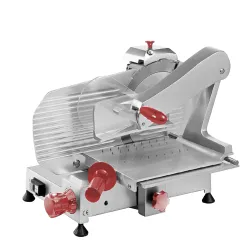
Article number: A14DB01060
The PARMA 300_V slicer features a 300 mm circular blade designed for cutting meat and sausage. An ad..
Is available
1,699.00€
with VAT: 2,055.79€
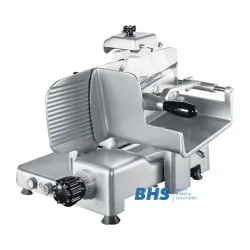
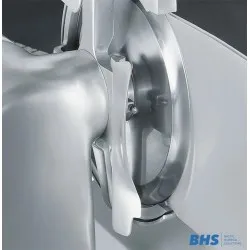
Article number: 250-VK-VE
The MANCONI Slicer 250VK-VE is a professional slicer designed for cutting deli items and fresh meat...
Is available
1,969.00€
with VAT: 2,382.49€
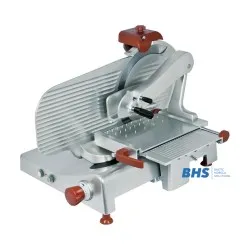
Article number: 350VX-BV
A gravity-fed slicer draws each slice from the weight of the meat itself, letting the blade cut with..
Is available
1,999.00€
with VAT: 2,418.79€
Article number: AFV330
The SAVIOLI AFV330 is a professional slicer designed for a variety of food preparation tasks. This s..
Is available
1,999.00€
with VAT: 2,418.79€
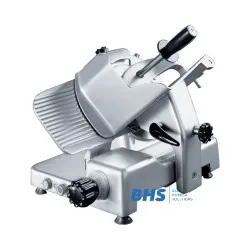
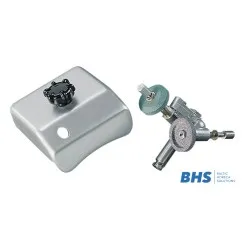
Article number: 250IK
The MANCONI Slicer 250IK is a professional-grade slicer designed for a variety of food preparation t..
Is available
2,009.00€
with VAT: 2,430.89€
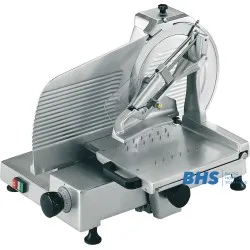
Article number: V330
The FIMAR V330 is a vertical slicer designed for professional food preparation. This appliance opera..
Is available
2,019.00€
with VAT: 2,442.99€
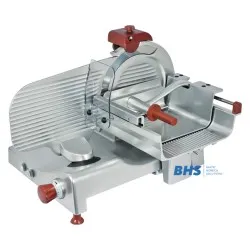
Article number: 350VX-TC
The MANCONI Slicer 300VX-TC is a type of slicer designed for the professional catering environment. ..
Is available
2,119.00€
with VAT: 2,563.99€
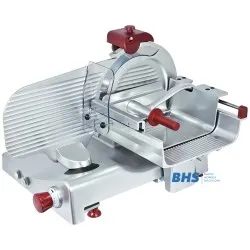
Article number: 370VX-TC
The MANCONI Slicer 370VX-TC is a professional slicing machine designed for versatility in food prepa..
Is available
2,149.00€
with VAT: 2,600.29€
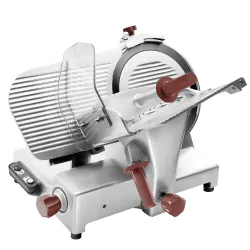
Article number: A14DB01059
A circular slicer uses a rotating blade and fixed carriage to slice food cleanly without crushing. T..
Is available
2,159.00€
with VAT: 2,612.39€
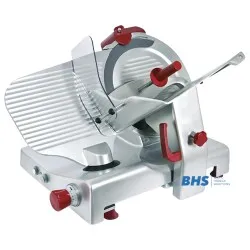
Article number: 370IX
This appliance is capable of cutting a wide range of products, including deli meats, bread, cheese, ..
Is available
2,199.00€
with VAT: 2,660.79€
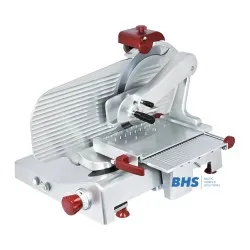
Article number: 370VX-BV
Its primary function is to precisely slice raw ham and all types of delicatessen products, including..
Is available
2,249.00€
with VAT: 2,721.29€
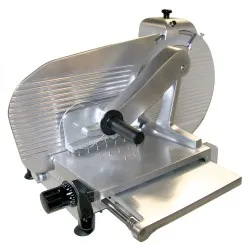

Article number: AFV350
A food slicer drives a circular blade at a steady speed to cut consistent slices from firm ingredien..
Is available
2,279.00€
with VAT: 2,757.59€
Article number: AFV350C
A motor-driven circular blade slices fresh meat into even portions without crushing fibres or tearin..
Is available
2,297.00€
with VAT: 2,779.37€
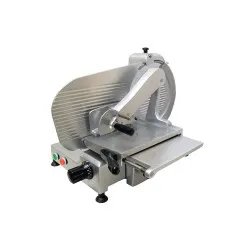
Article number: AFV370
The SAVIOLI D-370 mm WSAV-AFV370 is a professional slicer designed for consistent food preparation.
..
Is available
2,349.00€
with VAT: 2,842.29€
-250x250w.webp "Slicer SAVIOLI AFV370C")
Article number: AFV370C
A professional meat slicer built for high-volume slicing of fresh meat, charcuterie and firm cheeses..
Is available
2,369.00€
with VAT: 2,866.49€
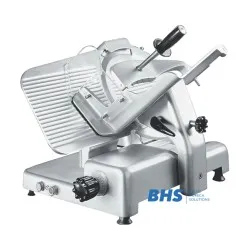
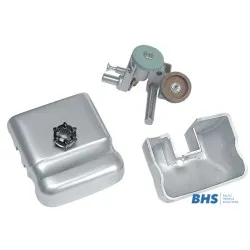
Article number: 300IK
Its compact and flexible design fits various kitchen environments.
The slicer operates with a rotati..
Is available
2,479.00€
with VAT: 2,999.59€
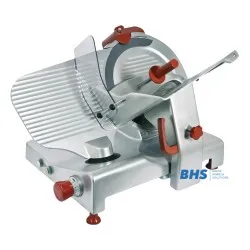
Article number: 350IX
The MANCONI Slicer 350IX is a professional-grade slicer designed for a variety of food preparation t..
Is available
2,499.00€
with VAT: 3,023.79€
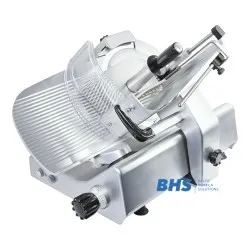
Article number: 330IK
The MANCONI Slicer 330IK is a professional slicer designed for various food preparation tasks.
The s..
Is available
2,589.00€
with VAT: 3,132.69€
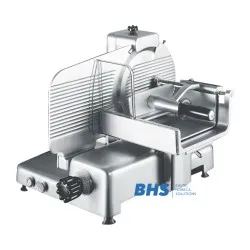
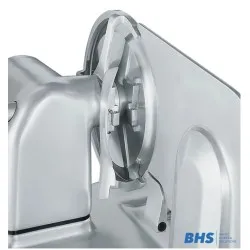
Article number: 300VK-VE
A circular blade of 300 mm diameter spins at a constant speed, driven by an electric motor. The oper..
Is available
2,609.00€
with VAT: 3,156.89€
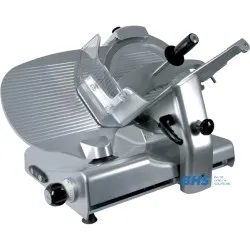
Article number: 350IK-Dual
The MANCONI Slicer 350IK-D, article number 350IK-Dual, is a professional slicer. It is suitable for ..
Is available
2,699.00€
with VAT: 3,265.79€
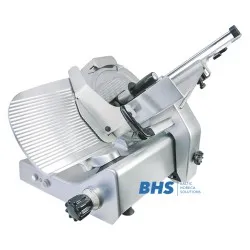
Article number: 330IK-US
The MANCONI Slicer 330IK-US is a professional slicing machine designed for the precise cutting of va..
Is available
2,819.00€
with VAT: 3,410.99€
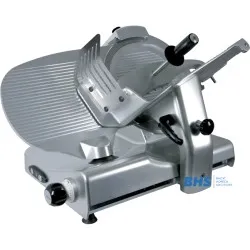
Article number: 370IK-Dual
The MANCONI Slicer 370IK-D, article number 370IK-Dual, is a professional slicing machine. This slice..
Is available
2,849.00€
with VAT: 3,447.29€
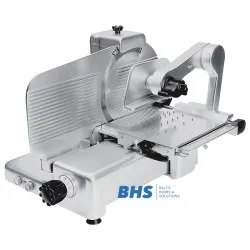
Article number: 300VK-BV
The MANCONI 300VK-BV is a vertical slicer designed for professional use.
This type of slicer operate..
Is available
2,909.00€
with VAT: 3,519.89€
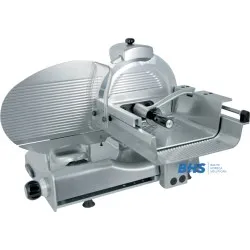
Article number: 350VK-TC-Dual
The MANCONI Slicer 350VK-TC-D, article number 350VK-TC-Dual, is a slicer designed for cutting fresh ..
Is available
2,989.00€
with VAT: 3,616.69€
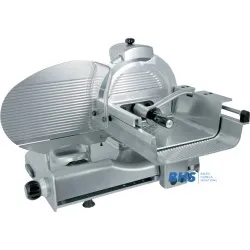
Article number: 370VK-TC-Dual
A slicer built for fresh meat divides whole cuts into even slices without tearing or crushing the fi..
Is available
3,099.00€
with VAT: 3,749.79€
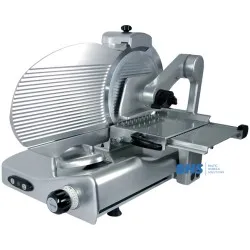
Article number: 350VK-BV-Dual
A slicer built for deli meats and raw ham, the MANCONI 350VK-BV-Dual uses a circular blade to cut co..
Is available
3,099.00€
with VAT: 3,749.79€
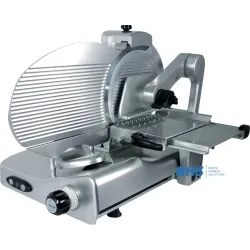
Article number: 370VK-BV-Dual
A circular blade of 370 mm diameter slices deli meats and raw ham without tearing the fibres. The bl..
Is available
3,199.00€
with VAT: 3,870.79€
Article number: 370VK-TC-Dual-Big
A 370 mm rotary blade slices fresh meat into even portions without tearing the fibres. The blade spi..
Is available
3,299.00€
with VAT: 3,991.79€
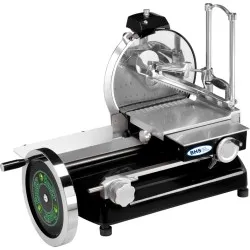
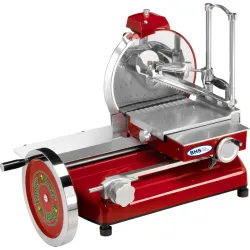
Article number: VV300
The FIMAR Slicer VV300 Volano is a slicer vv.
This slicer operates using a rotating blade. The opera..
Is available
3,619.00€
with VAT: 4,378.99€
Article number: VV350
The FIMAR Slicer VV350 Volano is a professional-grade slicer designed for a variety of applications...
Is available
6,029.00€
with VAT: 7,295.09€