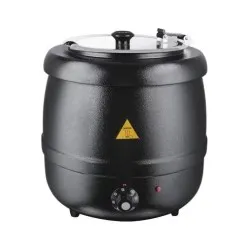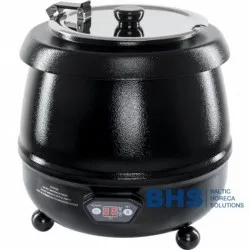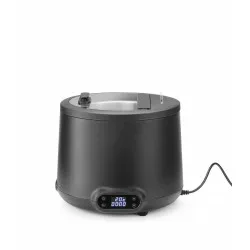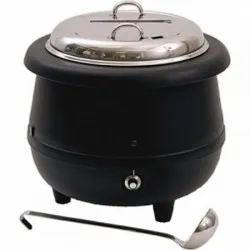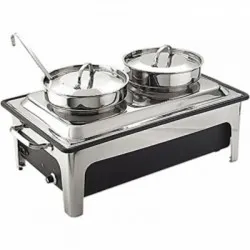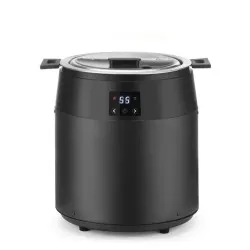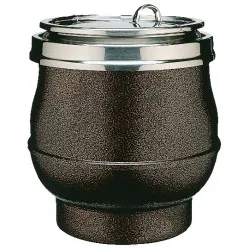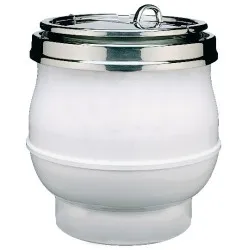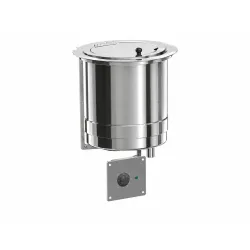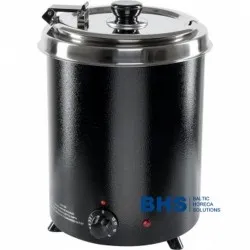
Electric soup kettles are professional, freestanding or built-in electric kettles for preparing large volumes of soups, porridge, sauces and sautés in restaurants, public catering canteens, hotels, cafés and other HoReCa businesses across Europe. An electric soup kettle allows simultaneous preparation of large quantities with even, controlled heating that prevents burning and ensures consistent product quality. Unlike stovetop kettles, electric soup kettles are equipped with a built-in thermostat and a stainless-steel body, making them suitable for intensive daily use in the HoReCa environment. BHS offers electric soup kettles as part of its Chafing Dishes and Accessories range and a wide selection of professional kitchen accessories for HoReCa businesses across Europe.
BHS specialists help select the most suitable electric soup kettle capacity and power based on the business’s needs. Also explore soup kettles, electric chafing dishes and chafing dish heaters.
Electric soup kettles are essential production equipment in restaurant and canteen kitchens. Combined with precise thermoregulation, large capacity and a stainless-steel construction, they ensure convenient and efficient preparation of large volumes of soup throughout the day. A properly selected soup kettle reduces cooking time and energy consumption while maintaining consistent food quality.
Types and capacities of electric soup kettles
Professional electric soup kettles are available in a wide range of capacities and various construction options to suit the business’s volume. Smaller kettles (10–20 l) are suitable for cafés, small canteens and restaurants with a limited soup menu or a changing menu. Medium-capacity kettles (20–40 l) are the standard size for medium-sized restaurants and canteens with a daily soup offering. Large kettles (40–80 l) are designed for high-capacity soup preparation in bakeries, school canteens and industrial kitchen businesses. Kettles with a mixer feature an automatic or manual stirring mechanism for even heating and to prevent burning. Tilting kettles are equipped with a tilting mechanism for easy pouring of the prepared product in large-volume systems. Also explore soup kettles.
Thermoregulation and heating efficiency
Professional electric soup kettle thermoregulation is the key parameter for consistent product preparation and energy saving. The built-in thermostat ensures precise temperature maintenance within a set range, preventing overcooking and deterioration of product quality. Double-wall heating (double-wall construction) — a water jacket double-wall system ensures more even heat transfer without the risk of burning. Electric power — typical power ranges from 3 kW for smaller models to 9–15 kW for large kettles; energy-efficient models with an insulated body reduce energy loss. Heating speed — an electric kettle heats water to boiling in 20–35 minutes, depending on capacity and power. Heat retention — after reaching boiling, the thermostatic mode maintains the soup temperature at 80–95°C. Also explore electric chafing dishes.
Construction and hygiene
The construction of professional electric soup kettles is based on materials and hygiene standards suitable for the food industry. Stainless steel — AISI 304 or 316 stainless steel for the inner tank provides a HACCP compliant food-contact surface. Drain valve — a bottom valve for easy emptying of the kettle after cooking ensures convenient cleaning without manual emptying. Smooth surfaces — rounded corners and a smooth stainless-steel interior make manual cleaning easier. Lid — a tightly sealable or ventilated lid regulates steam release and reduces heat loss. Legs or stand — adjustable legs or a special stand allow height adjustment and stability of the kettle. Also explore chafing dish heaters.
HoReCa usage scenarios
School canteen or company cafeteria — an electric soup kettle with a 40–60 l capacity ensures daily preparation of large volumes of soup for hundreds of portions with minimal labour input. Restaurant with a changing seasonal soup menu — several electric soup kettles for simultaneous preparation of different soups, each with its own temperature setting to meet various recipe requirements. Hotel kitchen with a breakfast buffet — an electric soup kettle with a heat retention function ensures hot soup is available throughout breakfast service.
Frequently asked questions
What capacity should be chosen for a restaurant? For a restaurant with 50–80 seats, a 20–30 l kettle is sufficient for the daily soup menu. Contact BHS for consultations. Explore soup kettles.
Can the electric soup kettle tank be washed in a dishwasher? Mostly no — the kettle body is not removable; cleaning is done in place with hot water and detergent.
Why choose BHS?
BHS – Baltic HoReCa Solutions supplies professional equipment for restaurants, cafés, hotels and canteens: more than 20,000 products from many manufacturers. Our specialists help you choose the right equipment and spare parts for your kitchen or bar.
Delivery
We deliver across the European Union. Delivery time and cost depend on the order volume and destination — contact the BHS team for an exact price and lead time.