More from this brand
Technical data
| Attributes | |
| ARTICLE | L00-70350 |
| POWER | 9 |
| SIZE L/W/H | 308/ 580/ 445 |
| VOLTAGE | 400 |
| Temperature | thermostat +35/ +85 |
| WEIGHT | 30 |
| CAPACITY | 100 L/h |
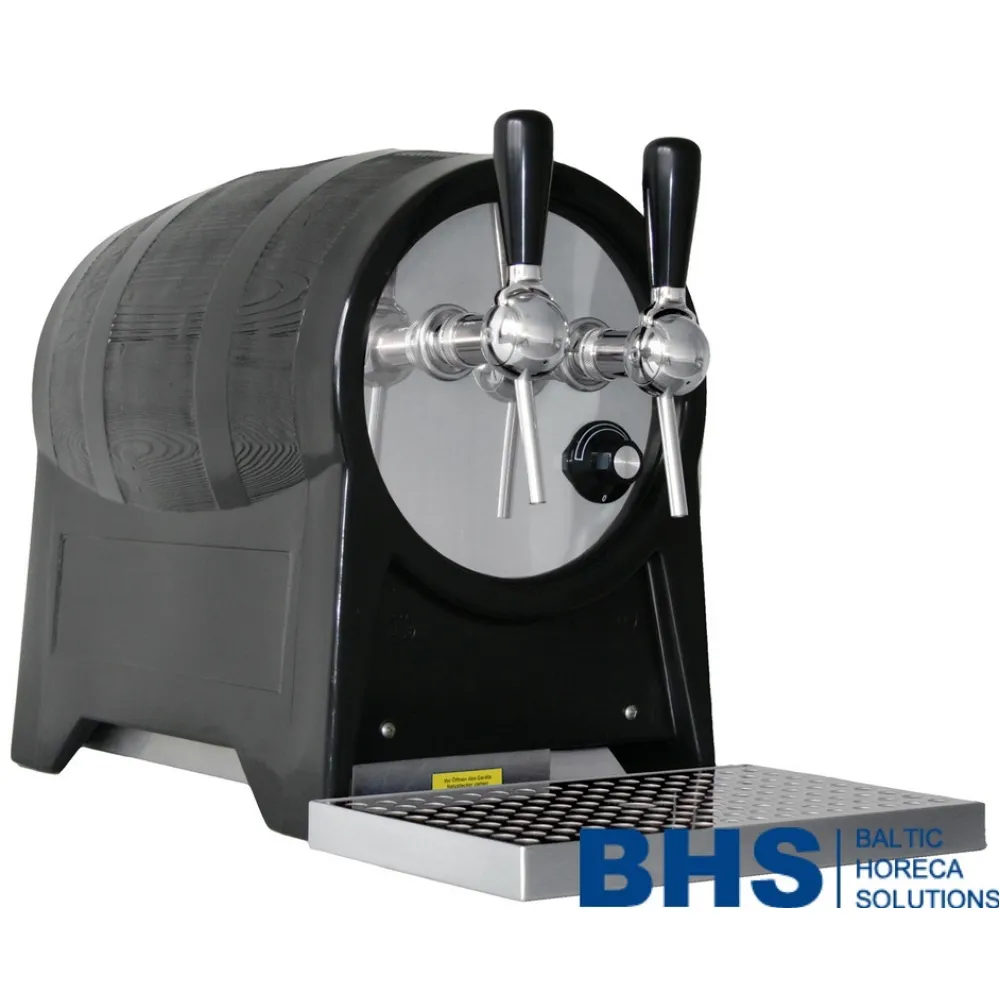
A hot wine barrel keeps mulled wine, cider or punch at serving temperature without scorching or boiling. It circulates the liquid through a heating element and back into the insulated vat, so every glass is drawn at the same warmth. The process is continuous: the operator fills the vat, sets the thermostat and leaves the unit to maintain the chosen temperature while the tap dispenses cup after cup. To use the barrel, the operator connects it to a 400 V three-phase supply. The vat is filled with the prepared drink, the lid closed and the thermostat dial turned to the desired setting between 35 °C and 85 °C. Once the liquid reaches temperature, the unit holds it there, compensating for heat lost through the tap or the sides. The tap is opened by hand, and the flow rate is controlled by the tap itself, not by the heating cycle. The construction is stainless steel throughout, chosen for hygiene and resistance to acidic drinks. The 30 kg weight keeps the barrel stable on a worktop or trolley, while the compact footprint of 308 mm depth, 580 mm width and 445 mm height fits under standard shelving or on a mobile stand. The 9 kW power rating requires a dedicated three-phase circuit, which is typical for professional beverage heaters of this output. The thermostat control adjusts the temperature in the stated range, allowing the barrel to serve everything from lightly warmed cider to spiced wine that needs a higher heat. The 100 L/h capacity means the unit can replenish a busy bar or buffet without interruption, provided the vat is refilled as needed. The stainless-steel interior and seamless welds let you rinse the barrel with a hose after each service, so mulled wine never leaves a sticky residue on the walls. After use, the vat is drained, rinsed with warm water and wiped with a non-abrasive cloth. The tap is removed for separate cleaning, and the exterior is wiped down with a damp cloth. No disassembly is required beyond the tap, and no special chemicals are needed for stainless steel.