


Bar accessories · Take away · Coffee area
Disposable cup and glass dispensers, holders and organizers – order, hygiene and speed at the counter
A stack of cups on the counter looks harmless until it topples over, someone grabs a cup by the rim or lids get mixed up with straws. A cup dispenser is a simple tube that keeps cups clean and releases them one at a time from the bottom. In this article we explain the types of dispensers, how to find the right size for your cup, how to install and care for them, where you need a lid and straw organizer, and what an organised coffee area costs.
15–1360 ml
cup sizes covered by dispensers in our range — from espresso to a large lemonade
1 cup
comes out of the bottom of the dispenser — the rest stay closed and untouched
4 dispensers
fit on the rotating stainless steel S3 stand
Contents
- Short answer: who needs cup dispensers
- Types: countertop, wall, built-in, vending
- How a dispenser works and how to find the size
- Models in numbers and materials
- Hygiene, HACCP and single-use plastics rules
- Café, fuel station, office, events
- Choosing and a simple calculation
- Installation: height, wall, cut-out, refilling
- Everyday use and common mistakes
- Care, accessories and advice
- Models in our range
- Frequently asked questions
01 Short answer: who needs cup dispensers
A cup dispenser is needed wherever drinks are served in disposable cups and counter space is precious.
Café and take away
Fuel station and self-service
Office, hotel, conference room
Key idea
02 Types: countertop, wall, built-in, vending
Dispensers differ by where they stand and how they are fixed.
- Countertop dispenser — on a base or stand; How it is fixed: coffee table, bar counter, self-service area; Best for: B61/B62 + S3 stand
- Wall dispenser — screwed to a wall or panel; How it is fixed: narrow counter, water cooler, corridor; Best for: B50
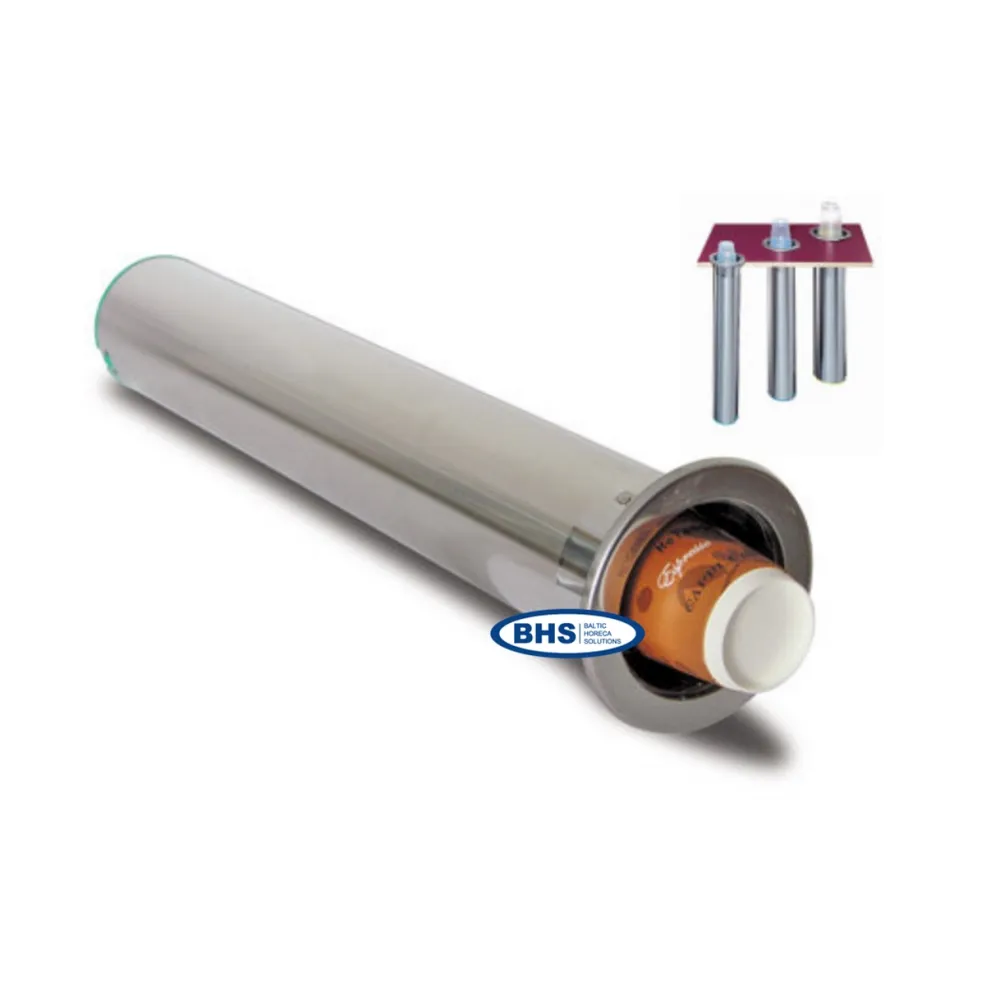
- Built-in dispenser — fitted into a counter cut-out, the collar stays on top; How it is fixed: café, cinema, fast food; Best for: B11, B21, B49
- Vending dispenser — mounted on a drinks machine; How it is fixed: fuel station, office, shop; Best for: B101–B103
When you need a stand
03 How a dispenser works and how to find the size
A dispenser has four parts, and each affects whether cups come out one at a time.
Tube
Collar or ring
Lid or top collar
Fixing
Cup size and matching dispenser
| Cup rim and volume | Dispenser |
|---|---|
| 38–59 mm, 15–120 ml (espresso) | B49, built-in |
| 57–73 mm, 90–120 ml | B101–B103, vending |
| 65–75 mm, 120–300 ml | B50, wall |
| 70–85 mm, 120–300 ml | B61 |
| 58–81 mm, 180–400 ml | B21, stainless steel |
| 82–98 mm, 350–710 ml | B62 |
| 60–120 mm, 120–1300 ml | B11 / B12, adjustable collar |
| 73–121 mm, 200–1360 ml | B40–B43, silicone rings |
How to measure a cup
04 Models in numbers and materials
The main dispensers and stands with figures from our product pages.
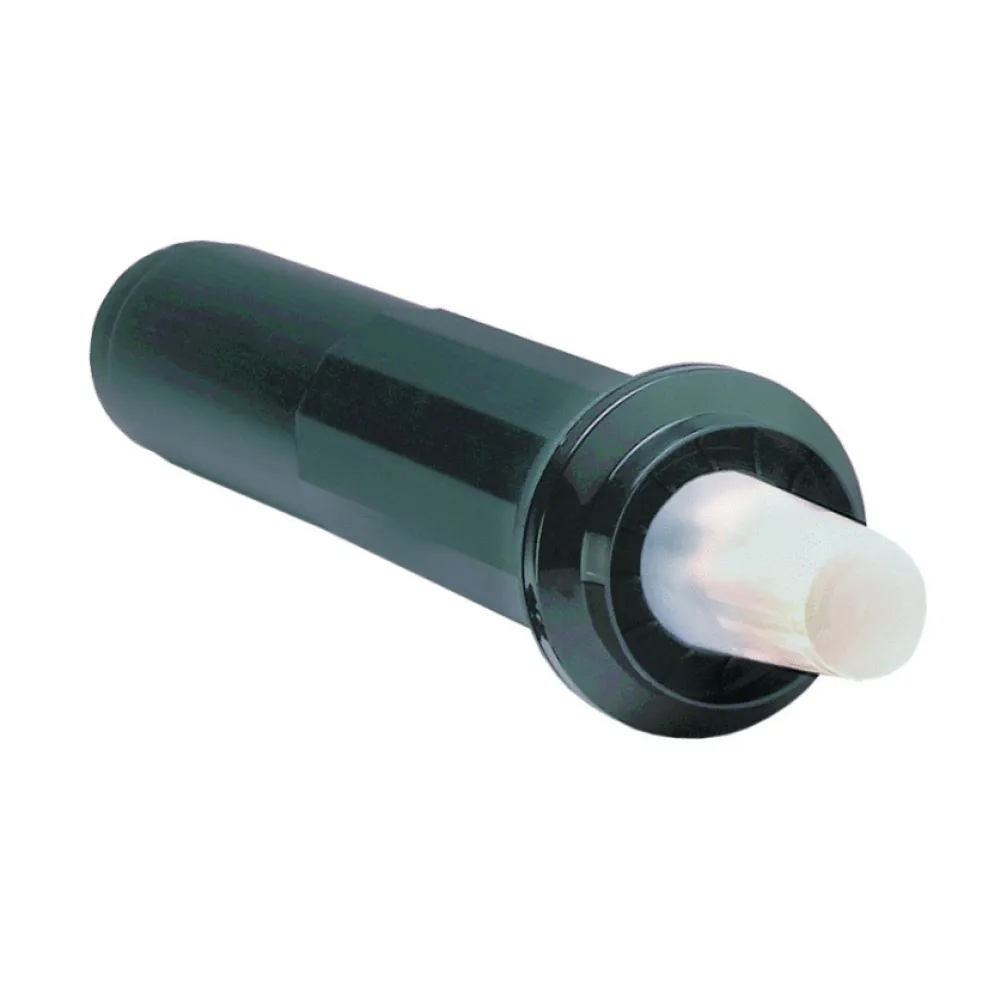
- B101–B103 — 57–73 mm; Volume: 90–120 ml; Material / mounting: stainless steel, white or blue plastic; Ø78 × 410 mm, vending
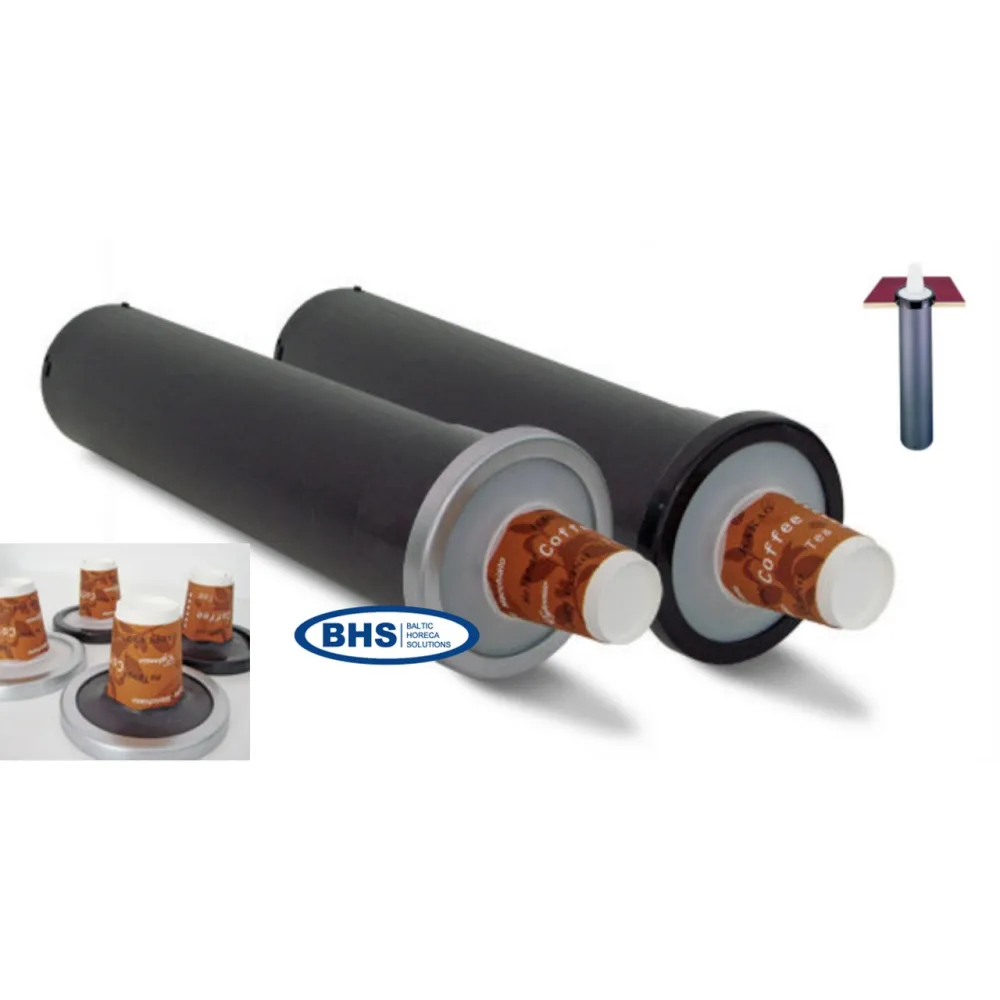
- B61/B62 white — 70–85 / 82–98 mm; Volume: 120–300 / 350–710 ml; Material / mounting: matt plastic with metal lid; 597 mm long
- B49 espresso — 38–59 mm; Volume: 15–120 ml; Material / mounting: black plastic, built-in; 383 mm long
- B11 — 60–120 mm; Volume: 120–1300 ml; Material / mounting: plastic with silicone ring; 138 mm cut-out
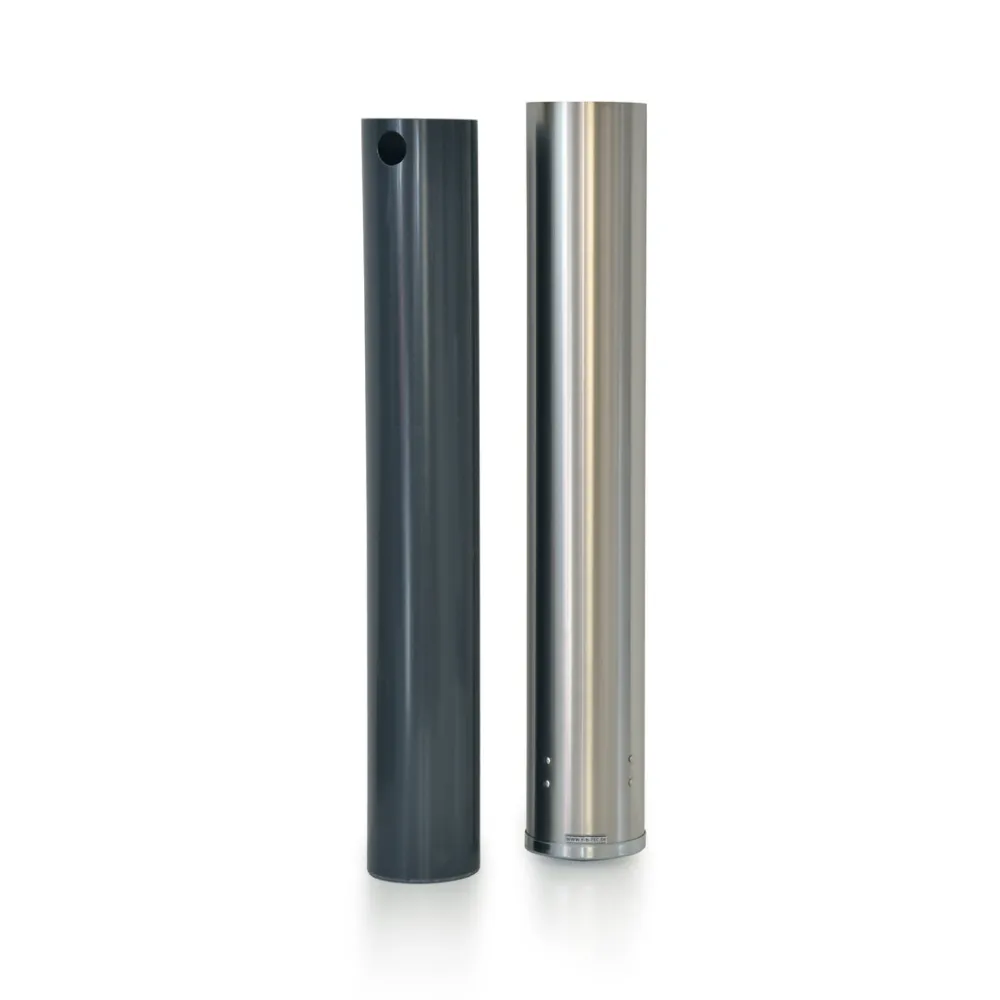
- B50 wall — 65–75 mm; Volume: 120–300 ml; Material / mounting: stainless steel; Ø95 × 605 mm
- B40–B43 — 73–121 mm; Volume: 200–1360 ml; Material / mounting: plastic, black or matt chrome; 440 or 580 mm
- B21 — 58–81 mm; Volume: 180–400 ml; Material / mounting: polished stainless steel, shallow collar
- S3 stand — up to 4 dispensers; Volume: rotating; Material / mounting: stainless steel
Stainless steel or plastic
Coffee table with thermoses
05 Hygiene, HACCP and single-use plastics rules
A disposable cup goes straight to the customer's lips, so storing it is a hygiene matter. The key principles:
- Take the cup from the bottom of the dispenser by its base — the rim and inside stay untouched.
- A closed tube protects cups from dust, splashes and insects better than an open pack.
- When refilling, transfer cups straight from the pack with clean hands or gloves, without touching the rim.
- Keep lids and straws in an organizer, not in a pile on the counter, for example the D33/D34 with three compartments and a straw slot.
- In the HACCP plan, list disposable cups as packaging material: a clean, dry place away from chemicals and steam.
- The EU directive on single-use plastic products requires marking on cups that contain plastic (including paper cups with a plastic lining) and bans expanded polystyrene cups. A dispenser works with any cup — plastic, paper or compostable — as long as the rim diameter matches.
The most common hygiene mistake
06 Café, fuel station, office, events
The same dispenser has a different job in each place.
- Café, take away — 2–3 sizes at the barista station, lid organizer; What to watch: cups from one supplier, counter space
- Fuel station, shop — dispenser at the machine, organizer for customers; What to watch: durability, easy refilling, cleanliness
- Office, hotel, conferences — thermos stand with compartments, countertop dispenser; What to watch: clear order that everyone understands
- Events, cinema, fast food — built-in dispensers for large cups; What to watch: counter cut-out, refilling during the shift
Café — common mistake
Mistake: The dispenser was bought for a 300 ml cup, but the supplier switches to cups with a wider rim, and they drop out two at a time.
Solution: Check the rim diameter before changing cups, or choose a dispenser with an adjustable collar such as the B12.
Fuel station — common mistake
Mistake: The dispenser is filled right to the top, so the cups jam together and get stuck.
Solution: Refill in small stacks and never force the cups down.
Office — common mistake
Mistake: Cups and lids sit in one box, and everyone digs through them by hand.
Solution: Cups in a dispenser, lids and sugar in separate compartments, for example on the Bravilor stand.
Events — common mistake
Mistake: The counter cut-out was made before the dispenser was chosen, and the collar does not cover the hole.
Solution: Buy the dispenser first, then cut to its size (B11 and B12 — 138 mm).
07 Choosing and a simple calculation
Five questions help you choose.
- Cups — rim diameter and volume for every size you use
- Location — table, wall, counter or machine; free height and depth
- Flow — how many cups per day and how often you can refill
- Material — stainless steel in the customer area, plastic in the work area
- Accessories — stand, lid and straw organizer, thermos stand
A simple calculation: what an organised take-away area costs
Example: a café selling about 300 take-away drinks a day. To stop cups standing in stacks, a rotating stand with three dispensers — for small, medium and large cups — goes on the counter, with a lid organizer next to it. The set has four parts:

Rotating base: keeps the dispensers together, the barista turns them towards themselves.
BHS460053 · €291.38

2 pcs: B61 for 120–300 ml cups and B62 for 350–710 ml cups.
BHS460021–22 × 2 · €116.00

Set total (excl. VAT): €528.38
| Calculation step | Result |
|---|---|
| Set price (excl. VAT) | €528.38 |
| Cups in 5 years: 300 a day × 360 days × 5 years | 540,000 cups |
| Set cost per cup | less than 0.1 cent |
| If the set saves 5 cups with lids from the bin every day (€0.10 each) | €180.00 a year, pays back in ~36 months |
| If it saves 10 cups a day | €360.00 a year, pays back in ~18 months |
Conclusion
08 Installation: height, wall, cut-out, refilling
Installing a dispenser takes minutes, but mistakes are harder to fix. Before mounting, check:
- Height: leave room under the dispenser for a hand to grip the cup comfortably; in self-service areas, at a height comfortable for customers.
- Wall: for the B50 wall dispenser, choose plugs and screws to suit the wall; for plasterboard, cavity fixings.
- Cut-out: for a built-in dispenser, cut the counter only when the dispenser is in your hands; the B11 needs 138 mm.
- Length: leave free space under the counter for the tube — B40–B43 are 440 or 580 mm long.
- Stand: place the S3 on a stable, level surface where it can rotate without catching the machine.
- First fill: load cups from the top in a small stack and check that exactly one comes out.
Tip
09 Everyday use and common mistakes
A dispenser lasts for years when handled correctly.
- Refilling: load cups from the top without forcing the stack down.
- Taking a cup: pull the bottom cup straight down, not sideways.
- One model: do not mix cups from different suppliers in one dispenser.
- Lids: one compartment per size in the organizer.
- Cleanliness: clean the dispenser empty; never refill a wet tube.
- Rings: check that silicone rings and collars have not stretched.
Common mistakes
- Several cups drop out — ring too wide for the cup or worn; Cause: a better-matched dispenser or another ring
- Cup gets stuck — collar too narrow or stack compressed; Cause: check the diameter, do not overfill
- Cups crush and deform — stack forced in; Cause: refill in smaller batches
- Dusty cups — lid open or removed, dispenser near ventilation; Cause: close it, move it
- Dispenser wobbles — loose screws or unstable base; Cause: tighten, use a stand
What it looks like in practice
10 Care, accessories and advice
Dispensers have no electronics, so care is simple. BHS helps choose the right size and accessories, and our service team supports bar and coffee equipment.
BHS service — 24/7, on site
Advice on dispenser sizes, service for coffee and bar equipment, spare parts stocked in Riga, more than 20 years of HoReCa experience. Delivery across the Baltics and Europe.
24/7
+371 25 522 233
On site
service visits
Warehouse
Riga, Vagonu iela 23
20+ years
HoReCa experience
Lids
Organizers
Coffee equipment
Advice
| When | What to do |
|---|---|
| Daily | wipe the bottom and collar of the dispenser, refill |
| Weekly | empty and wash the tube and organizer, dry |
| Monthly | check rings, collars and fixings |
| When changing cups | check that the new cups fit the dispenser |
11 Models in our range
Popular dispensers and stands in our range. The full selection is in the cup dispenser category, along with lid organizers and organizers.

TOP pick
BHS410002
€129.00
Adjustable collar 60–120 mm, cups 120–1300 ml, silicone ring. 138 mm cut-out.
View product →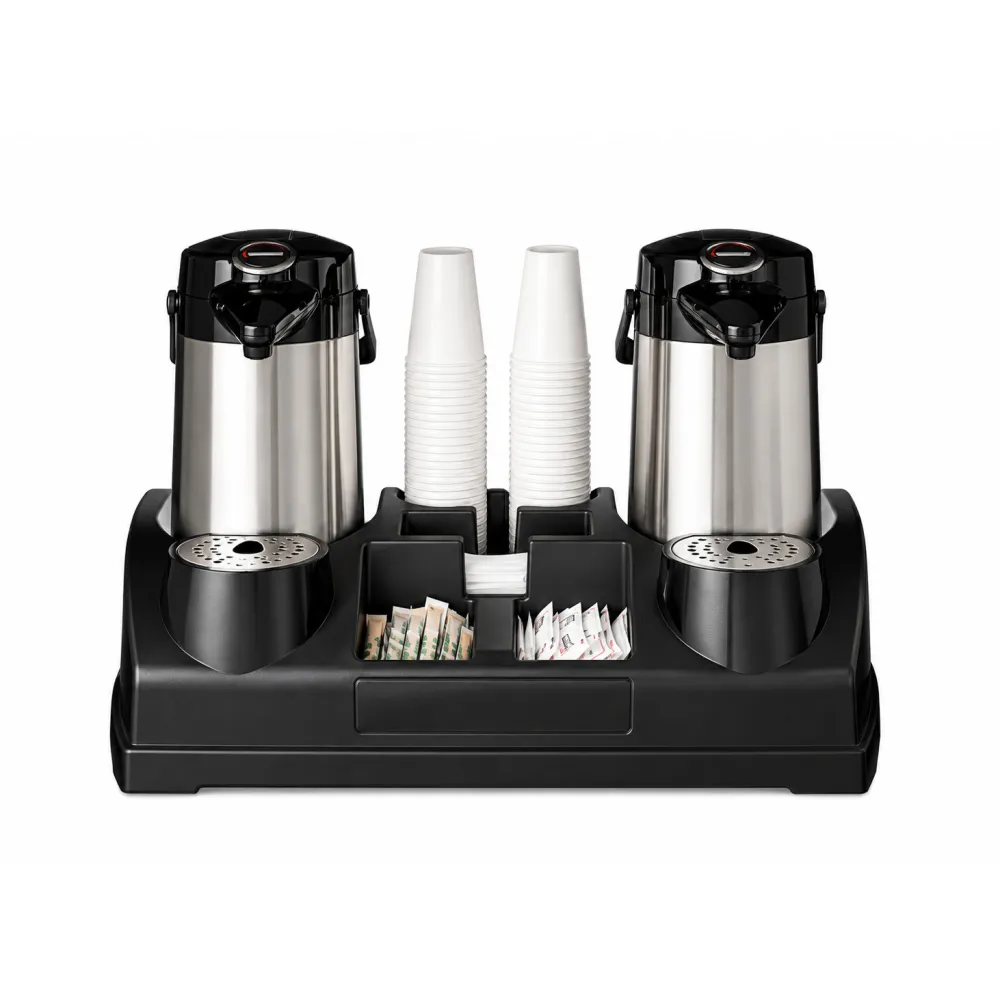
TOP pick
Bravilor stand for 2 thermoses
7.211.005.201
€119.00
Two thermos positions and 5 compartments for cups, lids, stirrers, napkins and sugar. Stainless steel.
View product →
BHS460060–62
€22.00
57–73 mm, 90–120 ml. Stainless steel or white/blue plastic, for vending machines.
View product →BHS460021–22
€58.00
B61: 70–85 mm, 120–300 ml; B62: 82–98 mm, 350–710 ml. Base sold separately.
View product →
BHS460053
€291.38
Rotating stainless steel stand for up to 4 dispensers; dispensers sold separately.
View product →Prices excl. VAT, October 2026. The price is per model; see the product page for variants (colour, length).
12 Frequently asked questions
Dispenser or holder: what is the difference
How to know which dispenser fits my cup
Can one dispenser fit several sizes
Can paper cups go in a dispenser
Where to keep lids and straws
Does a dispenser need a stand
How to clean a dispenser
Let's organise your coffee area together
Tell us which cups you use and how much counter space you have — BHS will help you choose dispensers, stands and organizers. Delivery across Europe.
Call: +371 25 522 233Cup dispensersLid organizersSpare partsService
Related articles
Disclaimer: this article is for information only. Dimensions and prices are taken from our product pages in October 2026; before buying, check that your cup rim matches the dispenser range. Regulations change, so check the current rules for single-use tableware; this is not legal advice. The calculation assumptions are illustrative — calculate with your own prices. “What it looks like in practice” describes a typical situation, not a specific customer case. Prices excl. VAT.