

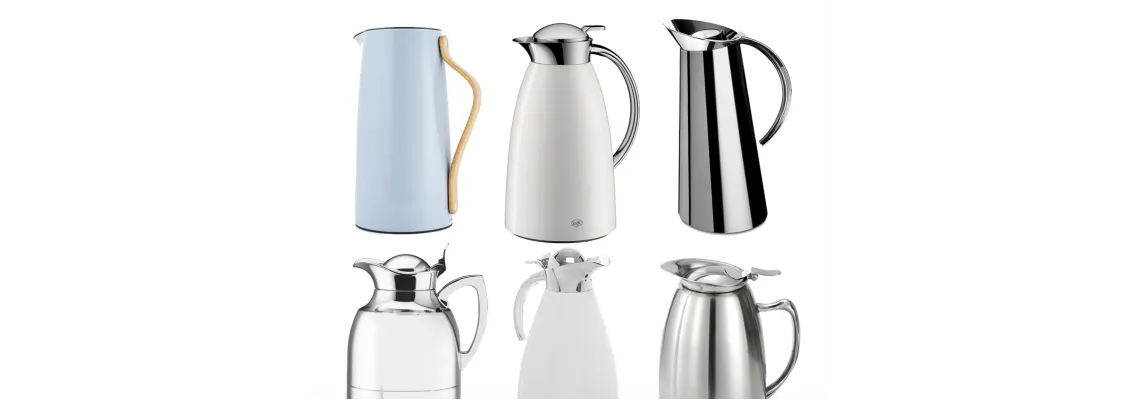
Beverage thermoses for banquets, catering and Christmas markets: how to choose and keep drinks hot
Coffee at a wedding after midnight, tea at a conference break, hot mulled wine at a Christmas market at −10 °C — guests everywhere expect the same: a drink that is hot, tastes good and is poured without a queue. In this article we compare types of thermoses, calculate capacity for a banquet and a market stall, share the experience of banquet organisers and show how to keep drinks hot all evening.
- Why professional events need proper thermoses
- Types of thermoses: from 1 to 30 litres
- How a thermos keeps heat and how not to lose it
- Temperatures and food safety
- Capacity: how many litres you need
- Banquet, conference, outdoor catering, hotel, market
- What banquet organisers have learned
- Christmas market: mulled wine in the cold
- Transport and workflow
- Common mistakes
- Cleaning, service and spare parts
- Thermoses and dispensers in the BHS range
- Frequently asked questions
01Why professional events need proper thermoses
A household flask is fine for a hike, but at an event it holds too little, is awkward to pour from and is not made for daily washing. A professional thermos is larger and sturdier, has a tap or pump and is easier to clean.
Coffee and tea for 100–300 guests at once, often late in the evening when the kitchen is already being cleaned.
Everyone wants a drink within 15–20 minutes. You need several pouring points and quick refills.
No kitchen and often no power. Drinks must arrive hot and stay hot for hours.
Frost, wind, queues and limited power in the stall. Mulled wine must be hot but never boiled.
02Types of thermoses: from 1 to 30 litres
The right thermos depends on where the drink is made, how long it must stay hot and who pours — guests or staff. See the whole range in beverage thermoses, percolators and water heaters.
- Vacuum flask / pump pot (airpot) — Self-service coffee and tea on tables or a buffet
Capacity: 1–5 L · What to consider: Pump dispensing, no lifting; easy to swap for a full one - Serving thermos and jug — Table service, VIP areas, hotel breakfast
Capacity: 1–2.5 L · What to consider: Looks and easy pouring; some models attach to a filter coffee machine - Large stainless steel thermos — Coffee and tea reserve at the buffet, hotels
Capacity: 9.5–14 L · What to consider: Easy to wash, durable; refilling needs a second person - Insulated container with tap — Transport, outdoor catering, markets
Capacity: 10–25 L · What to consider: Thick insulated walls, drip-free tap, stackable - Electrically heated dispenser — Mulled wine, hot water for tea; where there is power
Capacity: 9–30 L · What to consider: Thermostat 30–100 °C; ~1 kW — check the power supply - Percolator and water heater — Brewing coffee and hot water on site
Capacity: 6–25 L · What to consider: Brews and holds; needs power but no kitchen - Cold drink dispenser — Juice, lemonade, fruit water at summer events
Capacity: 3–16 L · What to consider: An ice tube chills without diluting
Categories: flasks, thermoses with tap, beverage dispensers, percolators, water heaters. For food transport — food thermoses and thermal boxes.
03How a thermos keeps heat and how not to lose it
A thermos does not heat — it only slows cooling. Vacuum flasks have a vacuum between two steel walls; large containers have a thick insulating layer. How long a drink stays hot depends not only on insulation but also on how the thermos is used.
- Preheat. Fill with hot water for 5–10 minutes and pour it out. Cold steel or plastic absorbs heat and the drink immediately loses a few degrees.
- Fill it up. Air above the drink cools faster than the liquid. A half-empty thermos cools faster than a full one.
- Bigger is better. A 15 L container loses degrees more slowly than a 1 L flask because it has less surface per litre.
- Open less. A tap or pump beats opening the lid, because hot steam does not escape.
- Place it right. Not in direct sun in summer, not on cold stone or metal in winter — put a wooden board or mat underneath.
- Start at the right temperature. Fill with a drink a few degrees hotter than the serving temperature.
Quality thermoses keep drinks hot for 6–12 hours, depending on volume and starting temperature. When planning an event, be more cautious: coffee tastes best in the first 1–2 hours, so brew in batches rather than all at once. Outdoors in winter, count on even less.
04Temperatures and food safety
Hot drinks with milk, cream or cocoa are higher-risk food, so they must be kept hot enough or made just before serving. The table gives guidelines; the final values and monitoring are set by your HACCP plan.
70–80 °C
≥ 63 °C, best taste 1–2 h
Brew in batches
80–95 °C
Hold in a heater
Green tea 70–80 °C
65–75 °C
Do not exceed 78 °C
Never boil: alcohol evaporates, taste turns bitter
65–70 °C
≥ 63 °C, short time
No milk in dispensers not designed for it
4–8 °C
With ice tube or chilled
Fresh juice — a few hours only
Label every thermos: drink, fill time, temperature, person responsible. During the event, probe the temperature every 1–2 hours. If a drink has been below the set limit for longer than your HACCP plan allows, do not reheat it or mix it with a new batch — discard it.
05Capacity: how many litres you need
Three numbers decide how many thermoses you need: number of guests, servings per guest and serving size. Then add a 10–15% reserve and check the peak hour.
1–1.5
150–200 ml
1–2
150 ml coffee, 250 ml tea
3–4
150–200 ml
By flow
150–250 ml
1.5–2
200–250 ml
Example 1: banquet for 120 guests
Coffee: 120 guests × 1.5 servings × 0.15 L = 27 L. Tea: about a third of guests × 0.25 L = 9 L of hot water. A practical set: a percolator to brew in batches, two 14 L thermoses as a coffee reserve at the buffet, 4–6 pump pots of 2.5 L on tables or stations, and a 10 L water heater for tea.
Example 2: Christmas market stall
About 220 cups of 0.2 L per evening = 44 L of mulled wine; ~70 cups or 14 L in the peak hour. One 16 L heated dispenser covers one peak hour while a second heats up in reserve. Add a 15 L insulated container of hot mulled wine from the kitchen as a reserve if power in the stall is limited. 15 L is ~75 cups, 16 L ~80.
06Banquet, conference, outdoor catering, hotel, market
- Banquet, wedding — Serve coffee and tea quickly to 100–300 guests late in the evening
Recommended set: Percolator + 14 L thermoses + pump pots on tables · Most common mistake: All the coffee brewed at once — bitter by midnight - Conference, coffee break — Serve everyone within 15 minutes
Recommended set: Several stations with 2.5–5 L thermoses, water heater, cup stand · Most common mistake: One pouring point and a long queue - Outdoor catering — Deliver hot and keep hot without power
Recommended set: Insulated containers with tap, 10–25 L · Most common mistake: Container not preheated and only half full - Hotel breakfast — Coffee and tea available for hours
Recommended set: Serving thermoses, water heater, coffee machine · Most common mistake: Coffee left standing in the thermos all morning - Christmas market — Hot mulled wine in the cold and a fast queue
Recommended set: Heated dispensers + insulated reserve container · Most common mistake: Mulled wine boiled or held too hot
07What banquet organisers have learned
We have gathered the lessons banquet and catering teams mention most often when talking about drinks service. They are not one company’s story but typical lessons from many events.
- Brew coffee in batches. The first batch before guests arrive, the next every 60–90 minutes. Do not mix: pour away old coffee rather than topping it up.
- One thermos — one drink. Tea from a coffee thermos tastes of coffee. Mark thermoses with a coloured label or tag.
- Always have a reserve ready. While one thermos empties, the next is already full and preheated. Swapping takes seconds, not five minutes.
- Stations, not one table. With 150 guests, two or three drink stations prevent a queue at the coffee break.
- Stand and accessories close by. Cups, lids, sugar and stirrers in one stand — guests do not walk off looking for a spoon.
- Check the day before. Taps, seals and pumps are checked before the event, not at the buffet. Keep at least one spare thermos.
A typical situation: at a wedding, guests suddenly want coffee after midnight. If the coffee was brewed before dinner and has been standing in a thermos ever since, it is lukewarm and bitter. Teams that plan a second batch for this moment and keep two preheated thermoses in reserve serve fresh coffee without a queue — and that is what guests remember.
For brewing larger volumes see coffee machines and the article How to choose a coffee machine for a café, restaurant or hotel. To keep food warm at the buffet — buffet and bain-marie equipment.
08Christmas market: mulled wine in the cold
A market is the toughest environment: frost, wind, damp, long queues and a stall with limited electrical power. A two-level system works best: a heated dispenser for serving and an insulated container as a reserve.
- Temperature. Hold mulled wine at 65–75 °C. Above 78 °C alcohol starts to evaporate, the spices turn bitter and the drink literally steams away.
- Power. A 9 L heated dispenser draws ~0.95 kW. Before the market, find out the stall’s power limit and do not run everything from one extension lead.
- Cold. At −10 °C with wind, a drink in an insulated container cools faster. Keep the container inside the stall on a wooden board, not on the counter in the wind.
- Queue. Two taps at peak hour work better than one large one. Pre-set cups and orange slices speed up service.
- Alcohol-free option. In a separate, clearly labelled dispenser — for families with children and drivers.
Mulled wine for 10 litres
| Ingredient | Amount |
|---|---|
| Dry or medium-dry red wine | 7.5 L |
| Water or apple juice | 1.5 L |
| Sugar or honey (to taste) | 600–800 g |
| Oranges (sliced) and 1 lemon | 4 |
| Cinnamon sticks / cloves / star anise | 10 / 30 / 8 |
| Fresh ginger (sliced) | ~50 g |
Simmer the water or juice with sugar and spices for 10 minutes to release the aroma. Then add the wine and fruit and heat to 70–75 °C — do not boil. Remove the spices after 1–2 hours or the drink turns bitter. For the alcohol-free version, replace the wine with blackcurrant or grape juice.
“[PASTE A REAL STALLHOLDER REVIEW — for example, how many cups were sold per evening, how long the mulled wine stayed hot in the frost, how the heated dispenser and reserve thermos performed.]”
— [Name, position], [company], [market, city, year]
09Transport and workflow
- Preparation. Wash the thermoses, check seals and taps, preheat with hot water.
- Filling. Fill to the top with a drink a few degrees hotter than serving temperature. Label time and temperature.
- Transport. Upright, tap closed, secured. Large containers can be stacked if the manufacturer allows.
- On site. Measure the temperature, place on a mat, put a drip tray under the tap.
- During the event. Check temperature every 1–2 hours, swap in the reserve in time, rinse empty thermoses straight away.
- After the event. Pour out leftovers, wash the thermoses and leave them to dry with the lid open.
10Common mistakes
- The drink cools quickly — Thermos not preheated or half empty
Solution: Preheat with hot water, fill to the top - Coffee tastes bitter — Standing too long or topped up with new coffee
Solution: Brew in batches, pour away the old - Tea tastes of coffee — One thermos for different drinks
Solution: Separate, labelled thermoses - Tap drips or will not close — Worn seal, coffee residue
Solution: Dismantle and wash the tap, replace the seal - Mulled wine bitter and weak — Boiled or held above 78 °C
Solution: Thermostat at 70–75 °C, remove spices - Thermos smells — Closed while wet, coffee oils
Solution: Cleaning tablets, dry with the lid open
11Cleaning, service and spare parts
Coffee oils and tea tannins build up on the walls and in the tap and eventually spoil the taste of any drink. Limescale in heated dispensers and water heaters reduces heating power and strains the heating element.
| When | What to do |
|---|---|
| After every use | Rinse with hot water, dismantle and rinse the tap or pump, dry open |
| Weekly | Wash with coffee cleaner or tablets, check the seals |
| Monthly | Descale heated dispensers and water heaters (more often with hard water) |
| Before the season | Check thermostat, heating element and taps; replace worn seals |
+371 25 522 233
Replacement of thermostats and heating elements, descaling, tap and seal repair, electrical safety check before the season. Book a check well before the Christmas markets. About BHS service →
Most frequently replaced parts: heating elements, thermostats and water filters that reduce limescale. All categories — BHS spare parts.
12Thermoses and dispensers in the BHS range
A few examples; prices as of October 2026.
Prices excl. VAT and subject to change. Stand for two thermoses with compartments for cups and lids — view. More models — thermoses with tap and beverage dispensers. Equipment rental is also possible for a single event.
13Frequently asked questions
How long does a professional thermos keep drinks hot?
Depending on volume and starting temperature, 6–12 hours if preheated and full. Large containers cool more slowly than small ones. Coffee still tastes best in the first 1–2 hours.
Thermos or heated dispenser?
A thermos needs no power and is ideal for transport and outdoor events. A heated dispenser holds temperature indefinitely but needs ~1 kW. For markets the best is a combination: dispenser for serving, thermos as a reserve.
Can I keep coffee with milk in a thermos?
Better not. Add milk in the cup or serve it cold separately. Milky drinks must be kept at ≥ 63 °C and only briefly; do not use milk in dispensers made only for water or wine.
How many litres for 100 guests?
For a coffee break, ~15–20 L of coffee (1–1.5 servings of 150 ml) and 5–8 L of hot water for tea, plus a 10–15% reserve.
How do I remove a coffee smell from a thermos?
Wash with coffee cleaner or tablets, dismantle the tap or pump and dry with the lid open. Never close a wet thermos.
Can I rent thermoses or dispensers for an event?
Yes, ask about equipment rental or call +371 25 522 233 — we will help calculate a set for your guest numbers.
Preparing for a banquet or a Christmas market?
Tell us how many guests or cups you are planning and whether there will be power — we will help choose thermoses and dispensers, calculate the litres, deliver across the Baltics and Europe and check the equipment before the season.
This article is for information only. Temperatures and times are indicative and depend on the thermos, volume and surroundings; specific values and monitoring are set by your HACCP plan. Banquet organisers’ experience is a summary of typical lessons, not one company’s story. The mulled wine recipe is indicative; alcohol may only be sold in line with your licence and local law. Equipment use is governed by the manufacturer’s manual.