

For canteens and catering groups · Central kitchen
Central production kitchens – how to organise food production, portioning and delivery to several sites
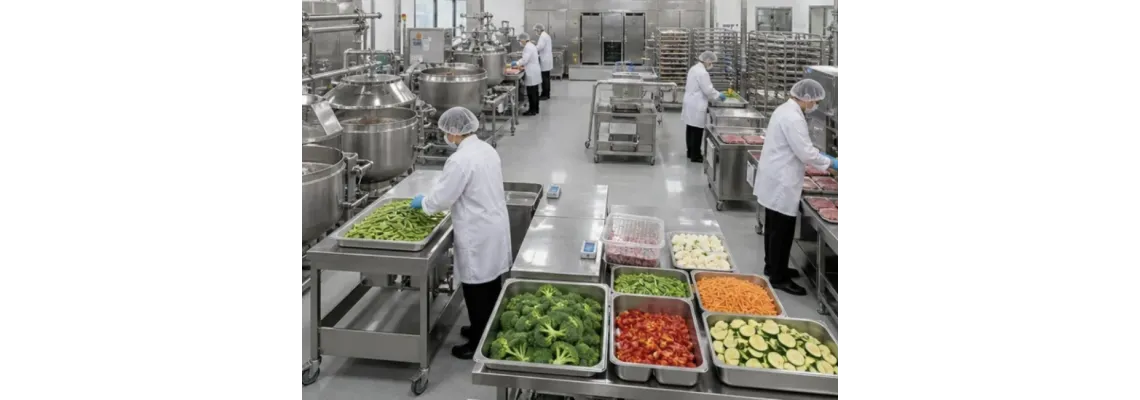
Four schools, three cafés or a hospital with several wards — each with its own kitchen, its own cooks, its own oven. A central kitchen cooks everything in one place, chills it or keeps it hot, portions it and delivers it to the sites. This article covers how to choose a system (hot delivery, cook-chill, cook-freeze), how to plan rooms and flow, which equipment you need, how to chill, pack and transport correctly and when centralisation pays off.
- What a central kitchen is and who it suits
- Three systems: hot delivery, cook-chill, cook-freeze
- Rooms and flow: one direction, no crossing
- Production: large volume, consistent quality
- Chilling: the critical step
- Portioning, packing and labelling
- Delivery and the satellite kitchen
- Regulators and approvals in Ireland
- Central kitchens for different businesses
- Choosing and costing
- Day to day, mistakes and one Monday
- BHS service, maintenance and spare parts
- Models in our range
- Frequently asked questions
01 What a central kitchen is and who it suits
A central kitchen (central production unit, CPU) produces food in one place and supplies several service points — satellite kitchens, canteens, cafés. Only receiving, reheating and serving remain on site.
02 Three systems: hot delivery, cook-chill, cook-freeze
- Hot delivery (cook-serve) — cooked that morning, held at ≥ +63 °C, carried in insulated containers and served within 1–3 hours; Shelf life: same day; Best for: schools and offices close to the central kitchen
- Cook-chill — cooked, chilled to 0…+3 °C within 90 minutes, stored and carried cold, reheated on site; Shelf life: up to 5 days, including the days of production and consumption; Best for: hospitals, care homes, restaurant groups
- Cook-freeze — cooked, blast frozen to −18 °C, stored frozen; Shelf life: weeks to months; Best for: sauces, stocks, desserts, reserve stock
- Vacuum and sous vide — product vacuum-packed, cooked at low temperature, chilled; Shelf life: per validated HACCP plan; Best for: meat, fish and vegetables for restaurant groups
Many central kitchens combine systems: soups and mains go out hot to nearby schools, while distant sites and weekends are covered by cook-chill. More on low-temperature cooking in "Sous vide cooking in restaurants".
03 Rooms and flow: one direction, no crossing
The main rule of central kitchen layout: product moves in one direction — from the "dirty" to the "clean" side — and raw food never crosses cooked food.
- Goods in — temperature check, packaging check, batch records.
- Storage — separate cold rooms for meat, fish, dairy, vegetables; dry store.
- Preparation — separate areas for meat, fish and vegetables; peeling kept apart from cooked food.
- Cooking — ovens, boiling pans and ranges under extraction.
- Chilling — blast chillers right next to the cooking area.
- Portioning and packing — a "high-risk" clean area kept cooler.
- Dispatch — assembling, labelling and loading containers; a separate wash-up for returning containers.
Allergen-free and special diet dishes need their own workstation and colour-coded GN pans and lids. Plan everything between the oven and the van around a GN pan system — one format for the oven, the blast chiller, trolleys and insulated containers.
04 Production: large volume, consistent quality
A central kitchen does not cook "by feel". Every dish has a standard recipe card: ingredients in grams, cooking settings, core temperature, chilling time, portion weight and allergens.
- Convection oven with steam — roasting, braising, steaming and reheating in GN pans; the probe tracks core temperature; Example: FM STG 71 V7 — 7 × GN 1/1, Multicook, All On Time, overnight programmes
- Boiling pan — soups, sauces, porridge 50–300 l without scorching; Example: GORT 50 l, 9.2 kW, automatic water filling
- Electromechanical equipment — vegetable cutting, peeling, mince, dough; Example: electromechanical equipment
- Scales — accurate recipes and portions; Example: bench scales 6–25 kg
An oven with a probe and programmes offers two advantages: overnight cooking (meat roasts while the kitchen is empty) and a recorded temperature for every batch — exactly what a HACCP plan requires. Our FM ovens come in the FM Gastro range from 5 to 20 GN levels.
05 Chilling: the critical step
Slow cooling is the main risk in a central kitchen: between +60 and +10 °C bacteria multiply fastest. So a cook-chill system relies on a blast chiller: the Stalgast 5 × GN 1/1 chills from +70 to +3 °C in 90 minutes and freezes to −18 °C in 240 minutes.
- GN pans no deeper than 65 mm — in a thick layer the centre takes hours to cool.
- Load it hot — straight after cooking, not after an hour on the bench.
- Probe in the core — chilling ends when +3 °C is reached inside, not on the surface.
- Label immediately — dish, date, time, batch, use-by.
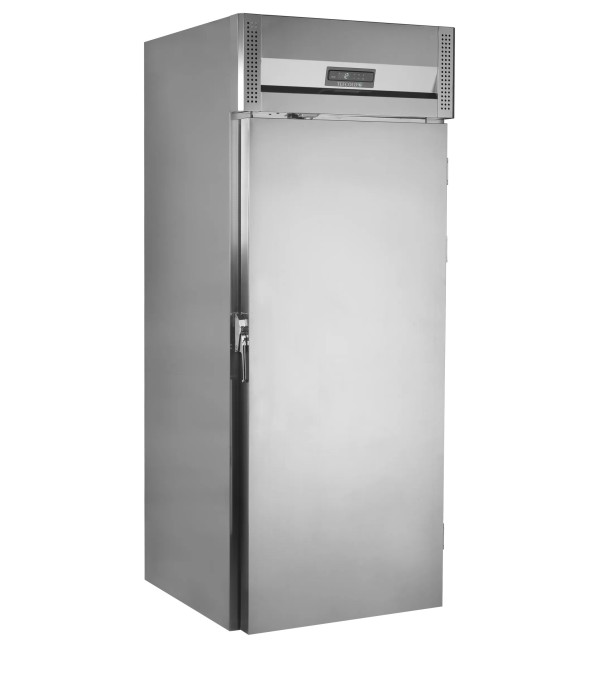
- Store at 0…+3 °C — in a separate fridge or cold room; for large volumes a roll-in trolley fridge takes all 20 levels at once.
Plan blast chiller capacity by batches: with a 90-minute cycle, a 5-level unit chills 4 batches, or 20 GN pans, between 9:00 and 15:00. More on blast chillers in "Blast freezers for professional kitchens".
06 Portioning, packing and labelling
~9 l
20–25 mains or sides
~14 l
35–40 sides
~21 l
60 soup portions
~28 l
80–90 soup portions
- GN pan with lid — bulk portions per site, served out on site; Best for: schools, canteens
- Sealed tray — the tray sealer applies film in 1–3 seconds; Best for: individual portions, takeaway, diets
- Vacuum bag — the chamber vacuum packer removes air for longer shelf life; Best for: restaurant groups, sous vide, sauces
What the label must show
- dish name and batch number;
- production date and use-by date;
- storage temperature and reheating instructions;
- the 14 allergens highlighted; diet marking where relevant.
07 Delivery and the satellite kitchen
In transport, food must stay at temperature and be protected from contamination. Hot food travels at no less than +63 °C, cold food at 0…+5 °C (cook-chill at 0…+3 °C).
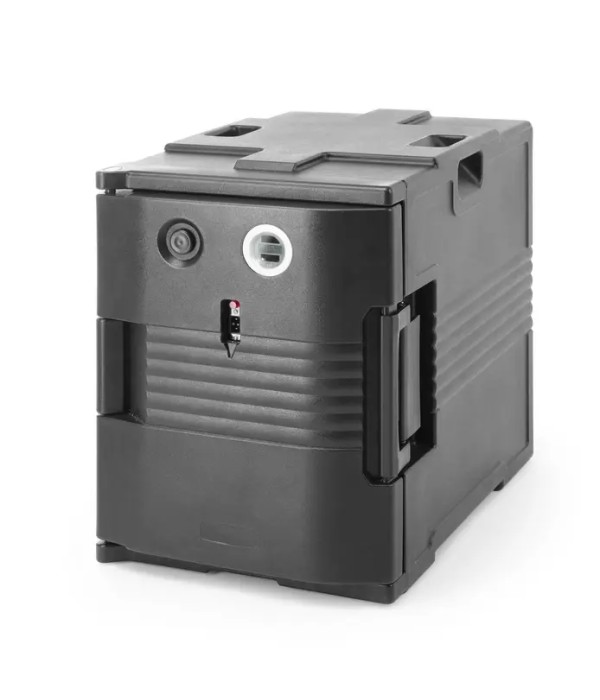
- Insulated container — polyurethane insulation, GN pans inside, vent valve; Example: Stalgast GN 1/1 200 mm, 26 l
- Heated container — built-in heating, keeps warm up to 4 h unplugged; Example: HENDI 707692: 12 × GN 1/1 20 mm or 2 × 200 mm
- Trolleys — move and load containers without lifting; Example: container trolleys
600 soup portions of 300 ml need 180 l, or about 7 insulated containers of 26 l. Fill containers with hot water 15 minutes before loading (or pre-cool with cold packs) — the temperature then drops more slowly.
At the satellite kitchen
- Receiving: measure the temperature, record it, check the label.
- Serve hot food straight away or hold it in a bain-marie at ≥ +63 °C.
- Regenerate cook-chill food in an oven to ≥ +75 °C at the core, then serve within 2 hours.
- Leftovers are not reheated a second time and not sent back to the central kitchen.
- Return clean containers — or wash them at the central kitchen.
Experience in the Baltics shows that self-service serving lines in schools cut food waste by roughly a third.
08 Regulators and approvals in Ireland
A central kitchen is a food business. Below are guide points; confirm your specific case with your local HSE Environmental Health Service.
On working with inspectors see "Food safety inspectors — allies or enemies"; on automatic temperature records see "Automatic temperature monitoring HACCP".
09 Central kitchens for different businesses
- School caterer, 4–10 schools — hot delivery + cook-chill backup; Key equipment: ovens, boiling pan, insulated and heated containers
- Hospital, care home — cook-chill, portions on trays; Key equipment: blast chillers, roll-in trolley fridge, tray sealing
- Restaurant group — cook-chill + cook-freeze + vacuum; Key equipment: vacuum packer, blast chiller, oven with probe
- Takeaway, deli — cook-chill in individual portions; Key equipment: tray sealer, labelling, cold room
10 Choosing and costing
| Question | What to work out |
|---|---|
| Portions a day | the busiest day, not the average |
| Distance | driving time to the furthest site |
| System | hot delivery, cook-chill or both |
| Chilling | GN pans per batch × batches a day |
| Power | ovens, boiling pans and blast chillers together — 400 V supply |
| Containers | litres × routes + spares for washing |
A simple calculation: 4 sites, 600 portions a day
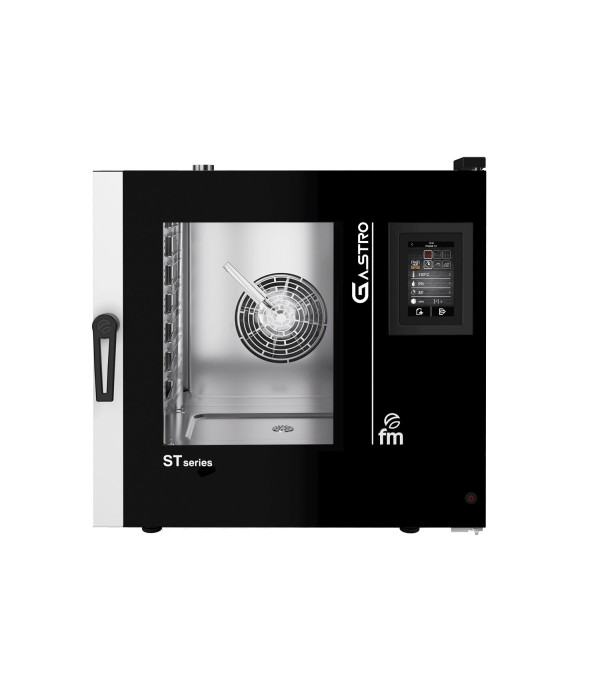
1 × €4,099.00
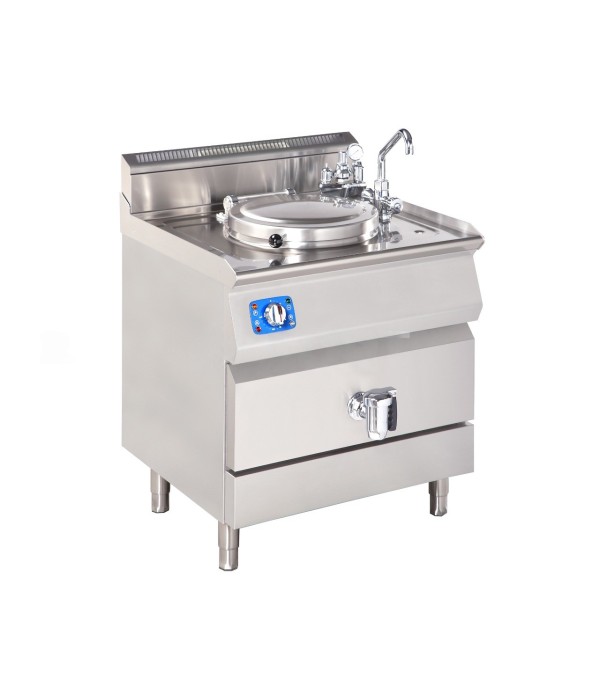
1 × €3,619.00
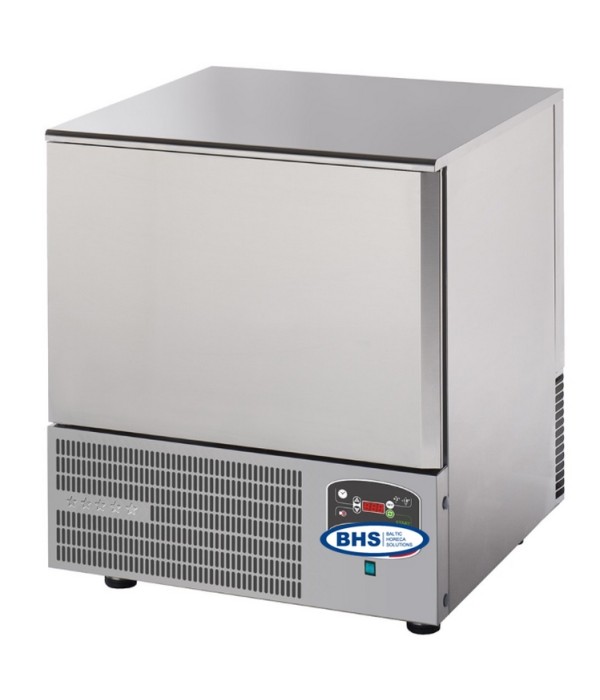
1 × €2,733.75
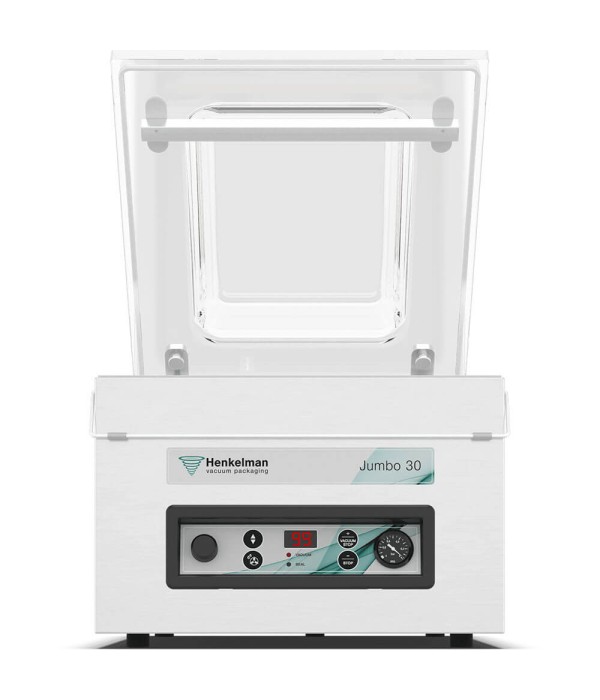
1 × €2,632.50
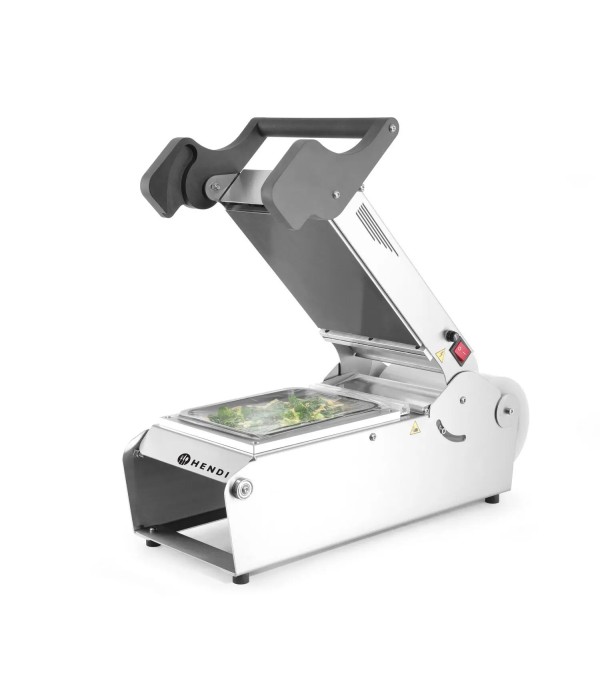
1 × €698.00
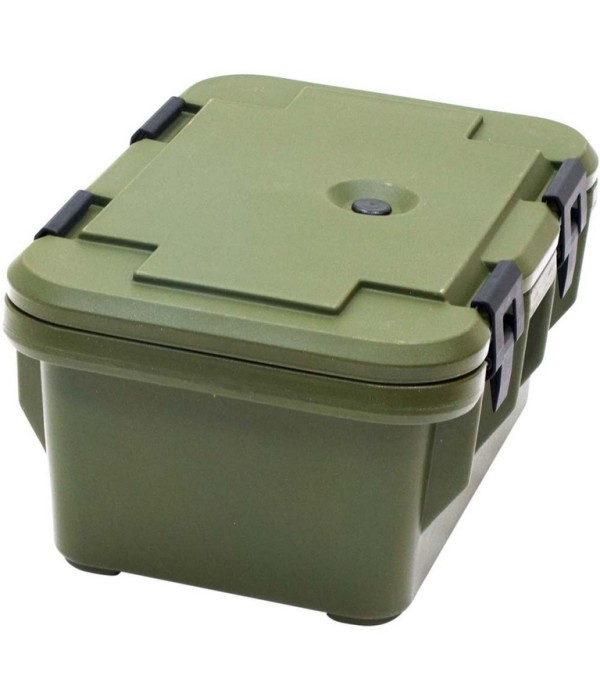
8 × €170.10
Assumptions: previously 4 kitchens with 2.5 FTE each (10 FTE), now a central kitchen with 5 cooks, a driver and 0.5 FTE serving at each site (8 FTE) — 2 FTE saved. Employer cost per FTE: €3,403.85 a month (CSO average for accommodation and food services of €18.08/h × 39 h a week + employer PRSI 11.40 %).
| Item | Per year |
|---|---|
| 2 FTE fewer | +€81,692 |
| Less waste: 3 % of 600 portions × €1.20 ingredients × 250 days | +€5,400 |
| Transport: 60 km a day × €0.35/km × 250 days | −€5,250 |
| Total | €81,842 |
The equipment pays back in ~2.2 months. Calculate with your own figures: transport, rent, menu and existing equipment vary from business to business.
11 Day to day, mistakes and one Monday
- Food arrives cold — container not pre-heated, route too long; Solution: pre-heat containers, heated container, shorter route
- Chilling takes hours — deep pans, chiller overloaded; Solution: GN 65 mm, more cycles or a second unit
- A site gets the wrong food — no picking list; Solution: dispatch sheet per route, label with site name
- Allergen error — diet portion mixed up; Solution: separate area, coloured lids, name on the label
- Oven stops at peak — no maintenance, scale in the steam generator; Solution: maintenance contract, water filter, backup plan
12 BHS service, maintenance and spare parts
Service workshop in Riga, parts across Europe
Downtime is expensive for a central kitchen: if the oven or blast chiller stops, every site stops. BHS has more than 20 years of experience servicing kitchen equipment: certified technicians, repairs in our workshop at Vagonu iela 23, Riga, and a spare parts warehouse in Riga with delivery across the Baltics and Europe.
What BHS service does
Spare parts for central kitchen equipment
| When | What to do |
|---|---|
| Daily | oven auto-clean, clean blast chiller and containers, temperature log |
| Weekly | check gaskets, probes and container lids; vacuum pump oil level |
| Monthly | clean condensers, descale the oven, check thermometers |
| Once a year | technical service of all equipment — easiest with a maintenance contract |
13 Models in our range
FM Industrial STG 71 V7 convection oven7 × GN 1/1, 10.2 kW, 400 V, probe, humidity control, up to +300 °C
€4,099.00
Prices excl. VAT, November 2026. 12-month warranty; after that — BHS service, maintenance contract and spare parts.
Blast chillersThermal boxesVacuum and packagingFM ovensBoiling pans
14 Frequently asked questions
Hot delivery or cook-chill
Hot delivery works when the drive is short and there is one meal. If sites are far away, there are several meals or you need a backup, choose cook-chill.
How long cook-chill food keeps
FSAI guidance sets no more than five days at 0…+3 °C, including the days of production and consumption. Your HACCP plan sets the actual shelf life.
Temperature for transporting hot food
At least +63 °C. Use insulated or heated containers and measure the temperature on arrival.
Which blast chiller you need
By number of batches: a 5-level unit with a 90-minute cycle chills about 20 GN pans in a working day. For more, 10–20 levels or two units.
Does a central kitchen need approval
It depends on the products and who you supply. Registration is always needed; approval may be required if you supply products of animal origin to other businesses. Ask the HSE.
Why an FM oven
The probe, humidity control, Multicook and overnight programmes let you cook large batches to the same quality and record the temperature.
Does BHS repair and service central kitchen equipment
Yes. BHS service repairs ovens, boiling pans, refrigeration and packaging equipment in our Riga workshop and offers maintenance contracts. Customer service 24/7: +371 25 522 233.
Spare parts availability
Yes, spare parts for ovens, fridges and other equipment are in our Riga warehouse, with delivery across the Baltics and Europe.
Let's plan your central kitchen together
Tell us how many portions a day, how many sites and how far apart — we will help you choose the system, ovens, blast chillers, packing and containers, and then take care of maintenance, repairs and spare parts.
This article is not legal advice; regulations change — confirm specific requirements with the HSE. Temperatures and shelf lives are guide values used in practice; final values are set by your HACCP plan. Calculations are illustrative — use your own figures. Characters in the story are fictional. Prices excl. VAT, November 2026.