


Food safety · HACCP · new premises
HSE and FSAI: your helper or your enemy. How to open a restaurant, café or kitchen without nasty surprises
Many owners wait for the Environmental Health Officer as if it were an exam. In reality, food safety rules are one of the cheapest ways to protect your guests, your reputation and your money. In plain language, this article explains what the inspectors expect, why the law requires it, how to prepare for your first inspection and which equipment you need from day one. The examples are based on Ireland.
Before
opening: register your food business with the HSE
3–5
days is the usual time to confirm a registration
14
allergens you must be able to tell guests about
Contents
- Short answer: helper or enemy
- Which laws require it and why
- From idea to opening day
- Recommendations for premises, flow and temperatures
- Restaurant, takeaway, canteen, production: what differs
- A simple calculation: hygiene equipment versus downtime
- What it looks like in practice: the owner and the kitchen porter
- Your first inspection: how to prepare
- Service, spare parts, maintenance
- Models in the BHS range
- Frequently asked questions
01 Short answer: helper or enemy
In Ireland, most restaurants and cafés are registered and inspected by the Environmental Health Service of the Health Service Executive (HSE). The Food Safety Authority of Ireland (FSAI) sets the national framework, publishes guidance and publishes enforcement orders. Neither is your friend or your enemy. Their job is to make sure the food you sell makes nobody ill. If your business is organised, the inspector becomes a free second pair of eyes. If it is not, the visit becomes the most expensive one of the year.
New restaurant or bistro
Café and takeaway
Canteen and central kitchen
Production and catering
02 Which laws require it and why
These rules were not invented in an office. Each of them follows real outbreaks of food poisoning in Europe. Below are the main pieces of legislation and a plain explanation of why they matter.
- Regulation (EC) No 178/2002 (General Food Law) — requires traceability: one step back, one step forward. If a supplier recalls a dangerous product, you need to know whether it is in your kitchen; What it means for you: keep invoices and know where every product came from
- Regulation (EC) No 852/2004 (hygiene of foodstuffs) — sets requirements for premises, water, hand washing, staff and a food safety management system based on HACCP. Most food poisoning is caused by dirty hands, wrong temperatures and cross-contamination; What it means for you: a written system plus records of temperatures and cleaning
- Regulation (EC) No 853/2004 (food of animal origin) — extra rules for meat, fish, eggs and dairy when you process them and supply other businesses; What it means for you: in that case you need approval, not only registration
- Regulation (EU) No 1169/2011 (food information to consumers) — guests must be able to find out whether a dish contains any of 14 allergens. For an allergic person, one mistake can cost their health; What it means for you: allergen information on the menu or from staff who know it, in line with Irish rules for non-prepacked food
- European Communities (Hygiene of Foodstuffs) Regulations 2006 — the Irish regulations that make EU hygiene law enforceable here and give the HSE its powers; What it means for you: registration with the HSE and inspection by an Environmental Health Officer
- Food Safety Authority of Ireland Act 1998 — establishes the FSAI and the system of improvement and closure orders; What it means for you: serious breaches can lead to a closure order that is published online
- Staff training and fitness for work (Regulation 852/2004, Annex II) — food handlers must be supervised and trained in food hygiene in line with their work, and nobody with an illness that can be spread through food may handle it; What it means for you: keep training records and teach staff to report symptoms before a shift
HACCP, TACCP and VACCP: three systems under one umbrella
Food safety management is often drawn as an umbrella with three parts. All three protect food, but each one protects it against a different kind of threat.
03 From idea to opening day
Owners who only think about the inspector in the last week before opening lose the most money and time. This is the right order:
- Choosing premises. Before you sign a lease, check that the premises have planning permission for food use and that the fire safety requirements can be met. A change of use can take months.
- A layout with flow. Draw how products come in, where they are stored, prepared, cooked and served, where dirty dishes go back and where waste leaves. Clean and dirty routes must not cross.
- Talk to the EHO early. Show your plan to your local HSE Environmental Health Service before building work starts. Correcting a drawing is cheap. Correcting a tiled wall is not.
- Equipment. Wash hand basins in every work area, cold equipment with thermometers, easy-to-clean stainless steel surfaces, separate boards and knives for different foods.
- Food safety management system. A written system based on HACCP: hazards, critical control points, temperature records, cleaning schedule, pest control, traceability, allergens.
- Staff. Hygiene training for everyone who will handle food, and a clear rule that anyone with vomiting, diarrhoea or infected wounds reports it and stays away from food.
- Register with the HSE. Notify the HSE Environmental Health Service online before you start trading. If your details are correct, confirmation usually comes within a few days.
- Inspection. The EHO inspects, often without notice. If something needs to be fixed, you will be told exactly what and by when.
The HSE is not the only authority
| Authority | When you need it |
|---|---|
| Local authority (planning) | change of use, alterations, new extraction or changes to the shop front |
| Local authority (building control and fire) | fire safety certificate, escape routes, extraction and gas equipment |
| Revenue and the courts | licences to sell alcohol, such as a restaurant or wine on-licence |
| Local authority | outdoor seating on the street, trading at markets and events |
| Uisce Éireann | trade effluent, for example grease from the kitchen, where a licence is required |
04 Recommendations for premises, flow and temperatures
Recommendations for premises are not about design. They are about leaving bacteria nowhere to hide and making it easier for staff to do the right thing than the wrong one.
Hand washing where people work
Separate foods, separate tools
Surfaces that can be washed
Pest control
Proof of temperature
Dishwashing area
Temperature guidelines
Chilled food
usually 0 to +5 °C, or as the producer specifies
bacteria multiply slowly at low temperatures
Frozen food
−18 °C or colder
bacteria practically stop multiplying
Cooking
core temperature usually at least +75 °C
most dangerous bacteria are destroyed
Hot holding
+63 °C or above
food stays out of the danger zone
Cooling
as fast as possible; in practice to +10 °C within 90 to 120 minutes
+10 to +60 °C is the zone of fastest growth
Reheating
core temperature of at least +75 °C
destroys bacteria that grew during cooling
05 Restaurant, takeaway, canteen, production: what differs
The basic rules are the same, but the risks and the inspector's focus differ.
- Restaurant — many raw ingredients, several stages of work, allergens on the menu; Status: registration; Most common mistake: one wash hand basin for the whole kitchen
- Takeaway and delivery — food travels, so transport temperature and packaging labels matter; Status: registration; Most common mistake: hot food sits for hours somewhere warm, but not hot
- Canteen and central kitchen — large volumes, food prepared in advance, cooling, delivery to other sites; Status: registration; sometimes approval; Most common mistake: large pots cool at room temperature
- Production and catering — products are passed to other businesses or large events; Status: often approval; Most common mistake: no traceability, so nobody knows which batch went where
06 A simple calculation: hygiene equipment versus downtime
Many owners see hygiene equipment as a cost of keeping the inspector happy. Let us compare it with the risk. Assumption: a small kitchen with two work areas, two cold units and one store.
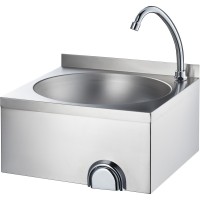
€285.60 2 × €142.80
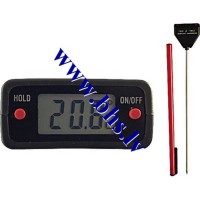
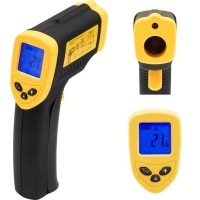


€13.17
€224.97 3 × €74.99
Now the risk. If an inspection finds a serious breach, you may have to close until it is fixed. Let us assume the kitchen is closed for 3 days, turnover is €1,500.00 a day, and a fridge fails overnight so stock worth €600.00 has to be thrown away. Total loss: €5,100.00, not counting your reputation. A basic hygiene kit for €906.83 is about 18% of that amount, and it works every single day.
07 What it looks like in practice: the owner and the kitchen porter
Below is a typical situation that many new owners describe. The characters are fictional, but the events happen again and again.
Ciarán, bistro owner: I thought the inspectors were there to find a reason to fine me
Ciarán worked as a waiter and bar manager for 15 years before he decided to open his own 40-seat bistro. The premises were beautiful, in an old building in the town centre. Half the budget went on design and the kitchen got what was left. He did not want to wake anyone up early, so he only registered with the HSE when the opening invitations had already gone out.
When the Environmental Health Officer came, she found three things. There was no wash hand basin in the preparation area, the nearest one was two doors away. The fridge with the finished sauces had no thermometer, and nobody knew how cold it was. And dirty dishes from the dining room went to the wash-up right past the pass where food was served.
My first thought was that this was the end, Ciarán remembers. But she sat down at a table and started drawing. She suggested moving the pass two metres and adding a contactless sink. We had to push the opening back by two weeks. It cost money and nerves, but if I had called before the fit-out, it would have cost nothing.
Now Ciarán says the inspector is like a harbour pilot. If you listen, you get through. If you ignore them, you run aground on your own.
Mary, kitchen porter: the inspector asked me, not the owner
Mary has worked in kitchens for over 20 years and calls the wash-up the back door every problem comes through. She knows the dishwasher has to reach a high enough rinse temperature (often around +80 to +85 °C, as the manufacturer states), and that the detergent supply must be checked every morning.
On the follow-up visit, the inspector went to the wash-up first. She asked how I tell clean dishes from dirty ones, where I wash my hands after taking the bins out and what I do if the dishwasher does not heat up. I told her, and she noted that the staff knew the procedures. That was worth more than any document.
Mary was also the one who spotted a torn door seal on a refrigerated counter. Through a gap like that the fridge runs non-stop but never gets properly cold. We replaced the seal for a few tens of euro, and the temperature settled.
Her advice for new colleagues: do not be afraid of the inspector. Be afraid that a guest gets ill and you know you could have prevented it.
What to learn from this story
- Talk to the Environmental Health Service before the fit-out, not after. Advice on a layout is cheaper than rebuilding.
- Plan a wash hand basin in every area where open food is handled.
- Staff who know what they are doing convince an inspector more than a thick folder of documents.
- A small defect such as a torn seal can ruin your whole temperature control.
08 Your first inspection: how to prepare
An inspection is a conversation, not an exam. The inspector wants to see that the business can work safely. Have ready:
- a food safety management system (HACCP plan) that matches your actual menu and premises;
- a temperature log or a report from an automatic monitoring system for every cold unit;
- a cleaning and disinfection schedule with a list of chemicals and safety data sheets;
- a pest control plan or contract;
- a supplier list and invoices for traceability;
- allergen information for every dish;
- staff training records and a fitness-to-work procedure;
- water quality records if your water does not come from the public supply.
Common mistakes: problem, cause, solution
- Fridge at +9 °C — overloaded, a damaged door seal or thermostat; Solution: replace the door seal or thermostat and measure daily
- No temperature records — forgotten, or the log is filled in afterwards; Solution: an automatic monitoring system that records by itself
- Cross-contamination — one board and one knife for everything; Solution: colour-coded mats and a colour chart on the wall
- Nowhere to wash hands — basin behind a door or full of dishes; Solution: a separate contactless wash hand basin in the work area
- Cooked food cooling on the counter — no rapid cooling equipment; Solution: smaller portions and a blast chiller
- Staff do not know the allergens — menu changed, information not updated; Solution: an allergen chart at the pass and a short briefing
09 Service, spare parts, maintenance
Many inspection findings are not about dirt but about equipment that does not work properly: a fridge that does not hold its temperature, a dishwasher that does not heat up, a hand basin sensor that does not respond. Regular maintenance is part of your food safety system.
BHS service: 24/7, parts and support
24/7 service line +371 25 522 233. Our engineers work on site across Latvia, the spare parts warehouse is in Riga at Vagonu iela 23, and we have more than 20 years of experience. We deliver equipment and spare parts across the Baltics and Europe.
Door seals
Thermostats
Other spare parts
Cutting boards
| When | What to check |
|---|---|
| Every day | cold unit temperatures, dishwasher temperature and chemical supply, soap and towels at hand basins |
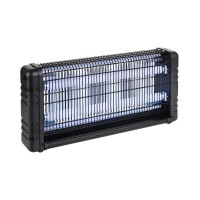
| Every week | condition of door seals, clean condensers, the insect killer tray |
| Every month | compare thermometers with a reference thermometer, monitoring sensor batteries |
| Once a year | professional servicing of cold and dishwashing equipment, review of the HACCP plan |
10 Models in the BHS range
Equipment that directly helps you meet hygiene requirements and that inspectors most often want to see.
Contactless sink with tap and pedal
610004 · Stalgast
€142.80
Stainless steel wash hand basin, water switched on with the knee. Suits every work area.
View product →Contactless hand washing station 2008
BHS-ZR20-2008 · Novameta
€708.00
Free-standing station with a sensor tap and contactless soap dispenser.
View product →Probe thermometer
620510 · Stalgast
€3.97
Simple analogue probe thermometer, 0 to +300 °C, not verified.
View product →Electronic thermometer
620010 · Stalgast
€17.39
210 mm probe, −50 to +280 °C, for core temperatures.
View product →Contactless digital thermometer
620711 · Stalgast
€25.90
Infrared, −50 to +380 °C, for quick checks at delivery.
View product →Wireless temperature sensor with probe
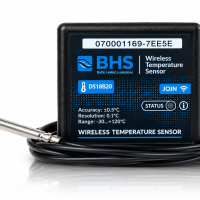
BBDS18B20 · BHS
€74.99
Probe −30 to +120 °C, accuracy ±0.5 °C, for freezers and cold rooms.
View product →Monitoring system gateway
BTCPIPLRX2 · BHS
€289.00
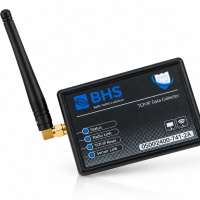
Up to 250 wireless sensors, cloud data, keeps data during internet outages.
View product →Cutting mat set, 6 colours
826300 · Hendi
€13.00
380 × 305 mm, polypropylene, one colour for each food group.
View product →Prices excluding VAT, October 2026. Check the product page for the current price and availability.
11 Frequently asked questions
Registration if I only reheat ready-made food
When to register
Registration versus approval
A ready-made HACCP plan
How to prove temperature control
What happens if a breach is found
Whether TACCP and VACCP are required
Get your kitchen ready for inspection today
BHS will help you choose wash hand basins, thermometers, a monitoring system and cold equipment that fit your kitchen flow and HACCP requirements. Delivery across the Baltics and Europe.
Call: +371 25 522 233Hand washing stationsMonitoring systemsThermometersService
Related articles
This article is for information only and is not legal advice. Legislation and procedures change, so check the current versions and contact the HSE Environmental Health Service or the FSAI before making decisions. Temperatures are widely used guidelines; set your final limits in your HACCP plan. The characters in the story are fictional. Prices excluding VAT, October 2026.