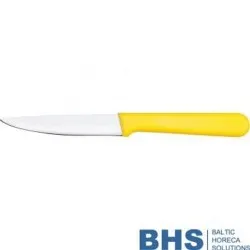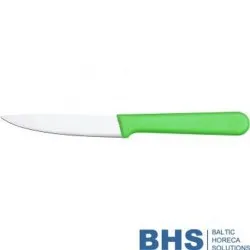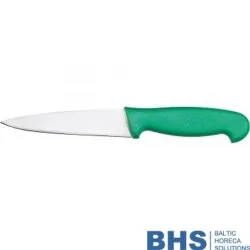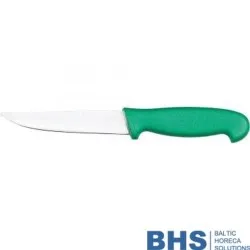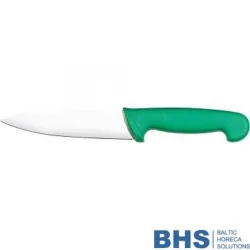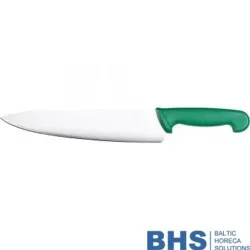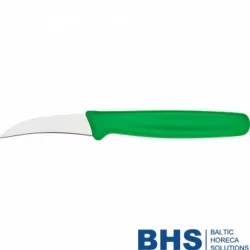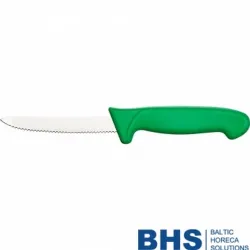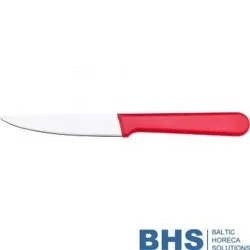
A Vegetable Knife is a professional HACCP system vegetable processing knife with a green handle, designed for washing, peeling, cutting, julienne processing and portion preparation of vegetables ’s restaurants, canteens and catering establishments. The green handle in the HACCP colour-coding system signifies exclusive use for vegetables and fruit — never for meat, fish or prepared products — preventing cross-contamination from raw animal products to plant-based products. Professional vegetable knives are made with a lightweight, manoeuvrable blade that allows precise work with vegetables of various shapes and hardnesses — from soft tomatoes to hard vegetables like pumpkin or root vegetables. BHS offers vegetable knives along with a wide range of HACCP Kitchen Knives.
BHS specialists help choose the most suitable vegetable knife set for a professional kitchen. Also see Meat Knife and Knife for Cheese and Dairy Products.
A Vegetable Knife is one of the most frequently used knives in professional kitchens — in most restaurants, vegetable preparation makes up the majority of the kitchen staff’s daily work. A quality vegetable knife with a green HACCP handle ensures hygiene compliance and allows fast and precise vegetable preparation; the right knife reduces food waste and minimises hand fatigue during long shifts.
Types of vegetable knives
Professional vegetable knives are available in various lengths and shapes. Vegetable chef’s knife (green) — 18–25 cm blade; versatile; for cutting onions, potatoes, carrots and large vegetables. Small paring knife — 8–11 cm blade; precise work; for peeling and decorating fruit and vegetables. Santoku knife (green) — 16–18 cm; Japanese-style wide blade; effective for peeling and cutting with a rocking motion. Turning knife — rounded blade tip; for decoration and channel cuts. Root knife — short, strong blade; for hard root vegetables (beetroot, celeriac). Also see Poultry Knife.
Meaning of the green HACCP handle
The green handle indicates the vegetable and fruit category in the HACCP system. Unprocessed vegetables and fruit — this category is processed only with green-handled tools; contamination from unknown growing or transport conditions. Peeling — the peeling process can remove the surface layer with bacteria; using a green tool prevents secondary contamination from bacteria in other categories. Prepared products — the green knife is not used for prepared food; distinguish from the brown handle (thermally treated products). Salad preparation — the green knife for salad vegetables; a clean and hygienic process. Also see Knife for Thermally Treated Products.
Cutting techniques and the vegetable knife
Different cutting techniques require different blade types. Julienne cutting — thin slices or strips; a long, thin blade with good rocking motion for work. Brunoise (small cubes) — a precise small knife or long universal knife; a very sharp blade is necessary. Chiffonade (herb strips) — a long blade; for finely cutting leafy vegetables; roll cutting. Decoration — small knives, turning knife and turning knife; for cutting visually appealing shapes. Cutting large vegetables — a stable, long blade; for pumpkins, cauliflower and other large vegetables. BHS helps choose a vegetable knife set.
Maintaining the sharpness of vegetable knives
Vegetable knives must be kept sharp — acidic vegetables often wear down the blade more quickly. Frequency — sharpen the vegetable knife once a week with a sharpening steel; once a month, a deeper treatment on a sharpening stone. Sharpening steel — a green sharpening steel for vegetable knives in the HACCP system; separated from the red sharpening steel for meat knives. Sharpening angle — 15–20°; the universal angle for vegetable knives. Erosion — tomatoes, citrus fruits and grapes contain acid that wears down the blade more quickly; a sharp knife is especially important for these products. Also see Fish Knife.
HoReCa usage scenarios
A restaurant with an extensive vegetable garnish menu — a set of green-handled knives; julienne, brunoise and chef’s knife for various preparation techniques. Salad bar or vegan restaurant — vegetable knives are the primary tool; the HACCP green handle system for food safety. Canteen kitchen — vegetable knives for large-volume vegetable preparation; durable models for intensive use.
Frequently asked questions
Is the green-handled knife also suitable for fruit processing? Yes — fruit falls into the same vegetable and fruit HACCP category; the green handle covers both groups. See the HACCP Kitchen Knives range.
How many knives are needed for a vegetable preparation station? Minimum set — a universal chef’s knife and a small paring knife; for full work, additionally a santoku and special knives. Also see Knife for Cheese and Dairy Products.
Why choose BHS?
BHS – Baltic HoReCa Solutions supplies professional equipment for restaurants, cafés, hotels and canteens: more than 20,000 products from many manufacturers. Our specialists help you choose the right equipment and spare parts for your kitchen or bar.
Delivery
We deliver across the European Union. Delivery time and cost depend on the order volume and destination — contact the BHS team for an exact price and lead time.