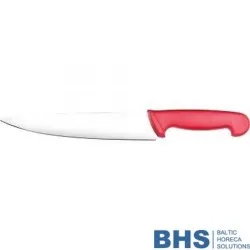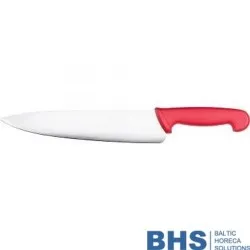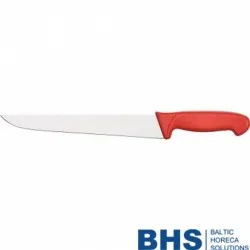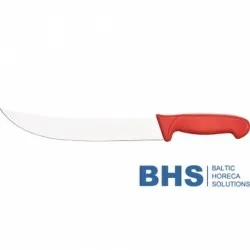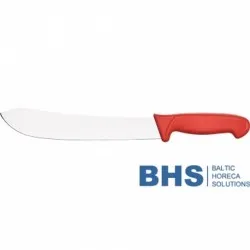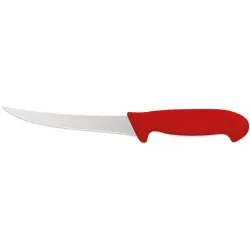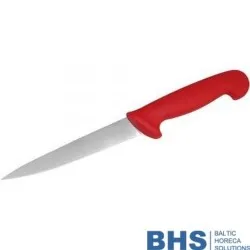
A meat knife is a professional HACCP system knife for meat processing, designed for restaurants, meat processing companies, canteens and other professional catering establishments for cutting, filleting, chopping and portioning meat. The HACCP meat knife features a colour-coded handle — a red handle indicates that this knife is intended solely for meat processing, preventing cross-contamination between different food categories, which is a critical hygiene requirement in professional kitchens. Professional meat knives are made from high-alloy stainless steel with a carefully finished blade that retains its sharpness during prolonged intensive use, and an ergonomic handle that ensures a secure and confident grip even with wet hands. BHS offers meat knives along with a wide range of HACCP kitchen knives.
BHS specialists help you choose the most suitable meat knife for your specific application. Also take a look at poultry knives and fish knives.
A meat knife is one of the most important tools in a professional kitchen, where meat processing — cutting, portioning, filleting and chopping — is a daily process with high hygiene requirements and the need for precise cuts. A high-quality professional meat knife with a sharp blade and ergonomic handle significantly eases the work, increases speed and improves the quality of the final product — a precise cut preserves the meat’s structure and fibre integrity better than a dull knife.
Types of meat knives
Professional meat knives are available in various types according to the specific application. Chef’s meat knife — 20–25 cm blade; versatile; suitable for cutting meat, onions and vegetables. Boning knife — narrow, flexible 14–16 cm blade; designed for separating meat from bones. Cleaver — massive, heavy knife with a wide blade; for chopping bones and dividing large pieces. Slicing knife — long 25–30 cm blade; thin and flexible; for cutting thin slices from large pieces. Shashlik knife — strong, short blade; for portioning and chopping. Also take a look at poultry knives.
HACCP colour-coding system
The HACCP colour-coding system prevents cross-contamination between different food categories. Red handle — only for red meat (beef, pork, lamb); the most common colour for meat knives. Yellow handle — for poultry and other bird meat. Blue handle — for seafood and fish. Green handle — for vegetables and fruit. White handle — for dairy products and bread. Brown handle — for smoked or cooked meat. Also take a look at vegetable knives.
Blade material and edge retention
The blade material and finish of a professional meat knife determine its lifespan and edge retention. Stainless steel 1.4116 (X50CrMoV15) — the most popular material for professional knives; good edge retention; corrosion-resistant. High-hardness steel (HRC 58–62) — hard blade; longer edge retention; slightly harder to sharpen. Blade sharpening angle — professional meat knives are sharpened at a 15–20° angle; fine edge; different from Japanese knives (10–15°). Regular sharpening — in a professional kitchen, meat knives are sharpened every week with a sharpening steel; once a month, deeper sharpening on a whetstone. Sharpening steel — in the HACCP system, colour-coded sharpening steels correspond to knife categories. Also take a look at fish knives.
Handle ergonomics and safety
The handle of a professional meat knife is just as important as the blade. Non-slip handle — rubber or textured plastic pattern; secure grip with wet hands. Ergonomic shape — handle contoured to the hand’s shape; reduces fatigue during long work. Hygienic material — seamless polypropylene or PP handle; unfavourable surface for bacterial accumulation. Full-tang construction — the blade tang extends through the entire length of the handle; stronger connection; safer for intensive use. Dishwasher-safe durability — handle safe for dishwashers; retains shape and colour. BHS advises on the choice of professional knives.
HoReCa usage scenarios
Restaurant kitchen with meat specialists — meat knife with a red HACCP handle for cutting and filleting meat; separate tool from knives for other food categories. Meat processing company — set of meat knives for different applications: boning, slicing and cleaver knives. Canteen kitchen — standard meat knives with the HACCP colour system; compliance with hygiene inspection requirements.
Frequently asked questions
Why should a meat knife not be used for cutting vegetables or fish? HACCP cross-contamination prevention requirement; each category has a separate, colour-marked knife. See the HACCP knife range.
How often should a professional meat knife be sharpened? In intensive use, every week with a sharpening steel; once a month, deeper sharpening on a whetstone. Also take a look at knives for thermally treated products.
Why choose BHS?
BHS – Baltic HoReCa Solutions supplies professional equipment for restaurants, cafés, hotels and canteens: more than 20,000 products from many manufacturers. Our specialists help you choose the right equipment and spare parts for your kitchen or bar.
Delivery
We deliver across the European Union. Delivery time and cost depend on the order volume and destination — contact the BHS team for an exact price and lead time.