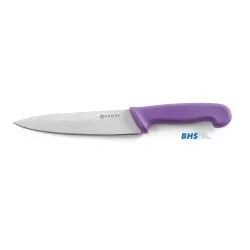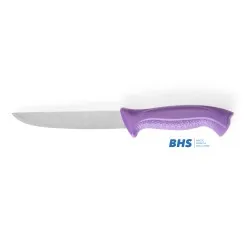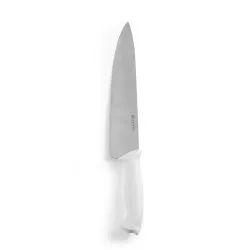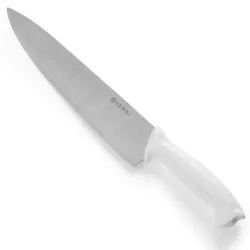
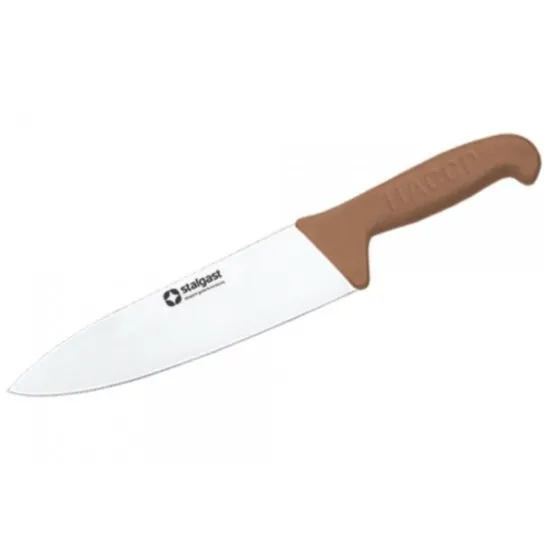
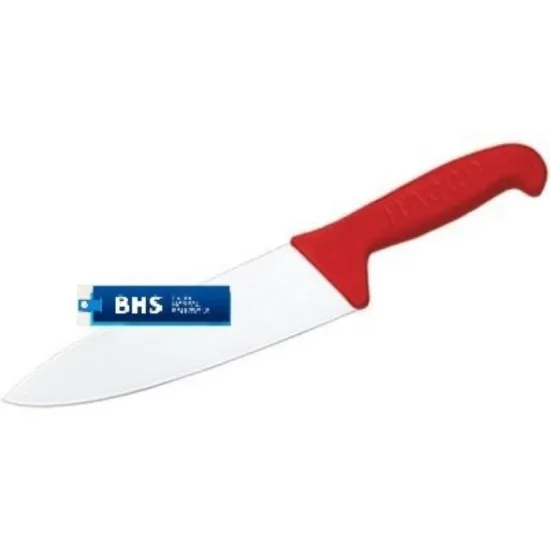
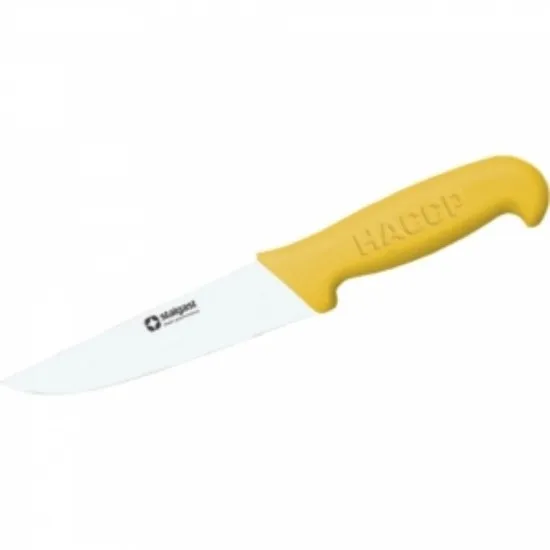
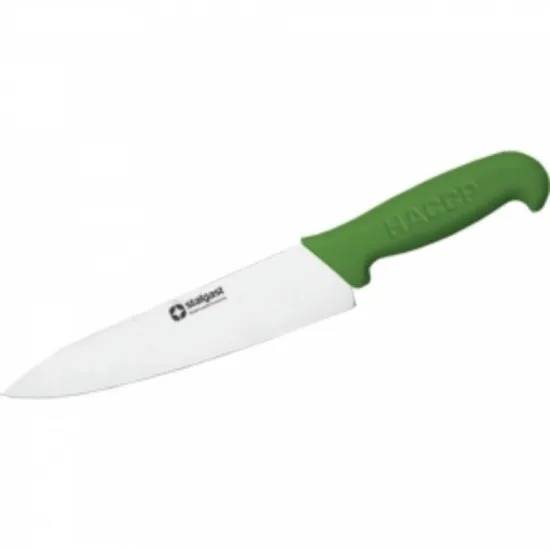
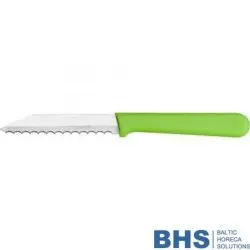
HACCP kitchen knives — specialised professional knives with colour-coded handles designed for different food groups to prevent cross-contamination in restaurants, cafés, canteens and HoReCa kitchens across Europe. The HACCP (Hazard Analysis and Critical Control Points) standard requires that cross-contamination risk be eliminated in food processing, and colour-coded knives are the simplest and most effective way to achieve this visually. BHS offers HACCP kitchen knives as part of the Knives and Boards range.
The BHS range includes HACCP knives for all main food groups — red, yellow, blue, green, white and other colours with corresponding specialised blades. BHS specialists help create a complete set of HACCP knives for the kitchen colour system. See also Meat Knife, Fish Knife and HACCP cutting boards.
The HACCP knife colour-coding system is a professional kitchen hygiene standard in Europe — one colour for each food group, one set for each preparation station. The system is simple and intuitive: staff understand without complex training which tools belong where. Regular HACCP audits check the implementation of this system, and its absence can lead to remarks or fines. BHS supplies HACCP knives to HoReCa businesses.
HACCP colour-coding system
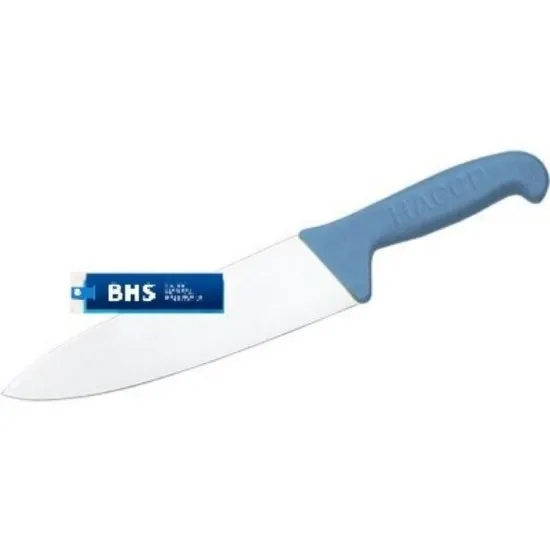
The internationally recognised HACCP colour system for knives: red — fresh red meat (beef, pork, lamb); yellow — poultry (chicken, turkey, duck) and egg products; blue — fresh fish, seafood and marine products; green — fresh vegetables, fruits and greens; white — dairy products, bread, confectionery and ready-to-eat food; brown — thermally treated red meat; black — delicatessen and special products. This system ensures that, for example, a knife just used for fresh chicken cannot come into contact with fresh salmon or vegetables that will be eaten without thermal treatment. BHS helps implement the system.
HACCP knife blade specialisation
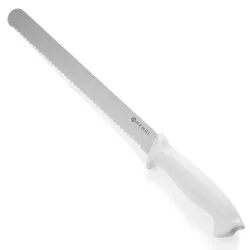
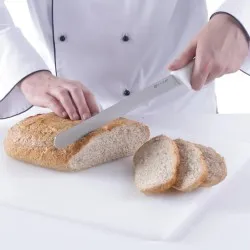
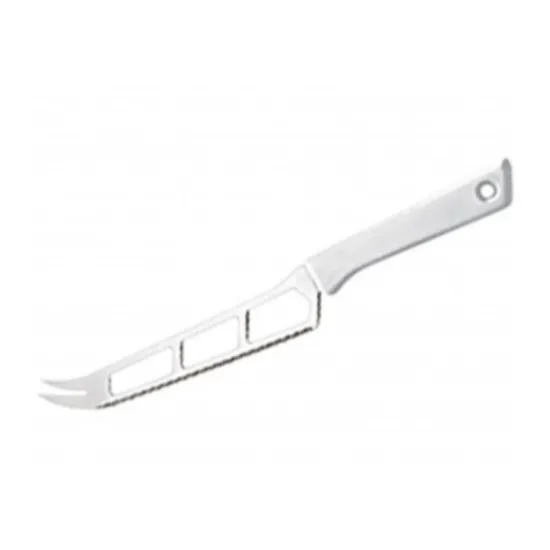
HACCP knives are not just colour-coded handles on standard knives — each food group has a blade profile tailored to its specific use. The red meat knife has a more robust, sturdier blade for portioning and separating meat. The blue fish knife has a more flexible and thinner blade, suitable for filleting. The green vegetable knife has a wider santoku-style blade for efficient chopping. The white bread or dairy knife has a serrated blade for bread or a santoku shape for cheese. This blade specialisation complements the visual advantage of colour coding with actual functionality. BHS helps select specialised HACCP knives.
Implementing the HACCP system in the kitchen
Successful implementation of the HACCP knife system requires three steps: first, identify the food groups processed in the kitchen and choose the corresponding colours; second, purchase enough knives for each colour at each preparation station; third, train staff and provide visual reminders in the kitchen. A knife storage system — magnetic strips or colour-coded knife blocks — helps ensure that knives return to the correct place after use. HACCP documentation must reflect that the knife system is maintained. BHS helps plan the implementation of the HACCP knife system.
HoReCa usage scenarios
In a large restaurant with 4 preparation stations (meat, fish, vegetables, pastry), each station has its own set of knife colours — no knife ever ends up at another station, as the system’s appearance itself demonstrates. In a canteen with high staff turnover, colour-coded knives are the first line of defence against hygiene errors, even among new employees. In hospital kitchens, the HACCP audit checks the knife colour system as one of the first requirements — its absence is an immediate source of remarks. BHS ensures the supply of HACCP knives to HoReCa businesses.
Frequently asked questions
How many knives are needed for a full HACCP system? Minimum: at least 1 knife for each active food group colour. Recommended: 2–3 knives per colour to ensure that while one knife is being washed or sharpened, work continues. For larger kitchens with multiple preparation stations — 4–6 knives per colour. BHS helps calculate the optimal number.
Is the HACCP knife system mandatory? The European food hygiene regulation (EC 852/2004) states that Good Practice guidelines must be applied to prevent cross-contamination. Colour coding is not a strict requirement but is standard practice, checked by sanitary inspections and included in the HACCP plan. Sanitary inspections assess its presence. BHS provides advice on interpreting the HACCP requirements.
Why choose BHS?
BHS – Baltic HoReCa Solutions supplies professional equipment for restaurants, cafés, hotels and canteens: more than 20,000 products from many manufacturers. Our specialists help you choose the right equipment and spare parts for your kitchen or bar.
Delivery
We deliver across the European Union. Delivery time and cost depend on the order volume and destination — contact the BHS team for an exact price and lead time.