
Choose category
Choose category
Filter
Your Cart

Fish Knife

Fish Knife — a professional HACCP system fish processing knife with a blue handle, designed for filleting, cutting, skinning and portioning fish in restaurants, fish processing companies and catering establishments. The blue handle in the HACCP colour-coding system indicates that this knife is to be used only for fish and seafood — never for meat, vegetables or dairy products — preventing cross-contamination, which is a critical food safety requirement in professional kitchens. Professional fish knives differ from meat knives with a more flexible and thinner blade, allowing the edge to follow the shape of the fish bones during filleting, extracting the maximum amount of fillet with minimal residue on the bones. BHS offers fish knives together with a wide range of HACCP Kitchen Knives.

BHS specialists help choose the most suitable fish knife for a specific application. Also see Meat Knife and Poultry Knife.

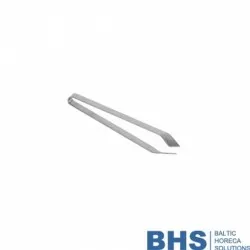
Article number: 303220
Tweezers designed for removing pin bones from fish fillets allow the chef to extract each bone clean..
Is available
1.26€
with VAT: 1.52€
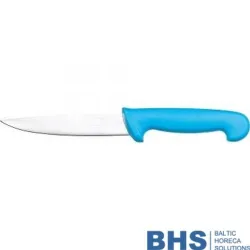
Article number: 282154
A boning knife separates meat from bone with a narrow, flexible blade that follows the contours of j..
Is available
2.78€
with VAT: 3.36€
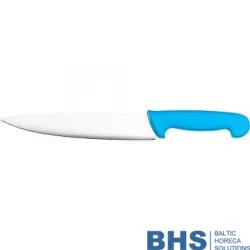
Article number: 281214
A 22 cm kitchen knife cuts, slices and chops ingredients with a single, continuous edge. The blade r..
Is available
3.09€
with VAT: 3.74€
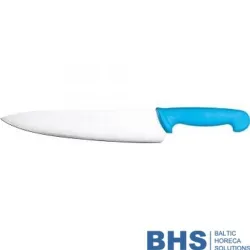
Article number: 281254
A 25 cm kitchen knife designed for precision cutting in professional kitchens, where consistent shar..
Is available
3.60€
with VAT: 4.36€
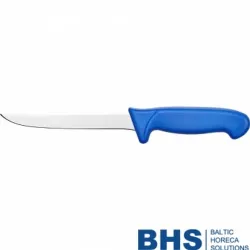
Article number: 283114
A boning knife separates meat from bone by following the contours with a narrow, flexible blade. The..
Is available
8.00€
with VAT: 9.68€
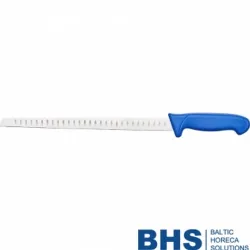
Article number: 283304
A boning knife separates meat from bone by following the contours with a narrow, flexible blade. The..
Is available
11.00€
with VAT: 13.31€
Showing 1 to 6 of 6 (1 Pages)

Fish Knife is a specialised tool that makes fish filleting and processing significantly faster and more precise, reducing product loss and improving the appearance of the fillet. The right fish knife with the correct length and flexibility of the blade is the difference between a wandering fillet with a flawless cut and a damaged fillet with a torn texture.

Types of fish knives

Professional fish knives are available in specialised types for different tasks. Filleting knife — a narrow, flexible 15–21 cm blade; allows the edge to follow the shape of the fish’s spine and ribs; the main tool for cutting fillets. Cleaver knife — a short, strong blade; used in fish farming to remove fish heads. Skinning knife — a flat, narrow blade with an angle between the blade and the handle; for removing fish skin from the fillet. Large fish filleting knife — a longer and slightly stiffer blade for large fish (salmon, trout, tuna). Universal fish knife — a medium-flexibility blade; suitable for multiple tasks. Also see Meat Knife.

Blade flexibility for fish filleting

Blade flexibility is the main parameter of a fish knife. Flexible blade — allows bending to follow the shape of the fish bones; less product loss on the bones; suitable for finer fish (plaice, sole). Medium-flexibility blade — a balanced compromise; suitable for filleting most fish; universal for salmon, trout, pike-perch. Stiff blade — for greater precision with large fish; for cutting and slicing large portions. Incorrect flexibility — if the blade is too stiff, filleting will require more force and result in greater losses. BHS advises on the stiffness of the fish knife blade according to the types of fish.

HACCP blue handle system

The blue handle in the HACCP system is an international standard for fish and seafood processing tools. In the kitchen — knives with blue handles are used to process all raw fish and seafood. Separate storage — fish knives must be stored in a separate blue knife box or with a blue colour marking; visual separation from other tools. HACCP audit — inspection checks whether the colour-coding system is being observed; non-compliance may result in a warning. Colour consistency — all kitchen tools in this category are blue (cutter, slicer, board). Also see Vegetable Knife.

Fish filleting technique

The correct filleting technique significantly improves the quality of the fillet and reduces losses. Incision behind the gill arch — a cross-cut in the direction of the spine; filleting starts here. Following the spine — keeping the blade parallel to the spine; light pressure on the back of the blade; the blade bends itself to follow the bone. Separating the rib bones — after the main cut, the rib bones are cut out with a careful angled cut. Skinning — placing the fillet skin-side down; inserting the skinning knife between the skin and the fillet at the tail; pulling the skin forward. BHS helps choose the right set of fish knives.

HoReCa usage scenarios

Cheese and fish shop with a preparation area — fish knives separated from other knives; compliance with HACCP documentation. Hotel restaurant with a fresh fish menu — a specialised filleting and skinning knife.

Frequently asked questions

Why is the blade of a fish knife more flexible than that of a meat knife? Fish bones are fine and follow a curved trajectory; a flexible blade follows the shape more effectively than a stiff one. See the HACCP Kitchen Knives range.

Can fish knives be used for seafood? Yes — the blue handle covers all raw seafood; shrimp, octopus and other seafood. Also see Poultry Knife.

Why choose BHS?

BHS – Baltic HoReCa Solutions supplies professional equipment for restaurants, cafés, hotels and canteens: more than 20,000 products from many manufacturers. Our specialists help you choose the right equipment and spare parts for your kitchen or bar.

Delivery

We deliver across the European Union. Delivery time and cost depend on the order volume and destination — contact the BHS team for an exact price and lead time.

Filter