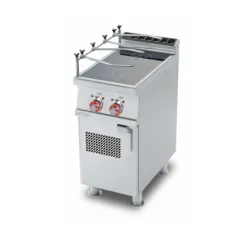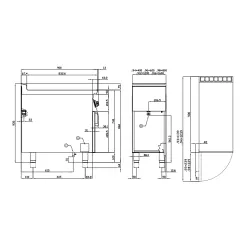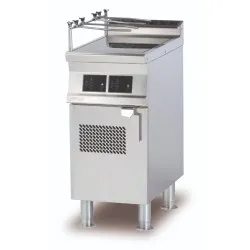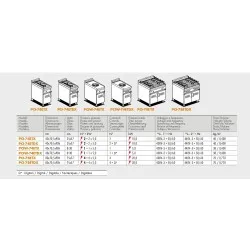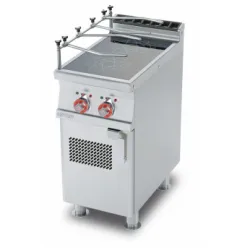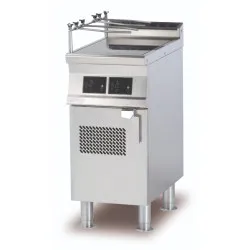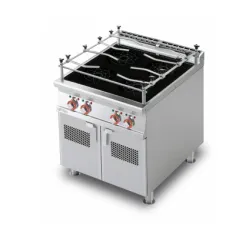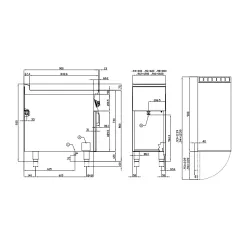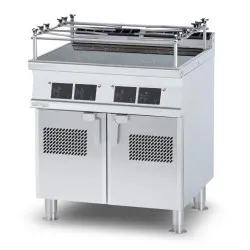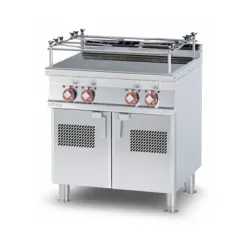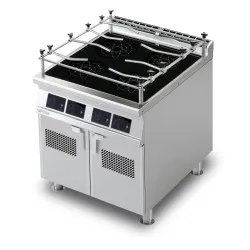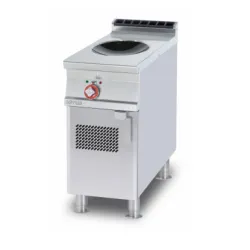
Induction Hobs for Ships are professional marine-grade freestanding induction cooking appliances with multiple heating zones and an integrated stand, designed for efficient meal preparation on cargo ships, passenger ferries and other marine vessels with routes through ports. Unlike built-in induction cooktop surfaces, induction hobs are complete freestanding appliances with a stationary base that provides additional stability in marine conditions and allows the appliance to be installed in any galley position without the need for built-in work. Marine-grade induction hobs are made from AISI 316 stainless steel with vibration-resistant electronics and pot holders.
BHS specialists help you choose the most suitable marine induction hob model. Also see induction cooktop surfaces for ships, electric hobs for ships and pot holders for ships.
Induction hobs for ships combine the energy efficiency of modern induction technology with the convenience of a full freestanding appliance in a ship’s galley. The freestanding design means the appliance can be installed and moved as needed, and it is safer in ship vibration conditions thanks to a sturdy base.
Types of induction hob models for ships
Professional induction hobs for ships are available in various configurations. Compact induction hob — 2–3 heating zones; suitable for small and medium-sized ships; can also be a portable version. Standard 4-zone induction hob — a full professional induction hob for ships with 4 independent heating zones and an integrated stand. Induction hob with oven below — a combined appliance with an induction cooking surface above an electric oven; a compact all-in-one marine culinary solution. Induction hob with shelf — an induction cooking surface with a lower shelf for storing pots and utensils. Also see induction cooktop surfaces for ships.
Marine technical parameters
Induction hobs in marine versions have special parameters for long-term operation in marine conditions. Reinforced glass-ceramic — a toughened glass-ceramic surface with additional shock resistance; able to withstand pot impacts during rocking. AISI 316 stainless steel — enhanced corrosion resistance in salt-air environments on both the surface and the base structure. Pot holder system — built-in or attached holder bars around each heating zone. Anti-vibration base — rubber or special insulation pad feet that absorb ship vibration. Frequency stabilisation — marine electronics with a wide input voltage and frequency range for operation on ship power supply systems. Also see electric hobs for ships.
Induction hob vs electric hob on a ship
When choosing between induction and electric hobs for a ship’s galley, several factors should be considered. Energy efficiency — induction hobs use 40–50% less electricity than electric hobs, as they heat the pot directly rather than the surface. Generator load — for ships with limited generator capacity, induction allows the overall load to be reduced, leaving more power for other equipment. Heating speed — induction heats 2–3 times faster than an electric solid-plate surface; saves cooking time. Pot limitation — induction requires magnetic pots; electric hobs are universal. Purchase price — induction hobs are usually more expensive; they pay off due to lower operating costs. Also see pot holders for ships.
HoReCa usage scenarios
Cargo ship with energy efficiency requirements — induction hob as the main cooking appliance, significantly reducing the ship’s galley electricity consumption and generator fuel usage. Passenger ferry with a large galley — several induction hobs as the main cooking appliances in the galley block; fast heating and precise temperature control for large quantities of food. Yacht with premium cuisine — a modern induction hob in the yacht’s galley as part of high-class kitchen equipment with fast heating and energy-efficient operation.
Frequently asked questions
What power induction hob is needed for a ship’s galley? Minimum 6 kW (4 zones x 1,5 kW); better 10–12 kW for larger ship galleys. Contact BHS. See induction cooktop surfaces for ships.
Is an induction hob safer than an electric one on a ship? In fact, both are safe with the right pot holders; induction does not heat the surface itself.
Why choose BHS?
BHS – Baltic HoReCa Solutions supplies professional equipment for restaurants, cafés, hotels and canteens: more than 20,000 products from many manufacturers. Our specialists help you choose the right equipment and spare parts for your kitchen or bar.
Delivery
We deliver across the European Union. Delivery time and cost depend on the order volume and destination — contact the BHS team for an exact price and lead time.