

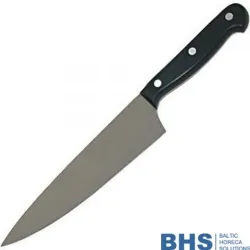
Article number: 218208
A kitchen knife of this type relies on a rigid, sharpened blade to slice, chop and dice ingredients ..
Is available
4.16€
with VAT: 5.03€
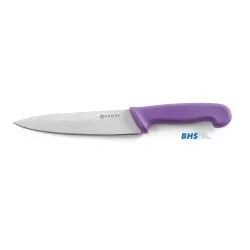
Article number: 842676
A cook knife with a 320 mm blade slices, chops and dices large volumes of vegetables, meats and fish..
Is available
5.15€
with VAT: 6.23€
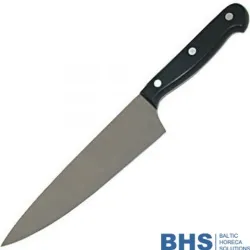
Article number: 218258
A 240 mm kitchen knife slices, chops and dices ingredients with a single, controlled stroke. The bla..
Is available
5.36€
with VAT: 6.49€
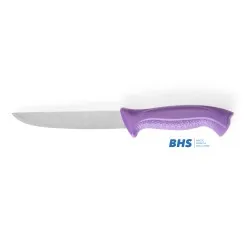
Article number: 842478
A butcher knife cuts large pieces of meat by concentrating force along a long, straight blade. The e..
Is available
5.75€
with VAT: 6.96€
Article number: 842751
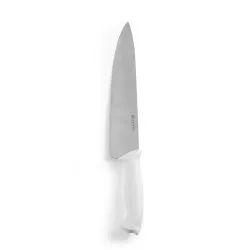
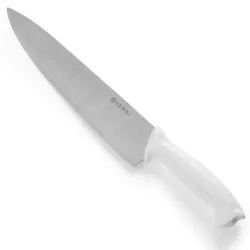
A chef's knife of this length is designed to transfer force from the cook's arm directly into a long..
Is available
6.05€
with VAT: 7.32€
Article number: 842775
A cook knife is the central tool in food preparation, designed to slice, chop and dice ingredients w..
Is available
6.05€
with VAT: 7.32€
Article number: 843154
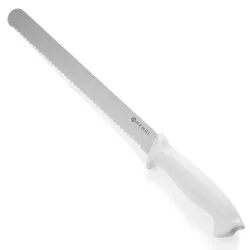
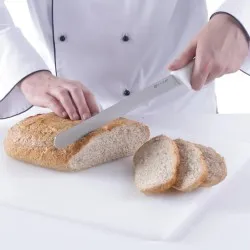
A bread knife slices through crusts and soft interiors without crushing the loaf. The long, serrated..
Is available
6.75€
with VAT: 8.17€
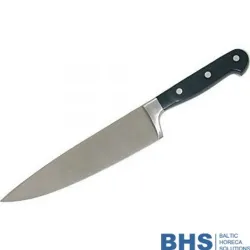
Article number: 218209
A kitchen knife of this length is designed to slice, chop and dice with a single draw. The blade run..
Is available
8.01€
with VAT: 9.69€
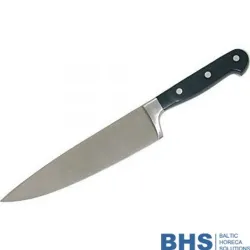
Article number: 218259
A kitchen knife of this length becomes the primary tool for slicing, chopping and portioning large i..
Is available
8.70€
with VAT: 10.53€
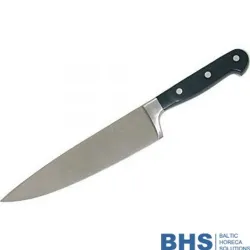
Article number: 218309
A 300 mm kitchen knife is built to slice, chop and portion large volumes of food with a single strok..
Is available
9.45€
with VAT: 11.43€
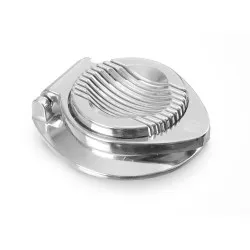
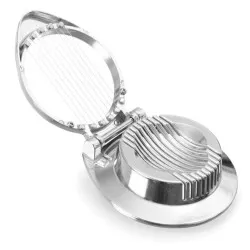
Article number: 570012
The HENDI egg slicer, article number 570012, is a kitchen utensil designed for preparing eggs. Const..
Is available
11.00€
with VAT: 13.31€
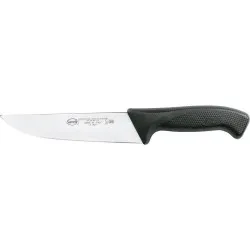
Article number: 286182
A cutting knife of this length is designed to slice through larger ingredients with a single draw, r..
Is available
18.21€
with VAT: 22.03€
Article number: 286222
A cutting knife of this type relies on a rigid, finely ground blade to transfer the force of the che..
Is available
22.05€
with VAT: 26.68€
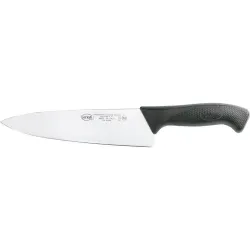
Article number: 286212
A 210 mm kitchen knife designed for controlled, precise cuts through meats, vegetables and herbs. Th..
Is available
23.25€
with VAT: 28.13€
Article number: 286252
A kitchen knife cuts by concentrating force along a finely ground edge. The blade's hardness determi..
Is available
27.09€
with VAT: 32.78€
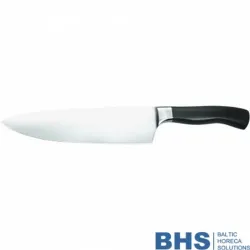
Article number: 290200
A 200 mm forged kitchen knife cuts through dense or fibrous ingredients with a single draw. The blad..
Is available
31.00€
with VAT: 37.51€