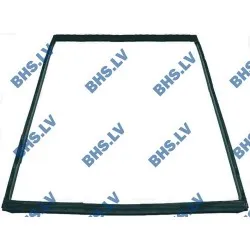
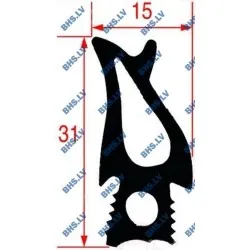
A door seal in hot equipment is a simple but critical component — it ensures a hermetic seal between the equipment body and the door, preventing heat loss. A worn seal leads to immediate costs (increased energy consumption) and long-term risks (uneven baking, overloading of oven components). Regular seal inspection and timely replacement are among the most cost-effective equipment maintenance operations. BHS offers door seals for hot equipment to HoReCa businesses.
Types of seals for hot equipment
Silicone seals (silicone gaskets) — more resistant to high temperatures (up to 230–280°C), more elastic against deformation when hot, and longer-lasting than standard rubber. Recommended for convection ovens and baking ovens. Heat-resistant rubber seals — a more economical solution for lower-temperature equipment (heating cabinets, refrigerator drawers with lower heat load). Magnetic seals — for some equipment, the seal contains magnets for hermetic closure. The profile shape varies depending on the equipment designer — straight, L-shaped or half-moon profiles provide different sealing mechanisms. BHS helps choose the right seal type and profile.
Signs of seal wear and replacement frequency
A worn or damaged seal may show the following signs: visible cracks or fraying in the seal material; the seal has become stiff and inelastic, not filling the door contour; noticeable hot air leaks around the door during operation; the oven door does not stay tightly closed or opens by itself; visible air or moisture condensation around the door edge. Replacement frequency: in intensive commercial use (8–16 hours per day) — every 6–12 months as a preventive measure. In lower-intensity use — every 1–2 years. A visual inspection every month helps detect wear in time. BHS helps determine the replacement frequency based on the model and usage intensity.
Measuring and finding the right seal
To find the right seal, precise dimensions are needed: the outer perimeter of the door (height and width), the seal profile shape and width, the equipment manufacturer and model. For some equipment, the seal is available as a ready-made frame, for others — by the metre and must be adjusted. Measuring: measure the width, height and thickness of the existing seal. If the seal is already damaged, measure the door frame groove where the seal is located. BHS specialists assist with identification using a photo and the equipment model number.
HoReCa usage scenarios
In bakeries with convection ovens operating 12 hours a day, preventive replacement of silicone seals every 6 months ensures consistent temperature and prevents hot air leaks, which affect bread baking results and increase electricity costs. In a restaurant where the convection oven door does not stay closed — requiring manual support to close — seal replacement is a matter of safety and hygiene: staff can get burned, and an open door increases contamination risk.
Frequently asked questions
How to determine the correct seal size? Measure the existing seal or the door frame groove and record: width (mm), height (mm) and profile shape (straight, L-shaped, half-moon). Specify the equipment manufacturer and model. BHS helps select the appropriate seal based on these dimensions.
Is a silicone seal better than a rubber one? A silicone seal is more resistant to higher temperatures and retains elasticity longer in intensive commercial use. A rubber seal is cheaper but becomes stiff and cracks faster when hot. For convection ovens and baking ovens, BHS recommends silicone seals as a longer-lasting solution.
Why choose BHS?
BHS – Baltic HoReCa Solutions supplies professional equipment for restaurants, cafés, hotels and canteens: more than 20,000 products from many manufacturers. Our specialists help you choose the right equipment and spare parts for your kitchen or bar.
Delivery
We deliver across the European Union. Delivery time and cost depend on the order volume and destination — contact the BHS team for an exact price and lead time.


/PIRON/GASKET-FOR-OVEN-DOOR-5500-mm-GUA30015-PIRON-L3786867-kga00015--250x250.webp "Gasket for oven door PIRON 3786867")
/PIRON/GASKET-FOR-OVEN-DOOR-5500-mm-GUA30015-PIRON-L3786867-kga00015-GUA30015-250x250h.webp "Gasket for oven door PIRON 3786867")
/L5196062_BHS.LV%20(2)-250x250h.webp "Door gasket for oven PIRON 5196062")