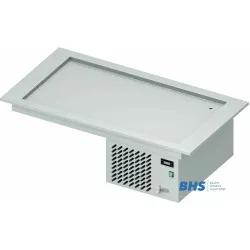
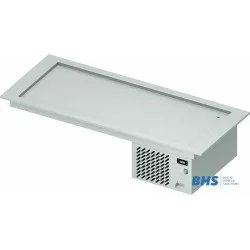
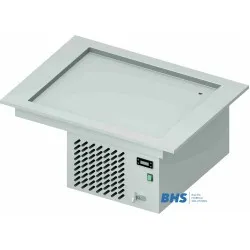
Cold Surfaces — a cold surface in canteen modular systems provides a chilled worktop for displaying chilled food in the serving front; passive or active surface cooling maintains the product at 2–8°C temperature, ensuring freshness and HACCP compliance for HoReCa businesses.
Cooling principle of cold surfaces
Cold Surfaces — cold surface cooling can be implemented in two ways: passively (with ice) and actively (with a compressor cooling system). Ice cooling — ice is placed on the surface or in a special ice well beneath the surface; products on the surface are chilled by absorbing the cooling effect from the ice; the method is simple and suitable for fish and seafood display surfaces, where products are often placed directly on ice. Active cooling without a compressor — some surface models use cold water circulation beneath the surface layer; cold water from a central cooling system or an ice-water reservoir circulates through channels beneath the surface, maintaining a stable surface temperature without the need for ice replenishment; explore Canteen Modular Systems.
Difference between cold surfaces and cold surfaces with refrigerators
Cold Surfaces — a standard cold surface and a cold surface with an integrated refrigerator are two distinct cooling solutions for the same function. Cold surface without a compressor — ice or cold water cooling; lower initial costs; greater operational effort (ice replenishment); suitable for smaller canteens or occasional display use. Cold surface with a refrigerator — compressor cooling; higher initial costs; autonomous temperature maintenance; suitable for intensive daily use; explore Cold Surfaces with Refrigerators and Cold Bain-Maries with Refrigerators.
Most suitable products for cold surfaces
Cold Surfaces — a cold surface is ideal for products where visual presentation is as important as temperature control, and which look excellent against a cold steel or ice background. Fish and seafood — fresh fish, prawns, oysters, crabs, salmon; the classic "fish market" display on ice or a cold steel surface; product freshness is visually assessable, and the cold surface preserves it. Deli delicacies — prosciutto, smoked salmon, cheese assortments, cold cuts; elegant display on a cold surface; explore Cold Bain-Maries and Worktop with Neutral Well for Ice Display.
HACCP and hygiene on cold surfaces
Cold Surfaces — HACCP requires that chilled food in the serving area be maintained at 2–8°C temperature; the cold surface cooling system is the primary tool for meeting this requirement. Temperature monitoring — staff regularly measure the surface temperature or the temperature of products on the surface; measurements are recorded in the HACCP log; for ice cooling, the amount of ice is monitored to ensure continuous cooling. Cleaning cold surfaces — the cold surface is cleaned after each shift with a food-safe disinfectant; special attention is given to cleaning fish and seafood surfaces, as these products can leave strong odour residues; explore Canteen Modular Systems.
HoReCa usage scenarios
Hotel restaurant with a cold surface — a dinner buffet’s fresh seafood zone with a cold surface and ice; oysters, prawns and salmon attractively arranged on an ice background; a striking visual effect; BHS equipment provides a professional solution. Corporate canteen with a cold surface in the deli section — a cold surface in the deli zone displays a cheese and cold cuts assortment; staff serve selected product portions. Premium restaurant with a cold surface for fish service — in the main course serving area, a cold surface keeps prepared fish portions before serving; BHS supplies the products. BHS offers cold surfaces to HoReCa businesses across Europe.
Frequently asked questions
Can a cold surface maintain fresh fish at a contact temperature below 4°C? Cold Surfaces — fresh fish is optimally stored at 0 to +2°C; standard cold surface cooling with ice can maintain this temperature at the product contact point; in active cooling surface models with a compressor, a lower temperature can be set using a thermostat; confirm the temperature capabilities of specific models with BHS specialists; explore Canteen Modular Systems.
Is a cold surface also suitable for displaying salads or desserts? Cold Surfaces — yes, a cold surface is versatile; displaying salads, dessert cakes and other chilled products on a cold surface is both functional and aesthetic; a cold surface with ice is especially attractive for dessert presentation; also explore Cold Bain-Maries.
Why choose BHS?
BHS – Baltic HoReCa Solutions supplies professional equipment for restaurants, cafés, hotels and canteens: more than 20,000 products from many manufacturers. Our specialists help you choose the right equipment and spare parts for your kitchen or bar.
Delivery
We deliver across the European Union. Delivery time and cost depend on the order volume and destination — contact the BHS team for an exact price and lead time.