


Electromechanical equipment · Potatoes
Potato peeling machines: where, how and why — plus an agronomist's advice on choosing potatoes
In a canteen that cooks 40 kg of potatoes a day, peeling by hand takes almost three hours and a quarter of every tuber ends up in the bin. A potato peeling machine does the same job in minutes. But the machine only works as well as the potatoes you put in it. This article covers where a peeler pays off, how it works and how to use it properly, how to choose a model, and what agronomists advise on variety, size and storage.
- Where a potato peeler pays off
- How a potato peeling machine works
- Using it properly, step by step
- Agronomist's advice: which potatoes to choose
- Storage and acrylamide
- Models and capacity
- Installation
- Potatoes in different kitchens
- Choosing and calculating
- Day-to-day use, mistakes and one autumn
- BHS service, maintenance and spare parts
- Models in the horecagear.com range
- Frequently asked questions
01 Where a potato peeler pays off
Potatoes are the cheapest and most common ingredient in the kitchen, but peeling them is one of the most expensive jobs — it is time a chef is not spending at the stove. If you peel more than 10–15 kg a day, a machine starts paying for itself.
02 How a potato peeling machine works
An abrasive disc spins at the bottom of the drum, and on some models the walls are abrasive too. The potatoes tumble over the disc and rub against each other, a water jet constantly rinses off the peel, and it goes down the drain. A cycle takes 2–4 minutes; then, at the push of a button, the potatoes roll out through the door into a container.
- Time — every extra minute grinds away flesh too; What to do: start with 1–2 min, check, add 30 s at a time
- Load — an overfilled drum peels unevenly, a half-empty one takes off too much; What to do: exactly the rated load, e.g. 10 kg
- Size — small tubers get over-peeled while large ones are still not done; What to do: grade by size before peeling
- Variety and eyes — deep eyes remain and have to be cut out with a knife; What to do: choose varieties with shallow eyes (section 04)
- Water — without water the peel is not rinsed away and the disc clogs; What to do: turn on the water before the motor
The machine also peels carrots, beetroot, parsnips and celeriac. New potatoes with thin skins are not really peeled — 20–40 seconds just rinses and scrubs the surface.
03 Using it properly, step by step
- Grade — large separately from small, discard damaged and green ones.
- Rinse off soil if the potatoes are very dirty — grit wears the disc faster.
- Turn on the water, then the motor, and load the rated amount.
- Timer 1–2 minutes — after the first batch, adjust the time for that variety.
- Unload into a container of cold water and cut out any remaining eyes with a knife.
- Keep in water — peeled potatoes discolour in air. In water in the fridge — up to 24 hours.
- After each shift — rinse the drum, disc and drain, remove and clean the disc.
04 Agronomist's advice: which potatoes to choose
For the machine, what matters is the tuber's shape, eyes and skin; for the kitchen, it is the dry matter and cooking type. Agronomists recommend buying not just "potatoes" but a specific variety, size grade and quality.
Cooking type: what you will make
low dry matter, holds its shape
salads, boiled in skins, stews
all-rounder, slightly floury
boiled, roasted, soups
high dry matter, breaks up
mash, chips, roasties
very high dry matter
mash, doughs, starch
Varieties in Ireland
‘Rooster’ dominates the Irish market: a round, red-skinned, floury all-rounder with shallow eyes — easy to peel by machine. ‘Kerr's Pink’ is very floury and loved for mash, but its deep eyes mean more knife work after the peeler. ‘Maris Piper’ is oval with shallow eyes and a classic for chips and roasties; ‘British Queens’ is a floury early potato with shallow eyes, and ‘Golden Wonder’ is known for storing well. For chips, choose low-sugar varieties and always ask your supplier which variety suits your dish.
05 Storage and acrylamide
| Storage | Guideline |
|---|---|
| Table potatoes | +4…+6 °C, dark, 85–95 % humidity, ventilated |
| For chips and frying | above +6 °C — in the cold, sugars build up and acrylamide forms during frying |
| Peeled potatoes | in cold water in the fridge for up to 24 h |
| Cut chips | rinse in cold water (not below +6 °C), dry |
The EU acrylamide regulation requires food businesses that make chips to use varieties with lower sugar content, to consult their supplier on the most suitable variety and to store potatoes above +6 °C. In Ireland this is overseen by the FSAI. If potatoes have been kept in the cold for a long time, leave them at room temperature for 1–2 days — some of the sugar turns back into starch. More about fryers in "Gas, electric or induction fryer for your products".
06 Models and capacity
5 kg
0.37 kW
60 kg/h
230/400 V
see product
0.55 kW
120 kg/h
400 V
10 kg
0.75 kW
120 kg/h
230/400 V
15 kg
1.1 kW
500 kg/h
400 V
25 kg, with side abrasive
1.1 kW
450 kg/h
230/400 V
- Up to 20 kg a day — 5 kg batch.
- 20–80 kg a day — 10 kg batch.
- 80–200 kg a day — 15–18 kg batch.
- Over 200 kg a day — 25 kg batch with side abrasive.
All models are stainless steel, with a transparent lid, microswitch and timer. See the full range in potato peeling machines, and for washing and peeling vegetables — vegetable peelers.
07 Installation
- Location — in the vegetable prep ("dirty") area, separate from ready-to-eat food.
- Water — cold water supply with a shut-off valve.
- Drain — into a floor gully or sink with a peel and starch trap; peel and grit must not go straight into the sewer. Stalgast machines have a separator (€111.38) — ask our service team about compatibility.
- Electricity — 230 V or 400 V depending on the model; FIMAR models are 230/400 V.
- Floor — level and moisture resistant; secure the machine so it does not vibrate.
08 Potatoes in different kitchens
- Café, bistro — 10–20 kg; Recommendation: 5 kg machine, type B for all-round dishes
- Canteen, school — 30–80 kg; Recommendation: 10 kg machine, type B–C for mash and boiled
- Restaurant with chips — 20–60 kg; Recommendation: 10 kg machine + chip cutter; low-sugar variety, storage above +6 °C
- Central kitchen, production — 100–500 kg; Recommendation: 15 kg or 25 kg machine + vegetable washer
09 Choosing and calculating
| Criterion | What to check |
|---|---|
| Kg per day | your busiest day, not the average |
| Batch | kg per cycle — how fast you need it |
| Electricity | 230 V or 400 V in your kitchen |
| Abrasive | disc, side abrasive on large models; replaceable |
| Drain | is there a gully and a peel trap |
| Service | availability of discs and seals |
A simple calculation: canteen, 40 kg of potatoes a day
Assumptions: by hand a cook peels ~15 kg an hour — 40 kg takes 2.7 h. With the FIMAR PPN/10M (4 batches of 10 kg, loading and cutting out eyes) — ~0.6 h. Waste by hand ~20 %, by machine with a suitable variety ~12 %. Potatoes €0.45/kg, 250 working days. Employer cost — €20.14 an hour (average hospitality wage plus employer PRSI).
| Item | Per year |
|---|---|
| 517 working hours saved | +€10,406 |
| Less waste: 3.2 kg a day | +€360 |
| Total | €10,766 |
A machine at €1,509.00 pays for itself in ~1.7 months. The variety effect: if you buy potatoes with deep eyes, waste rises by another ~5 % (€225 a year) and cutting out eyes takes ~15 minutes a day (€1,259 a year) — around €1,484 a year in total. Do the sums with your own prices. More on saving labour time with equipment in "Reduce labour costs with equipment".
10 Day-to-day use, mistakes and one autumn
- Potatoes ground down to half — cycle too long, small tubers; Solution: shorten the time, grade by size
- Peel stays on — worn disc, too little water, overfilled drum; Solution: replace the disc, check the water, smaller batch
- Peeled potatoes go dark — left in the air; Solution: into cold water immediately
- Drain blocks — grit and peel; Solution: peel trap, rinse after each shift
- Machine won't start — lid microswitch, fuse; Solution: check the lid, call our service team
11 BHS service, maintenance and spare parts
Service workshop in Riga, parts across Europe
Without a potato peeler, a canteen needs an extra three hours from one cook. BHS has more than 20 years of experience servicing kitchen equipment: certified technicians, repairs in our workshop at Vagonu iela 23, Riga, and a spare parts warehouse in Riga with delivery across the Baltics and Europe.
What BHS service does
Spare parts for potato peelers
| When | What to do |
|---|---|
| Every day | rinse the drum, disc, door and drain; dry the lid |
| Every week | remove the disc and clean underneath; check the door seal |
| Once a month | check abrasive wear, the lid microswitch and the water nozzle |
| Once a year | technical maintenance — easiest with a maintenance contract |
12 Models in the horecagear.com range
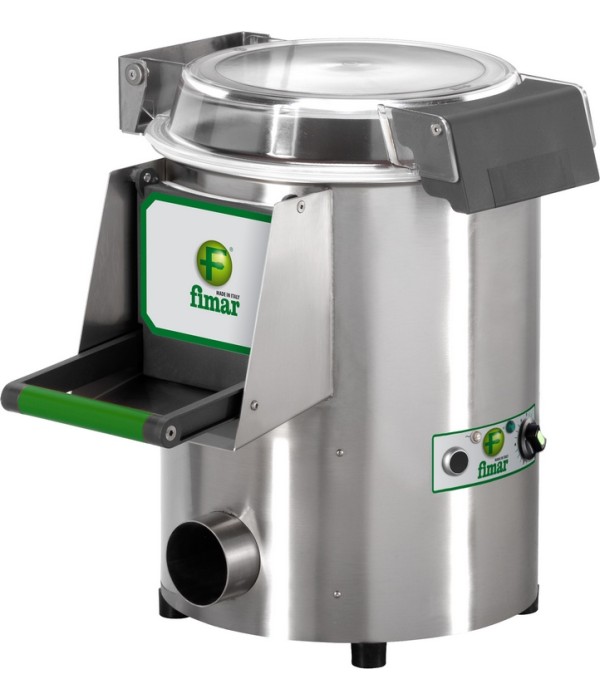
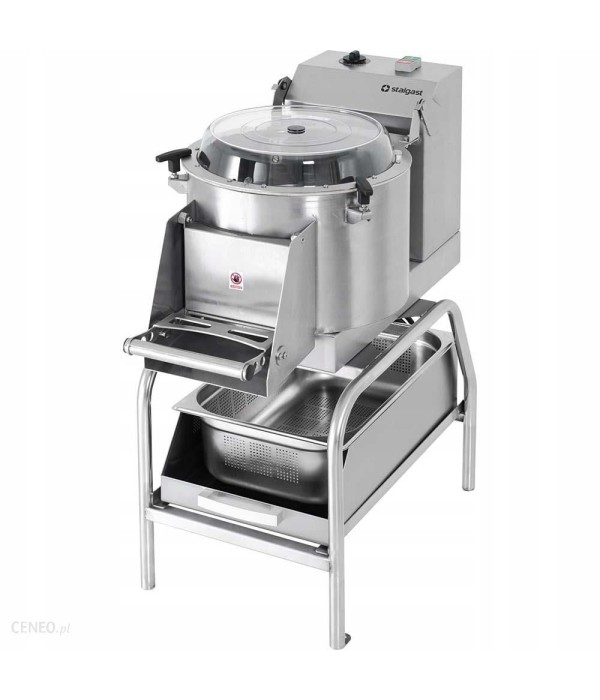
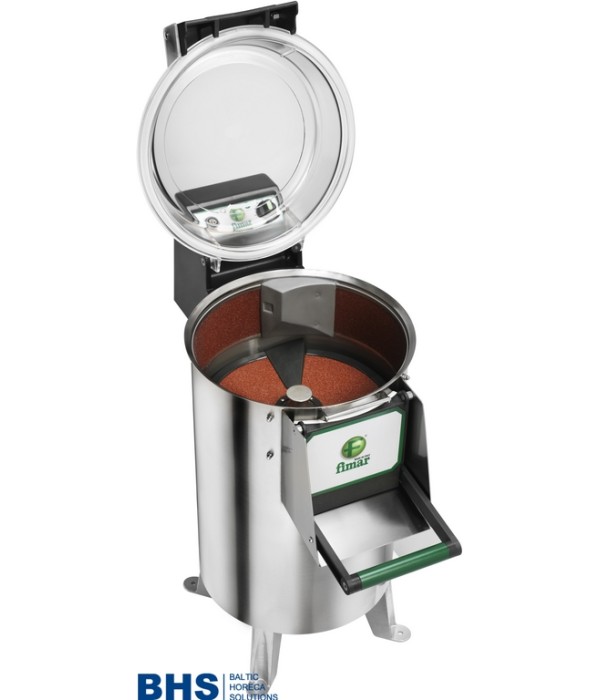
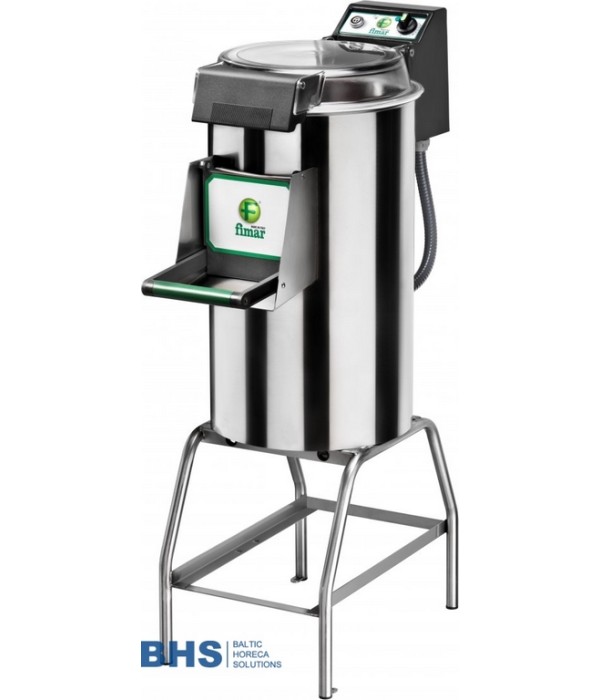
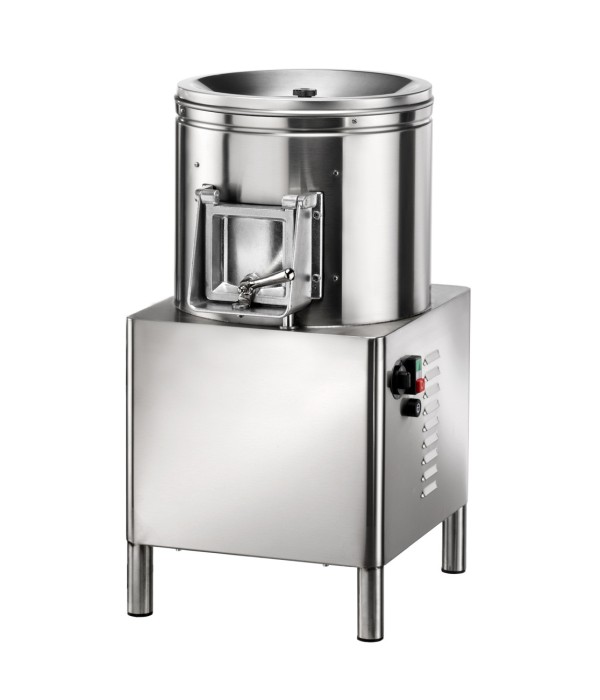
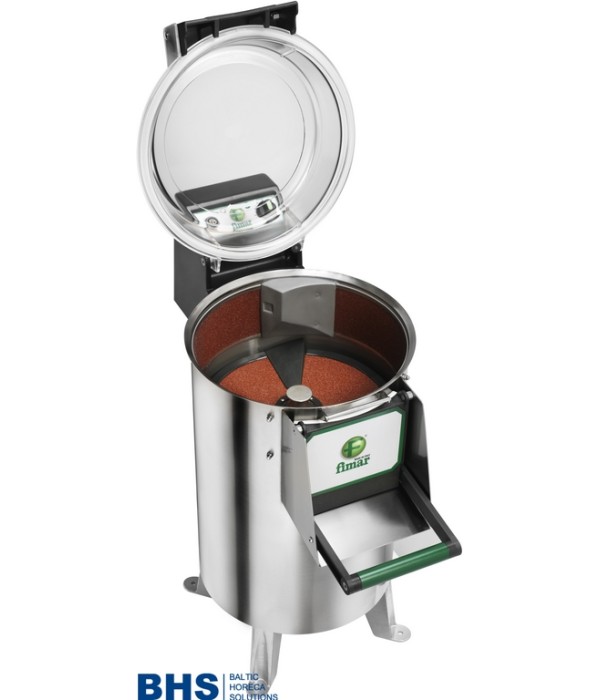
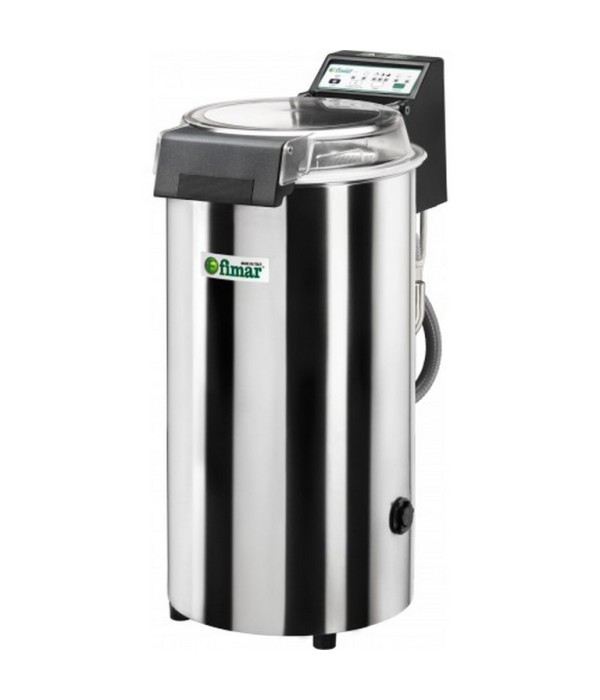
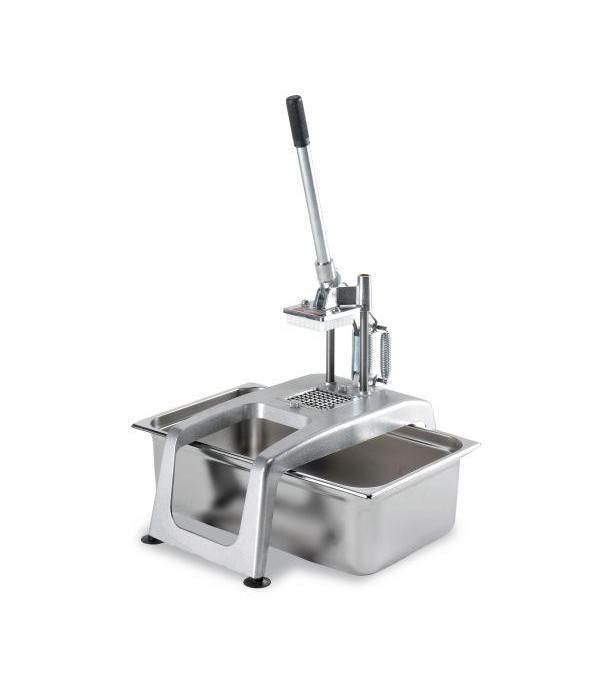
Prices excl. VAT, November 2026. 12-month warranty; after that — BHS service, maintenance contracts and spare parts.
Potato peelersVegetable peelersElectromechanical equipmentSpare parts
13 Frequently asked questions
From how many kg a day does a machine pay off
From 10–15 kg a day a machine already saves at least an hour of work. At 40 kg a day it pays for itself in a few months.
How much potato does the machine take off
With a suitable variety and the right time, waste is around 10–15 % in practice; by hand — 15–25 %. Too long a cycle and deep eyes increase waste.
Which potatoes suit a machine best
Round or oval, with shallow eyes, smooth skin and a uniform 45–70 mm size, without scab or greening.
Does the machine peel carrots and beetroot
Yes, most models also peel carrots, beetroot and parsnips; the time depends on size and skin thickness.
How should potatoes for chips be stored
Above +6 °C, in the dark and ventilated — less sugar builds up and less acrylamide forms during frying.
Do I need a peel trap
Yes, peel, starch and grit must not go straight into the sewer. Fit a trap or separator on the drain.
Does BHS repair and service potato peelers
Yes. BHS service repairs potato peelers and other electromechanical equipment in our Riga workshop, offers maintenance contracts and delivers parts across Europe. Customer service 24/7: +371 25 522 233.
Are spare parts available
Yes, abrasive discs and other potato peeler spare parts are in stock in Riga, with delivery across the Baltics and Europe.
Let's choose a potato peeler for your kitchen
Tell us how many kilos of potatoes you peel a day, what power supply and drainage you have and what you cook — we will help you choose a model, and afterwards take care of maintenance, repairs and spare parts.
Variety, storage and waste figures are practical guidelines; ask your supplier about the exact suitability of a variety. Calculations are illustrative — do the sums with your own prices. Ciarán in the story is a fictional character. Prices excl. VAT, November 2026.