
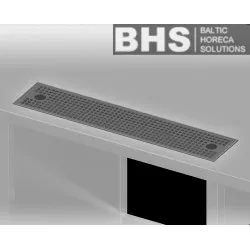
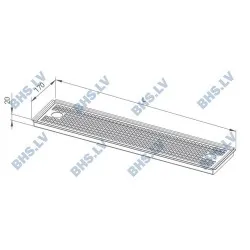
A drip tray for a bar is a stainless-steel trough or grid placed at the front of the bar work surface — it collects spilled drinks, overflowing liquids and rinse water, keeping the bar work surface dry and clean. A professional drip tray plays an important role in bar hygiene and visual order — without it, the bar surface becomes wet and dirty in intensive service conditions. Correctly positioned and properly dimensioned, the tray also prevents liquids from getting under the bar counter and promotes a clean working environment. The BHS range includes drip trays as part of the Bar Station component range.
Models in various sizes are available to match the width of the bar work area. Additionally, drip trays for coffee tables and other bar station components are also available.
A drip tray for a bar solves one of the most practical everyday problems — the accumulation of liquids on the bar work surface. In bars and restaurants where fast service is a priority, the bartender cannot stop to wipe up every spilled glass or spilled cocktail portion. The drip tray takes over this function — liquids drain away through the grid or openings, and the surface remains dry during the service process.
Product range
Bar drip trays are available in various sizes and configurations to suit the specifics of the bar work area and aesthetic requirements.
Stainless-steel trays with a grid are the most common option — the grid allows liquids to drain freely while providing a stable surface for glasses and containers. Such trays typically offer higher durability and a longer service life.
Trays with a liquid compartment are deeper models that hold a larger volume of liquid before needing to be emptied — more suitable for bars with a high turnover of drinks. Emptying is done periodically during shift changes.
Combination trays combine the drainage function with a drainboard tray solution — a practical option for bars where one surface serves multiple functions. All trays integrate well with table tops for bar stations 600.
How to choose a drip tray for a bar
The main criterion is the width of the tray — it must match the length of the front of the bar work area where the bartender serves drinks to customers. A tray that is too short will not cover the entire active serving area.
The second aspect is the depth of the tray and its liquid capacity — a deeper tray or one with a larger capacity requires less frequent emptying, reducing maintenance work during busy shifts.
The third criterion is ease of cleaning — whether the tray can be easily removed from the bar work surface. Equipment that can be fully removed from the bar allows for more thorough cleaning and disinfection. It is also important to check whether the specific model is compatible with the existing bar work surface design.
- Choose the width to match the length of the bar serving area
- Consider the capacity based on the volume of liquids during a shift
- Ensure easy removal for cleaning and disinfection
- Check compatibility with the existing work surface cut-out or mounting solution
Drip tray and bar workflow
A drip tray for a bar not only keeps the bar surface clean but also positively impacts the overall bar workflow. A bartender working with a drip tray can focus on preparing drinks without stopping to wipe up every spilled glass or spilled liquid. In bars and cocktail bars where fast service is a priority during peak evening hours, this seemingly small component can significantly affect service speed and customer satisfaction.
Cleaning and disinfection in an intensive work environment
Regular cleaning and disinfection of the drip tray is a hygiene essential — liquids that accumulate in the tray create a favourable environment for bacteria if the container is not regularly emptied and washed. Stainless-steel trays are easier to clean than plastic materials, but they also require regular disinfection with HoReCa-approved cleaning agents. At the end of each shift, it is recommended to completely empty and rinse the tray.
Drip tray for a coffee table and bar surface
In addition to the bar drip tray at the front of the bar station, cafés and bars also use drip trays for coffee tables — these are placed under the espresso machine or milk frother, collecting drips during the coffee preparation process. Both types of trays have their purpose, and for complete bar station hygiene, a combination of both solutions is recommended based on the specific bar work area configuration.
Tray materials and durability
A stainless-steel drip tray is more durable than plastic equivalents — its surface does not suffer from the effects of hot liquids, does not absorb dyes and remains aesthetic even after prolonged use. AISI 304 steel is the standard in professional HoReCa trays, and with proper maintenance, its service life is many times longer than that of household-grade materials. Investing in a professional stainless-steel tray pays off in cost efficiency over the long term.
Frequently asked questions
How often should a bar drip tray be emptied?
The emptying frequency depends on the volume of liquids and the tray’s capacity. The standard recommendation is to check the tray every 2–3 hours during intensive work and empty it when it is one-third full. Increasing the frequency during peak evening hours will prevent the risk of overflow and keep the bar surface dry.
What size drip tray is needed for a standard bar?
The most common option is a tray that covers the entire front serving area of the bar — usually 40–80 cm in length depending on the bar’s width. BHS offers various sizes and can manufacture a tray to custom dimensions based on the specific bar layout.
Regular inspection of the drainage system
Regular inspection of the drip tray along with pipes and connections ensures a long service life without the risk of overflow. It is recommended to check the drainage pipes once a month and, in case of blockages, clean them with a specialised cleaning solution or mechanically. A properly functioning drainage system reduces moisture from reaching the underside of the bar counter, preventing material damage and unnecessary renovation costs. The BHS service team maintains drainage systems for bar equipment.
Why choose BHS?
BHS – Baltic HoReCa Solutions supplies professional equipment for restaurants, cafés, hotels and canteens: more than 20,000 products from many manufacturers. Our specialists help you choose the right equipment and spare parts for your kitchen or bar.
Delivery
We deliver across the European Union. Delivery time and cost depend on the order volume and destination — contact the BHS team for an exact price and lead time.