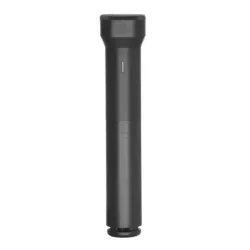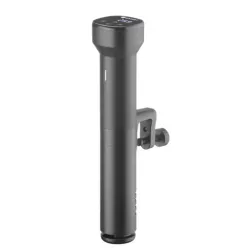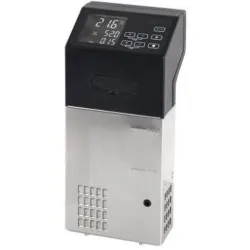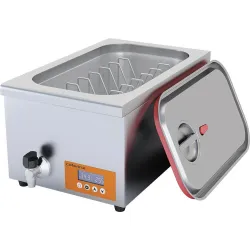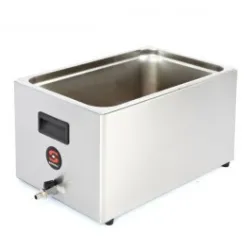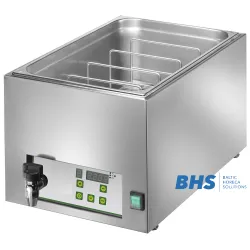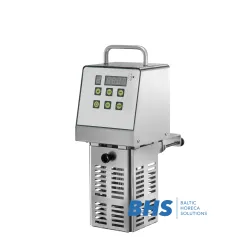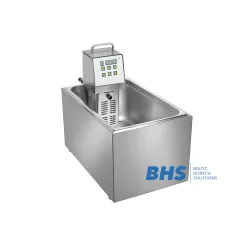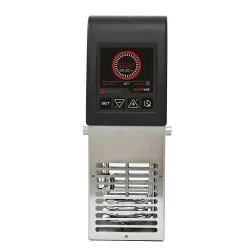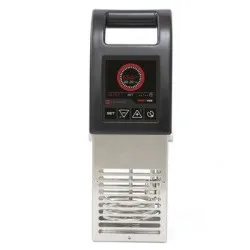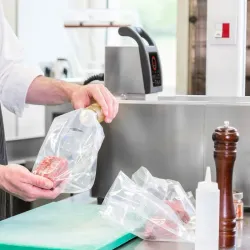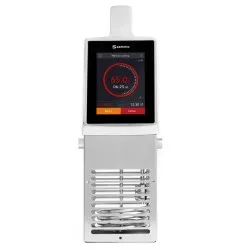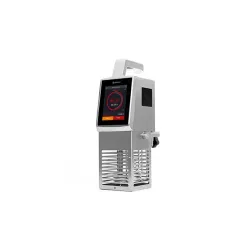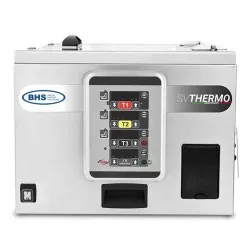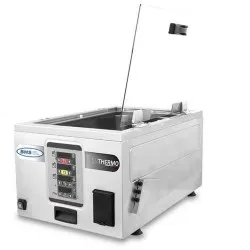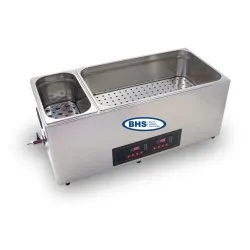
A sous-vide circulator is professional kitchen equipment that provides precise temperature control in a water bath for the vacuum cooking (sous-vide) method in restaurants, fine dining establishments, hotel kitchens and HoReCa businesses across Europe. The sous-vide method allows you to prepare meat, fish, vegetables and eggs with an ideal and consistent result every time — the product is cooked in a vacuum bag at a precisely set temperature for hours or even days, preserving juices, flavour and texture. BHS offers sous-vide circulators as part of the Hot Equipment range.
The BHS range includes professional sous-vide circulators with various power ratings and water tank capacities to suit different needs. BHS specialists help you choose the right model based on volume and frequency of use. Also explore food dehydrators and other hot equipment.
Sous-vide cooking revolutionised professional culinary arts — this method achieves precise internal product temperature that cannot be guaranteed with traditional methods such as pan-frying or oven-roasting. The circulator heats and continuously circulates water, maintaining the temperature with 0,1°C precision for several hours or even days. The result: evenly cooked meat from edge to edge, perfect texture without overcooking, minimal weight loss and a fully reproducible result every shift — regardless of the chef’s experience. BHS supplies sous-vide circulators to HoReCa businesses across Europe.
How a sous-vide circulator works
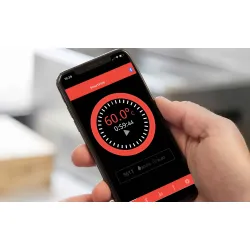
A sous-vide circulator operates in a water bath or specialised polycarbonate container — the device heats the water to a precise set temperature and continuously circulates it, ensuring even heat distribution throughout the container. The product, sealed in a vacuum bag, is cooked for a set time — from 30 minutes to 72 hours depending on the type of product and desired result. The temperature range for professional circulators is typically 0°C to 95°C, allowing the processing of various products — from low-temperature vegetable blanching to pasteurisation and collagen breakdown in tougher cuts of meat. The circulator’s precision is its main value: oven-roasting yields fluctuations of ±5–10°C, while sous-vide achieves ±0,1°C. Many professional models feature Wi-Fi or Bluetooth connectivity and apps for remote control. BHS helps you select a circulator based on power and required tank size.
Products for sous-vide cooking
The sous-vide method is suitable for a wide range of products with precise parameters. Beef steak — 54–57°C, 1–4 hours: medium-rare with ideal tenderness and even doneness; pork fillet — 60–63°C, 1–2 hours: juicy and safe; lamb fillets — 57°C, 1–3 hours. Chicken fillet — 63–65°C, 1–4 hours: fully safe and juicy. Salmon and sea bass — 45–52°C, 30–45 minutes: delicate texture that is difficult to replicate with other methods. Sous-vide eggs — 63°C, 45–75 minutes: the perfect "63° egg" with a runny yolk and creamy white. Vegetables — carrots, asparagus 85°C, 30–60 minutes: retaining colour and nutrients. Prepared products can be stored in a refrigerator and quickly reheated during service. BHS advises on the optimal parameters for different products.
Hygiene and HACCP in the sous-vide process
Sous-vide cooking involves specific HACCP considerations in a commercial kitchen. Pasteurisation through time and temperature combinations — for poultry 63°C/4 hours or 70°C/10 minutes is equivalent in terms of pasteurisation effect; it is important to use validated protocols. Shock chilling after sous-vide — if products are pre-cooked and stored, immediate shock chilling to ≤3°C with a blast chiller or ice-water bath is mandatory. Vacuum bag quality — only food-contact approved bags should be used; a damaged bag can allow contamination. Low-temperature risks — the sous-vide 50–55°C zone can be favourable for bacterial growth if the time and temperature combination is incorrect; scientifically validated parameters must be followed. Cleaning the circulator and tank — regular washing after each session with food-safe agents. BHS advises on implementing HACCP compliant sous-vide practices.
HoReCa application scenarios
In a fine dining restaurant, sous-vide is a standard tool — the chef pre-cooks batches of beef fillets, only searing them in a pan during service to achieve a consistent result regardless of kitchen busyness. In a hotel kitchen, where hundreds of portions are served at breakfast every morning, sous-vide egg preparation with a programmed timer overnight delivers a perfect result without maximum staff involvement. In a catering business, sous-vide allows large batches to be pre-cooked, stored in a refrigerator and quickly reheated during service — the process optimises time and reduces waste. In a café, sous-vide chicken fillet guarantees consistent quality that can be entrusted even to less experienced staff.
Frequently asked questions
What power rating does a circulator need? The power choice (1000–2500 W) determines how quickly the device heats the water and what tank capacity it can maintain. For a single shift with 10–20 bags, a 1500 W circulator and a 15–30 litre tank are sufficient. For larger production or multiple simultaneous sous-vide batches, more powerful models 2000–2500 W are required. BHS helps calculate the required power based on volume.
Can a sous-vide circulator be used without vacuum equipment? The sous-vide method requires hermetically sealed bags — for commercial use, chamber vacuum equipment or external vacuum equipment is necessary. Some products are processed in zip-lock bags using the water displacement method, but this is not suitable for a commercial environment. BHS offers a complete sous-vide solution set.
Why choose BHS?
BHS – Baltic HoReCa Solutions supplies professional equipment for restaurants, cafés, hotels and canteens: more than 20,000 products from many manufacturers. Our specialists help you choose the right equipment and spare parts for your kitchen or bar.
Delivery
We deliver across the European Union. Delivery time and cost depend on the order volume and destination — contact the BHS team for an exact price and lead time.