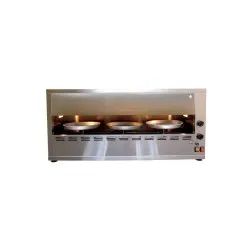
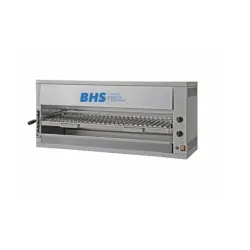
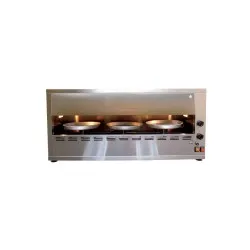
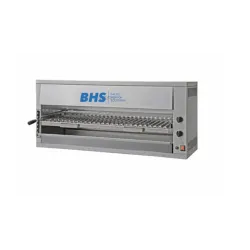
Pizza grills combine pizza baking speed with grill heat intensity — direct contact heat from below and above evenly sears the pizza base and melts toppings at the right temperature, creating the characteristic grill texture. BHS offers these appliances across Europe.
How a pizza grill works
A pizza grill operates on the principle of direct contact heat, which differs from the indirect heat of a pizza oven. Two-sided heating — pizza grills with bottom and top heating surfaces; the pizza is pressed between two hot surfaces or a hot surface below with a hot cover above. Fast baking — a hallmark of pizza grills; high temperature and direct contact reduce baking time to 2–5 minutes. Grill pattern — a pizza grill sears the characteristic ridge pattern onto the pizza base; a visual texture not provided by a traditional pizza oven with a stone base. Heat control — pizza grills with independent top and bottom temperature control; adjustable for different pizza thicknesses and crust styles. See also electric grill surfaces.
Types and configurations of pizza grills
Pizza grills are available in various types to suit production volume and pizza style. Contact grill pizza model — a pizza grill with two-sided heating and a thicker grill surface; ideal for thin, fast-baking pizza and flatbread style. Stone grill — a pizza grill with a stone surface below and a radiant cover above; combines the benefits of stone heat with a faster process. Gas pizza grill — a pizza grill with gas burners; higher temperature and lower long-term costs for intensive production. Electric pizza grill — a pizza grill with electric heating elements; easier installation and temperature control without a gas connection. Portable pizza grill — a pizza grill in compact format for events and outdoor catering; LPG or electric power.
Advantages of a pizza grill compared to a pizza oven
Pizza grills offer several distinct advantages over a traditional pizza oven. Speed — pizza grills reduce baking time; high contact temperature triggers the Maillard reaction faster than the convection heat of a pizza oven. Grill effect — pizza grills sear a visual grill pattern onto the pizza base; releases a charred aroma and texture. Compact size — pizza grills often take up less space than a traditional pizza oven; suitable for smaller kitchens. Installation — electric pizza grills do not require a special ventilation system like gas pizza ovens. Advantages of a pizza oven — a pizza oven provides a higher maximum temperature (500°C) and a more authentic Neapolitan pizza result; a pizza grill is faster but produces a different end product. See also salamander grill.
Pizza grill maintenance and safety
Pizza grills require regular maintenance to ensure optimal performance and hygiene. Cleaning the grill surface — clean the pizza grill cooking surfaces after each shift with a metal scraper; remove burnt pizza residue and crispy dough crumbs while the surface is still warm. Oiling — oil cast iron surfaces of a pizza grill with a small amount of cooking oil after cleaning; prevents sticking and protects the cast iron from oxidation. Grease collection — grease runoff from a pizza grill collects in a bottom tray; clean after each shift. Temperature check — regularly check the temperature uniformity of a pizza grill with an infrared thermometer. See also rotisserie grill.
HoReCa usage scenarios
A pizzeria with an electric pizza grill — fast-baking pizza ready in 3 minutes; high turnover without the high investment cost of a pizza oven. A restaurant with a pizza grill for a quick lunch format — a business-oriented lunch menu; grilled pizzas prepared in 5 minutes; no long waits for guests. Catering with a portable pizza grill at an event — outdoor festival with a pizza stand; an electric grill in compact format works from a 16A socket.
Frequently asked questions
What is the difference between a pizza grill and a traditional pizza oven? A pizza grill uses direct contact heat from both sides, searing a grill pattern and speeding up baking; a pizza oven (especially with a stone base and gas/wood heat) reaches higher temperatures and produces a more authentic pizza crust — the choice depends on the pizza style and production speed requirements. See pizza ovens.
Is a pizza grill suitable for all types of pizza? A pizza grill is best suited for thin, crispy pizza, flatbread and focaccia; for thick, fluffy Neapolitan pizza, a pizza grill may not achieve the required internal crust structure; for this style, choose a pizza oven with a stone base and high temperature. See also contact grills.
Why choose BHS?
BHS – Baltic HoReCa Solutions supplies professional equipment for restaurants, cafés, hotels and canteens: more than 20,000 products from many manufacturers. Our specialists help you choose the right equipment and spare parts for your kitchen or bar.
Delivery
We deliver across the European Union. Delivery time and cost depend on the order volume and destination — contact the BHS team for an exact price and lead time.