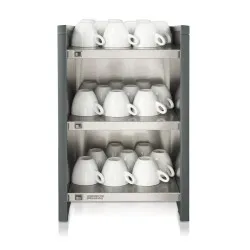
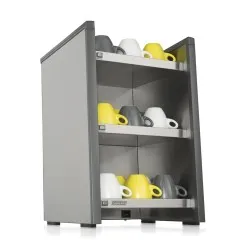
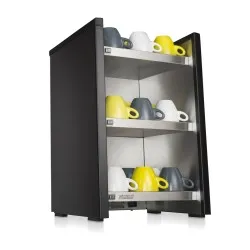
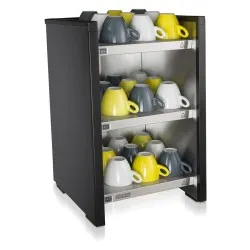
Cup warming is one of the foundational elements of barista craft and HoReCa serving culture — in the specialty coffee world, a pre-warmed cup is a mandatory requirement for high-class espresso preparation. Even the best espresso in a cold cup reaches the customer 5–8 degrees colder than intended, affecting aroma, crema stability and the overall tasting experience. BHS helps equip professional cafés and espresso bars.
Types of cup warmers
Built-in warming plate on an espresso machine — most professional espresso machines come with a warming plate on top, allowing cups to be stored directly on the machine. The temperature in this zone is usually 60–70°C. Separate electric cup warmer — a stationary unit with built-in heating elements, where cups are stored in layers. Models with a capacity of 20–60 cups. Dry warmers keep cups warm in hot air; wet warmers (with steam or water heating) maintain higher humidity. UV sterilisation warmers combine warming with sterilisation — useful in medical or hotel contexts.
When and where a cup warmer is needed
In espresso and specialty coffee bars, cup warming is an absolute standard — any lack of a cup warmer is noticeable in product quality. In hotel breakfast areas, a cup warmer by the coffee station ensures every espresso or cappuccino served arrives in a warm cup. In restaurants with a coffee menu and high beverage turnover, a separate warmer provides a cup reserve beyond the espresso machine’s capacity. During conference breaks, a warmer at the coffee station keeps cups ready for serving.
Temperature and coffee quality
The ideal cup warming temperature for espresso preparation is 45–55°C — warm enough to avoid lowering the beverage’s temperature but not so hot as to dry out the cups or create discomfort for the customer. For cappuccino and latte cups, a higher temperature is recommended — 55–65°C. Excessively high temperatures (above 75°C) can damage porcelain colour or glaze. Regular temperature checks with a thermometer are advisable. Cup warming practices can also be implemented manually — by pouring hot water into the cup before espresso preparation, though this method requires extra time.
HoReCa usage scenarios
In a specialty café, the barista places a cup in the warmer at least 5 minutes before each espresso — this is a standard quality procedure that customers may not notice but will feel in the beverage’s temperature. In a large café with high beverage turnover, a separate 40–60 cup warmer ensures a pre-warmed cup is always ready for any type of drink. In a hotel restaurant with buffet breakfasts, an electric cup warmer next to the coffee station allows guests to independently take a warm cup. Also check out coffee machines.
Frequently asked questions
Is a cup warmer mandatory? In specialty and upscale cafés — yes, it is a standard. In casual cafés or restaurants with low coffee turnover — useful but not mandatory. The investment pays off with higher customer satisfaction regarding coffee temperature.
Can cups be stored in the warmer all day? Yes, warming does not affect cup materials at normal temperatures. Periodically ventilate the warmer to prevent moisture buildup. Cups should be washed every evening as usual — maintenance does not require special procedures, making daily work easier.
Why choose BHS?
BHS – Baltic HoReCa Solutions supplies professional equipment for restaurants, cafés, hotels and canteens: more than 20,000 products from many manufacturers. Our specialists help you choose the right equipment and spare parts for your kitchen or bar.
Delivery
We deliver across the European Union. Delivery time and cost depend on the order volume and destination — contact the BHS team for an exact price and lead time.