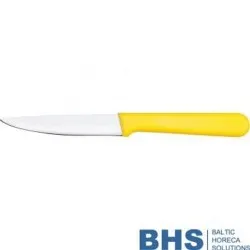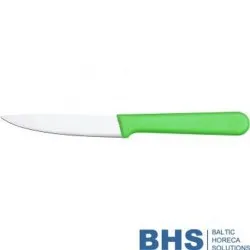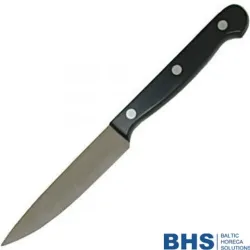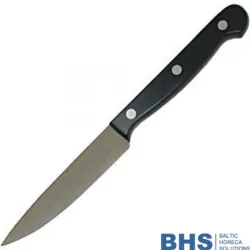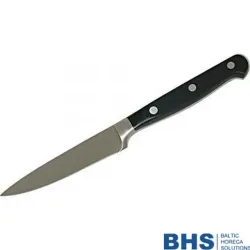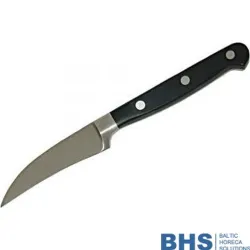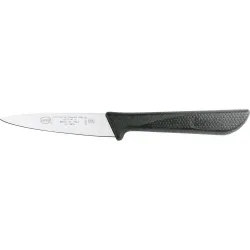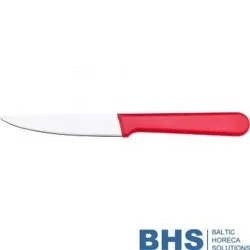
A vegetable peeling knife, or paring knife, is a small and precise professional kitchen knife with a short blade (6–10 cm), designed for removing vegetable peels, precise processing, decoration, and tasks where a large chef’s knife is too cumbersome in restaurants, cafés, canteens, and HoReCa kitchens across Europe. The paring knife is an essential part of every professional kitchen knife set—it complements the chef’s knife in smaller and more precisely controlled tasks. BHS offers vegetable peeling knives as part of its Knives and Boards range.
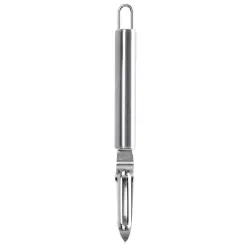
The BHS range includes peeling knives in various blade lengths and profiles—classic straight paring knives, curved blade bird's beak variants, and decoration knives. BHS specialists help select the right model. Also explore vegetable peelers, vegetable cutting knives, and HACCP kitchen knives.
The paring knife is the smallest and lightest knife in the kitchen, yet just as important as the large chef’s knife—it expands kitchen capabilities in precise tasks that a larger knife cannot perform. Peeling potatoes, decorating tomatoes, cleaning onions, removing apple cores, or crafting decorative vegetable roses—all these tasks require the precision and control of a small paring knife. BHS offers peeling knives to HoReCa businesses across Europe.
Types and blade profiles of paring knives
Classic straight paring knives (6–9 cm) are the most versatile, suitable for peeling, cutting, and decorating. The blade profile is straight or slightly curved upward at the tip. Curved blade or bird's beak knives feature a curved blade that allows precise processing of spherical shapes (potatoes, apples, tubers) with minimal product loss. Decoration knives (turning knife) have a distinctly curved blade for precise decorative cutting, turning, and carving, used in gourmet kitchens. Tomato knife—a serrated paring knife for cutting through soft tomato skin without pressure. Onion and garlic knife—a small, sturdy blade for processing onions. Green HACCP paring knives—the green handle indicates the knife is intended only for vegetables. BHS helps select the right profile.
Blade sharpness and material
The sharpness of a paring knife’s blade is critical—a dull knife tears soft produce and creates uneven, unattractive cuts. Stainless steel blade (AISI 420 or higher) offers an optimal balance between sharpness and ease of maintenance. High-hardness Japanese steel provides exceptional sharpness, suitable for experienced chefs with a sharpening routine. Ceramic blade—ultra-sharp but brittle—risk of damage from drops or contact with bone. A blade length of 7–8 cm is optimal for most paring tasks—small enough for control yet large enough for effective peeling. Regular sharpening with a paring knife sharpener or compact sharpening stone maintains sharpness. BHS advises on selecting paring knife materials.
Ergonomics and safety
A paring knife is often held with the fingers rather than a full grip—this requires special ergonomics. A small, lightweight handle with a non-slip surface reduces the risk of the knife slipping with wet hands or during intensive work. Finger protection: the thickness of the bolster ensures fingers are not too close to the blade. The HACCP green paring knife is an important tool at the vegetable peeling station—tasks involving small vegetable processing details are in direct contact with produce often eaten raw. BHS helps select ergonomic paring knives.
HoReCa usage scenarios
In a fine dining restaurant, a decoration knife allows the chef to precisely carve decorative vegetable ornaments for garnishes and platters—carrotage and turning techniques that make presentation unique. In a canteen with a large volume of vegetables, using a paring knife for quick potato and carrot peeling complements the peeler’s work—whenever a complex shape or eye needs removing. In a Japanese restaurant, a high-hardness paring knife ensures ultra-thin vegetable slices for decorative garnishes.
Frequently asked questions
What blade length is optimal for a paring knife? 7–8 cm is the universal optimum—small enough for precise control yet large enough for effective peeling. A smaller 6 cm is for decorative work. A larger 9–10 cm when a larger cutting surface is needed. BHS helps select based on specific kitchen tasks.
Can a paring knife be washed in a dishwasher? In most cases, yes. However, hand washing with warm water and immediate drying extends service life and keeps the blade sharper. Premium knives with wooden handles must only be hand washed. BHS advises on the care of specific models.
Why choose BHS?
BHS – Baltic HoReCa Solutions supplies professional equipment for restaurants, cafés, hotels and canteens: more than 20,000 products from many manufacturers. Our specialists help you choose the right equipment and spare parts for your kitchen or bar.
Delivery
We deliver across the European Union. Delivery time and cost depend on the order volume and destination — contact the BHS team for an exact price and lead time.