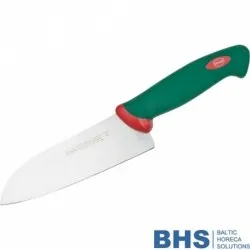
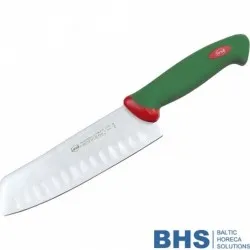
Japanese knives are the highest-tier professional kitchen knives—Japan’s forging tradition, high carbon content in steel, and precise blade sharpening angle control ensure exceptional sharpness, longer edge retention, and unmatched cutting precision, making them a trusted tool for professional restaurant chefs. BHS offers Japanese knives to HoReCa businesses across Europe.
Types and uses of Japanese knives
Japanese knives come in several classic types, each with distinct uses in a professional kitchen. Gyuto—the Japanese chef’s knife, similar to a chef’s knife but with a thinner and lighter blade; the most versatile Japanese knife for cutting meat, fish, and vegetables. Santoku—a three-function knife for slicing, chopping, and mincing; shorter and wider than a gyuto, popular among both professionals and home cooks. Yanagiba—a long, narrow-bladed knife for filleting fish and slicing sashimi; an essential tool in any Japanese or sushi restaurant. Deba—a robust, thick-bladed knife for cleaning fish and removing heads; designed for heavy-duty cutting. Nakiri—a straight-edged vegetable knife with parallel sides for precise vegetable slicing; ideal for high-precision cuts. BHS helps select the most suitable Japanese knives based on kitchen profile and cutting tasks.
Where to use Japanese knives
Japanese knives are ideal for professional kitchens where high cutting precision and tool quality matter. In Japanese, Asian, or fusion restaurant kitchens—yanagiba and deba knives are essential for preparing sashimi, sushi, and Eastern dishes. In fine dining restaurant kitchens—gyuto and santoku as the chef’s personal knives for high-precision cutting. In patisseries or dessert restaurants—Japanese knives for precise preparation of fruits, pastries, and decorative elements. In meat and fish processing kitchens—deba and specialized Japanese meat knives for delicate filleting work. In professional culinary schools—Japanese knives as teaching tools for chefs learning high-end cutting techniques.
Maintenance and sharpening
Proper maintenance of Japanese knives is essential for preserving their sharpness and longevity. Sharpening with a whetstone—Japanese knives should be sharpened with traditional Japanese whetstones, not metal sharpeners; the blade sharpening angle is 10–15° depending on the knife type. Hand washing—Japanese knives are not dishwasher-safe; high temperatures and aggressive detergents can damage the carbon steel blade and handle. Drying immediately after washing—especially for high-carbon knives, dry them promptly to prevent rust. Storage—knives should be stored in a magnetic knife holder or knife roll, never loose in a drawer where they can scratch each other.
HoReCa usage scenarios
In sushi or Japanese restaurant kitchens—yanagiba and deba knives as the main tools for precise fish filleting; gyuto for everyday preparation tasks. In fine dining restaurant chef teams—Japanese gyuto and santoku as personal knives for chefs who value tool quality and sharpness. At gastronomic events with live cooking demonstrations—Japanese knives as a visually appealing, prestige tool for showcases. In Asian kitchens or fusion restaurants—Japanese knives as an authentic kitchen tool matching the establishment’s culinary tradition. In culinary competitions or masterclasses—Japanese knives as high-end tools demonstrating precision cutting techniques.
Frequently asked questions
What is the main difference between Japanese and kitchen knives? Japanese knives are forged with higher carbon content, are thinner, sharpened at a narrower angle (10–15° vs. ’s 20–25°), and sharper, but require more careful maintenance. knives are more durable and forgiving for everyday use. Also see Meat Knives and Filleting Knife.
Can Japanese knives be washed in a dishwasher? No—Japanese knives must never be washed in a dishwasher. High temperatures and aggressive detergents damage the blade and handle. Wash by hand and dry immediately. Contact the BHS team and explore the full Knives and Boards range.
Why choose BHS?
BHS – Baltic HoReCa Solutions supplies professional equipment for restaurants, cafés, hotels and canteens: more than 20,000 products from many manufacturers. Our specialists help you choose the right equipment and spare parts for your kitchen or bar.
Delivery
We deliver across the European Union. Delivery time and cost depend on the order volume and destination — contact the BHS team for an exact price and lead time.