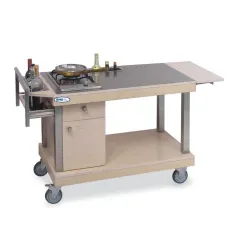
Flambéing at the table is a theatrical service element that emotionally engages guests and elevates the dining experience to a fundamentally new level. Preparing or flambéing food in front of guests demonstrates the chef's skill, creates visual drama and gives the meal an exclusive, personalised character. In fine dining, flambé service is one of the strongest differentiation methods between mid-range and upscale restaurants.
Flambé trolley design
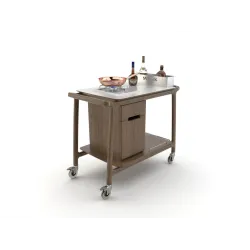
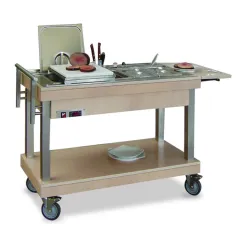
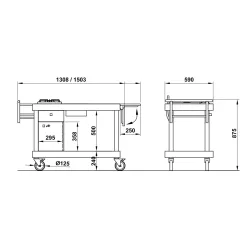
A flambé trolley is typically equipped with a flat, durable work surface and a burner stand. The work surface is large enough to accommodate all the necessary dishes and ingredients for the flambéing process—usually at least 50x60 cm. The burner stand securely holds the burner above the work surface, preventing accidental movement that could cause burns or fire hazards.
Some flambé trolley models are equipped with an additional shelf below for storing dishes, measuring cups and accessories. Classic flambé trolleys are made of wood with stainless steel or brass elements, while modern versions are often entirely stainless steel—more hygienic and durable for intensive commercial use.
Burner system and fuel
The central element of flambé service is an alcohol or propane burner. Alcohol burners, which use rectified spirit, are the most traditional and provide a stable, controllable flame. Propane or butane cartridge burners are more convenient to transport and store, as they do not require liquid fuel containers.
Flame regulation is important—the chef must be able to precisely control the heat intensity during both preparation and flambéing. Burner cartridges must be stored separately from heat sources. The reserve fuel quantity should be planned for each shift to ensure flambé service does not stop during order fulfilment.
Safety during flambéing
Safety during flambé service is an absolute priority. The trolley must be stable and not tip over—an unstable trolley with open fuel or an open flame is a serious fire hazard. A safe distance from flammable surfaces (fabric drapes, wooden furniture) must be strictly observed. The flame must be kept away from guests' hair, clothing and table decorations.
Staff performing flambé service must be trained in alcohol use and safe procedures in case of fire. Fire extinguishing equipment must be kept within reach. The use of open flames indoors is permitted in food establishments with appropriate fire safety measures.
Staff training for flambé service
Implementing flambé service requires specialised staff training. The waiter or chef performing flambé service must be trained in proper burner handling, alcohol dosage and safe movements at the table. Training ensures that flambé service looks professional and impressive to every guest, not just in isolated cases.
Classic flambé dish range
Traditional flambé dishes include Crêpes Suzette with orange and Cointreau sauce, Bananas Foster with brown sugar and rum, green peppercorn sauce with steak and brandy, and Cherries Jubilee with cherry liqueur. Preparing these dishes at the table is a theatrical ritual that guests find impressive to watch. In fine dining restaurants, flambé service as a premium offering is popular for wedding and anniversary meals.
Business benefits of flambé service
Flambé service is an effective marketing tool—guests who see flambé preparation at the next table become interested and want to order the same. Flambé moments shared by guests on social media enhance the restaurant's recognition and attract new customers. Flambé dishes justifiably command a higher price point on the menu, as they provide an exclusive experience that justifies the increased cost.
Flambé trolley maintenance
After each shift, the flambé trolley must be cleaned of oil, juice and alcohol stains. The work surface must be washed with an alkaline cleaning agent and wiped dry. The burner stand and cover elements must be checked for corrosion and mechanical damage. Wheels must be lubricated once a month to ensure quiet movement. Regular maintenance extends the trolley's service life and preserves its aesthetics.
Flambé trolley placement in the dining room
Proper placement of the flambé trolley in the dining room is an important prerequisite for safety and service quality. The trolley must be close enough to the table where flambé service is performed, but with a clear space of at least one metre around the work surface on all sides. The dining room layout must include a movement trajectory for the flambé trolley from its storage location to the respective table, avoiding collisions with other guests or furniture during hot service.
Implementing flambé service in the restaurant
Implementing flambé service requires preparation beyond just purchasing the trolley. Food establishments with open flames indoors must ensure appropriate fire safety equipment and staff knowledge of emergency procedures.
Pricing flambé dishes
Flambé dishes on the menu can justifiably command a higher price point, as the service includes additional labour time, alcohol costs and specialised equipment. Typically, flambé desserts in fine dining restaurants are offered at a price twice as high as a regular dessert without the theatrical service element. The flambé serving time from order to table is usually eight to twelve minutes.
Types of alcohol for flambé service
Different flambé dishes use different types of alcohol with varying flammability and aroma. Brandy and cognac are suitable for flambéing fruit desserts, rum for banana and pineapple recipes, whisky for steak and honey combinations, and kirsch for cherry flambéing. It is important to purchase high-proof alcohol without excess sweetness, so the alcohol does not overpower the dish's flavour.
Flambé trolley range on the market
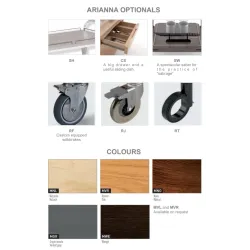
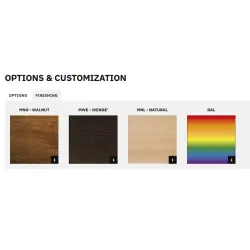
The flambé trolley range includes classic wooden trolleys with stainless steel or brass decorations, as well as entirely stainless steel models. Wooden trolleys provide an elegant appearance that matches traditional fine dining aesthetics. Stainless steel models are more durable and easier to clean—an advantage for restaurants with an intensive flambé service schedule and high hygiene standards.
Why choose BHS?
BHS – Baltic HoReCa Solutions supplies professional equipment for restaurants, cafés, hotels and canteens: more than 20,000 products from many manufacturers. Our specialists help you choose the right equipment and spare parts for your kitchen or bar.
Delivery
We deliver across the European Union. Delivery time and cost depend on the order volume and destination — contact the BHS team for an exact price and lead time.