

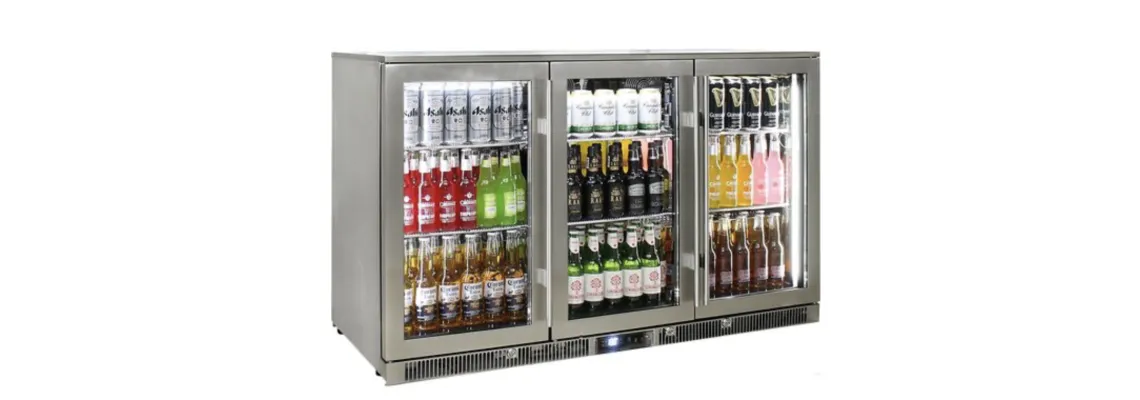
Bar equipment · 2026 guide
Bar refrigerators: how to choose, place and maintain them so drinks are always cold
A warm pint on a Friday night is more than an annoyance — it is lost money and a guest who picks another bar next time. This guide covers how a bar refrigerator works, which type and size to choose, where to put it, how to look after it and what a cold bottle really costs.
+2…+10 °C
working range of most bar refrigerators
24/7
BHS service, maintenance and spare parts from our Riga warehouse
< 1 cent
cooling cost per bottle in our example
Contents
- Short answer: which refrigerator for which bar
- How a bar refrigerator works
- Temperatures and models in numbers
- Food safety and HACCP
- Bar, pub, restaurant, hotel
- Choosing and a simple calculation
- Installation
- Daily routine and common mistakes
- BHS service, maintenance and spare parts
- Models in the BHS range
- Frequently asked questions
01 Short answer: which refrigerator for which bar
A bar refrigerator (back bar cooler) is a low refrigerator that sits under the counter or along the back wall, within the bartender's reach. It keeps drinks at serving temperature and shows them to the guest. The right type depends on what you sell most.
Cocktail bar
A drawer refrigerator for juices, syrups, dairy and garnish + one glass-door unit for bottles. Drawers mean less bending and less cold loss.
Beer bar and pub
A two- or three-door glass-door refrigerator for bottles and a refrigerated counter for crates. What matters most is volume and a reserve to chill before service.
Restaurant with wine
A separate zone for white and sparkling wine (8–12 °C) and an adjustable unit with a wide range, such as GORT with drawers, +2…+16 °C.
Hotel
For the bar — a built-in back bar module under the counter; for rooms — a silent 34 l minibar without a compressor.
Café and takeaway
One single-door glass refrigerator for soft drinks and milk — if it stands in the customer area, it sells by itself.
New project
If the counter has no final drawing yet, choose the refrigerators together with it — in BHS bar projects the cold modules are built into the counter at the drawing stage.
We don't just sell — we look after your equipment
Every bar refrigerator from BHS comes with service behind it: repairs in our workshop, preventive maintenance under contract and spare parts from our own warehouse in Riga, shipped across the Baltics and Europe. Our customer service line is open 24/7.
02 How a bar refrigerator works
A bar refrigerator works like any compressor refrigerator, but it is built for a different job: the doors are opened dozens of times an hour, the surroundings are warm and the air near the floor is heated by other equipment.
Compressor and refrigerant
The compressor pressurises the refrigerant, which then absorbs heat from the cabinet in the evaporator. New units use natural refrigerants R600a or R290 — for example DB302H (R600a) and CBC310 (R290).
Condenser and air
Heat leaves through the condenser — usually at the front bottom or at the back. Without air it runs non-stop and still does not cool.
Fan inside the cabinet
Fan-assisted cooling moves air between the bottles — the temperature is more even and recovers faster after the door is opened than with static cooling.
Doors and glass
Double tempered glass lets you see the stock but lets in more heat than solid doors. Self-closing doors and intact seals are half the battle.
Key principle: a refrigerator holds cold, it does not chill fast
A bar refrigerator is designed to keep drinks that are already cold, or to cool them gradually. Load six warm crates at 6 pm and the cabinet warms up, the compressor runs flat out and the first cold bottles will only be ready hours later. So stock is loaded the evening before, or there is a separate reserve refrigerator.
Climate class: will the refrigerator cope with your bar
Commercial refrigerators are tested at a set room temperature and humidity. Behind the counter in summer, next to a coffee machine or glasswasher, the air is often warmer than in the room. If the class is not given on the product page, ask before you buy.
| Class 3 (+25 °C, 60 %) | A cool, well-ventilated room. Fine for a storeroom, not for a hot counter. |
| Class 4 (+30 °C, 55 %) | A typical bar or café work area. A safe minimum for a back bar unit. |
| Class 5 (+40 °C, 40 %) | A very warm spot — terrace, hot kitchen, poorly ventilated counter. |
Hotel room minibars are often thermoelectric (Peltier), with no compressor — almost silent, but they only hold +6…+8 °C and are not made for frequent door opening. They are not used behind a bar.
03 Temperatures and models in numbers
Temperature is taste. Beer that is too cold loses aroma; white wine that is too warm feels heavy. The table gives guide values used by bartenders; the exact value is set by the producer and your menu.
Drinks and temperatures
Pale lager, cider
Ale, IPA, stout
Soft drinks, water, tonic
White, rosé, sparkling wine
Milk, cream, juices
Cut fruit, garnish
Models in numbers (BHS data)
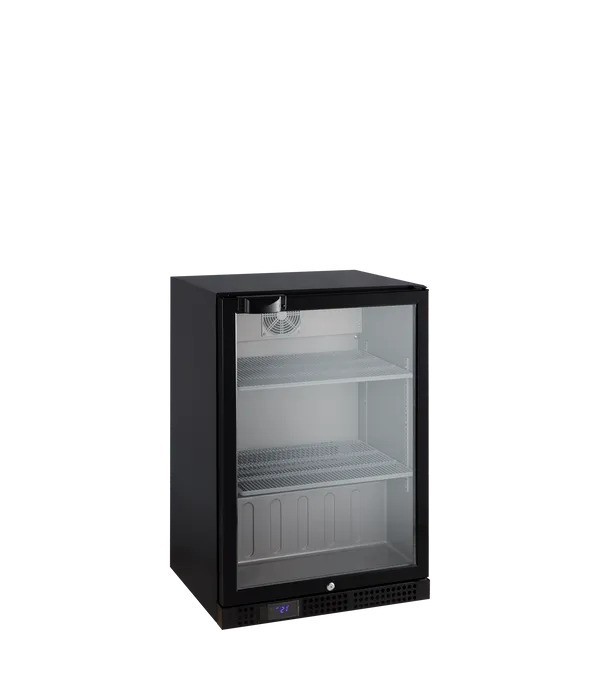
TEFCOLD DB127H — 1 glass door
TEFCOLD DB202H — 2 glass doors
TEFCOLD DB302H — 3 glass doors
TEFCOLD CBC310 — stainless steel
Novameta back bar module, 2 sections
Power is the electrical power while the compressor runs, not consumption per day. Consumption depends on room temperature, door openings and loading — which is why the calculation uses an assumption.
04 Food safety and HACCP
If the bar refrigerator holds only sealed bottles and cans, the risk is low. Once it holds milk for coffee, cream, juices, cut fruit or opened syrups, it becomes a food storage point and is covered by your HACCP plan.
- Food gets a separate zone (a drawer or door), not a shelf between beer bottles.
- A thermometer in every unit and a daily temperature record — or automatic temperature monitoring with alerts on your phone.
- Cut fruit and garnish in closed containers, labelled with the preparation time; leftovers at the end of the shift are handled by your own rules.
- Opened syrups, juices and milk — the use-by period after opening given by the producer.
- Do not overfill: air must circulate, otherwise the top shelves are warmer.
- Cleaning with products suitable for food areas, including seals and drains.
Guide values, not rules
Chilled food is usually kept at +2…+5 °C, but the deciding factors are the producer's label and the limits set in your HACCP plan. During an inspection, the HSE environmental health officer checks that your limits are kept and recorded; FSAI guidance is the national reference.
As a general framework: the EU food hygiene regulation requires businesses to work to HACCP principles; since 2021 EU ecodesign and energy labelling rules also cover commercial glass-door beverage coolers, and the EU F-gas regulation is moving new equipment to natural refrigerants. In practice: when buying a new unit, check the energy label and the refrigerant.
05 Bar, pub, restaurant, hotel
There is no one-size-fits-all. Here is how the choice differs by type of venue.
- Cocktail bar — many ingredients, fewer bottles, speed is everything; typical set: 2 drawers + a 1–2 door glass-door unit
- Beer bar, pub — large volume of bottles and crates, guests want to see the choice; typical set: 3-door unit + refrigerated counter for crates + reserve unit
- Restaurant — wine, water, soft drinks, juices; typical set: 2-door unit + adjustable drawers for wine
- Hotel — lobby bar, breakfast, rooms; typical set: built-in back bar module + minibars in rooms
- Café, takeaway — milk for coffee, soft drinks, small floor area; typical set: 1-door glass unit + a drawer for milk
Cocktail bar
Drawers under the worktop = the bartender never leaves the station. Plan them together with the bar station.
Beer bar
Guests buy with their eyes: glass doors and LED lighting show the full range. The P115 refrigerated counter goes down to −5 °C for extra-cold beer.
Restaurant
White wine needs 8–12 °C, not 3 °C. One unit for everything is a compromise — two zones are better.
Hotel
In the room silence matters, at the bar capacity. A minibar for the room and a back bar module at the counter are two different jobs.
Most common mistake: one big refrigerator for everything
Milk, lemons, beer and white wine kept in one cabinet at one temperature. The wine is too cold, the milk is opened more often than needed and the food zone cannot be separated. Two smaller units with different settings often cost less than one big unit and the problems it causes.
06 Choosing and a simple calculation
Selection criteria
- Volume — bottles needed for the evening + a reserve to chill in advance; what to check: net litres, number of shelves
- Dimensions — height under the counter, depth to the wall, door swing; what to check: ~870 mm height, room for doors
- Doors — glass sells, solid doors save cold, drawers save time; what to check: glass / steel / drawers
- Ventilation — where the condenser releases heat; what to check: front or rear ventilation, built-in option
- Climate class — how warm the air around the unit is; what to check: at least class 4 behind the counter
- Material — cleaning and resistance to knocks; what to check: AISI 304 stainless steel or painted metal
- Service — are spare parts available and who will come; what to check: seals, thermostat, fan in stock
A simple calculation: a cold bottle on a Friday night
Assumptions: on a busy night the bar sells 240 bottled or canned drinks. Stock must be cold before service, so we allow a reserve of ×1.3 → 312 places needed. In practice ~0.8 bottles of 0.33 l fit per litre of net volume (depends on shelving). The choice:
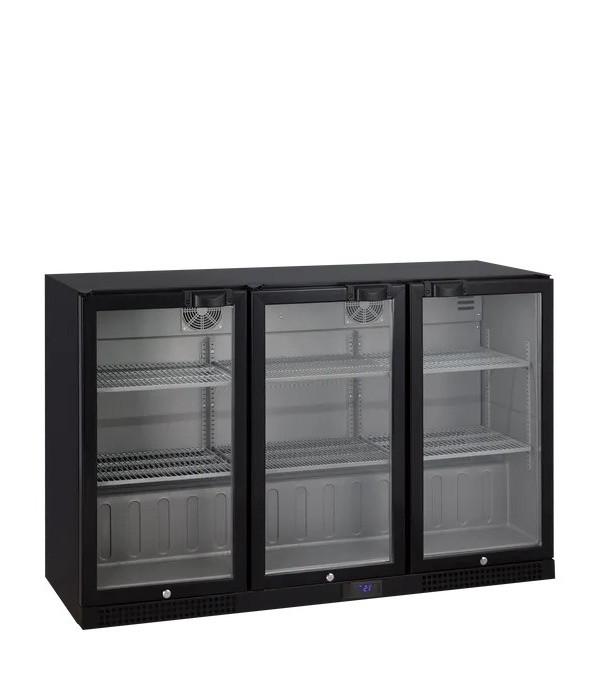
- Electricity: total power 336 W. If the compressor runs ~50 % of the time (assumption), that is 4.03 kWh a day × €0.22/kWh = €0.89 a day, or ~€324 a year.
- Per bottle: 300 nights × 240 = 72,000 bottles a year. Electricity — 0.45 cents, equipment spread over 5 years — 0.31 cents. Total ~0.76 cents per bottle.
- The cost of a warm drink: if warm beer costs you just 3 sales a night at €4 margin each, that is €12 a night, or €3,600 a year.
- Payback: €1,108.00 / €12 = 93 working nights — ~4 months.
Conclusion
Cooling costs less than a cent per bottle; a warm drink costs you a guest. Run the numbers with your own tariff, sales volume and margin.
07 Installation
Even the best refrigerator works poorly in the wrong place. Before ordering, measure the counter recess and think about air, power and water.
Location and air
Keep it away from ovens, coffee machines and glasswashers. A built-in unit must be designed for building in (front ventilation); otherwise leave the clearance stated by the manufacturer.
Electricity
A dedicated earthed socket, no extension leads or multi-plug adapters. Several units on one circuit with an ice maker — ask an electrician about the load.
Level and floor
Level the unit on its adjustable feet — otherwise the doors do not close by themselves and the seal does not sit properly. Leg height allows cleaning underneath.
First start-up
After transport let the oil settle (the time is in the manual; longer if transported lying down). Switch on empty, wait for the set temperature and only then load drinks that are already cold.
08 Daily routine and common mistakes
A bar refrigerator is a working tool, and how it is used decides whether drinks are cold at 11 pm.
- At the start of the shift — check the temperature and record it.
- Load stock first in, first out: new bottles at the back, cold ones at the front.
- Warm crates go to the reserve unit or in overnight, not in the middle of service.
- Open doors with a plan: take everything at once, not one bottle at a time.
- At the end of the shift — restock for the next day, wipe the seals and shelves.
What it looks like in practice: “Saturday, 10:40 pm”
Bartender Aoife starts her shift at 6 pm. The delivery is late, and six crates of beer go into the refrigerator just before the guests arrive. At 9 pm a guest hands back a glass: “The beer is warm.” The thermometer reads 11 °C — the compressor runs non-stop, but the door opens every thirty seconds.
The next week the shift is different: the delivery arrives by 3 pm, the crates go into a second unit, and the front one already holds cold stock for the night. Aoife opens the door with a plan, and at 10:40 pm the beer is at 4 °C. Same equipment — a different routine.
Workshop wisdom from bartenders
- Keep the refrigerator full but not crammed — bottles must not block the fan.
- A small gap between the bottles and the back wall lets cold air circulate around the whole cabinet.
- The top shelf is usually the warmest — put your fastest sellers there.
- If the door has to be opened often, two smaller units beat one big one.
- Ice and cold are different things: an ice maker does not replace a refrigerator.
Common mistakes: problem — cause — solution
- Drinks not cold enough — warm crates loaded just before service; solution: load in advance or use a reserve unit
- Compressor runs non-stop — dirty condenser or no air; solution: clean the condenser, clear the vents
- Condensation on the glass — humid air, damaged seal or door not closing; solution: check the seal and the level
- Ice on the back wall — overfilled, door not closed properly; solution: defrost, free up space, replace the seal
- Water on the floor — blocked drain; solution: clean the drain hole
- Noisy refrigerator — not level or something touching the fan; solution: level it, check the fan
- Thermometer readings vary — uneven loading; solution: leave room for air, check the thermostat
09 BHS service, maintenance and spare parts
BHS service: 24/7
BHS service works with professional refrigeration — refrigerators, freezers, cold tables and display cabinets, including bar refrigerators. Repairs are carried out in our service workshop in Riga (Vagonu iela 23) by certified, experienced technicians, with more than 20 years of BHS experience behind them. Customer service 24/7: +371 25 522 233.
What BHS service does
Diagnostics and repair
The fastest route is the workshop, where tools and parts are on hand. Call first — we will tell you what to check and whether a part can solve it.
Maintenance contract
Scheduled technical inspection, cleaning and adjustment, safety checks, wear monitoring and timely part replacement — before the refrigerator stops on a Friday night.
Spare parts in stock
Compressors, evaporators, thermostats, fans, motors, door seals — kept in Riga and shipped across the Baltics and Europe, so a repair does not wait for weeks.
Repair warranty
Repairs carried out in the BHS workshop come with a warranty under the BHS service warranty terms. New refrigerators carry a 12-month warranty.
Spare parts for bar refrigerators
The most frequently replaced parts are available online — order them yourself or let a technician fit them.
Door seals
A cracked or hardened seal lets in warm air — the most common cause of condensation and ice.
Thermostats
If the temperature jumps or the display shows an error, the culprit is often the thermostat or sensor.
Compressors
Only a technician replaces a compressor — first checking that the problem is not the condenser or the fan.
Bar refrigerator parts
Door stops, glass doors, condensers, thermostats — dozens of parts for bar refrigerators.
Maintenance schedule
| Daily | Temperature record, check the doors close, wipe up spills |
| Weekly | Shelves and seals — warm water with a mild cleaner, drain |
| Monthly | Clean dust from the condenser and vents (power off) |
| Yearly | Technical maintenance: seals, fans, thermostat, electrical connections — easiest under a maintenance contract |
Cold modules built into the counter
BHS makes bar counters and stations to individual projects in its own workshop: measuring, CAD/3D drawing, production and installation. Cold modules and drawers are planned in the drawing, so ventilation, drainage and power are in place from the start.
10 Models in the BHS range
Eight models for different jobs — from a minibar to a refrigerated counter for beer crates.
1 glass door, 118 l net, 600×520×870 mm, +2…+10 °C. For a café or small bar.
€399.00 excl. VAT
View product →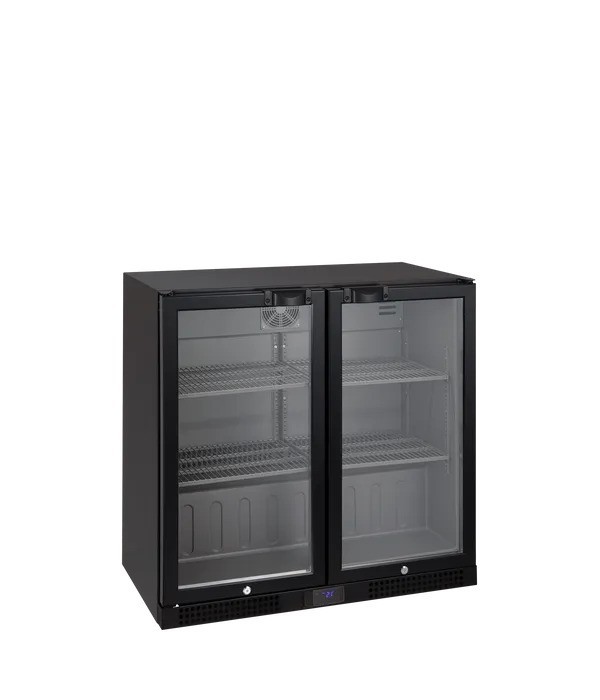
2 glass doors, 185 l net, 900×520×870 mm, R600a. An all-round back bar unit.
€549.00 excl. VAT
View product →3 glass doors, 287 l net, 1350 mm wide, 6 shelves. For a beer bar or pub.
€709.00 excl. VAT
View product →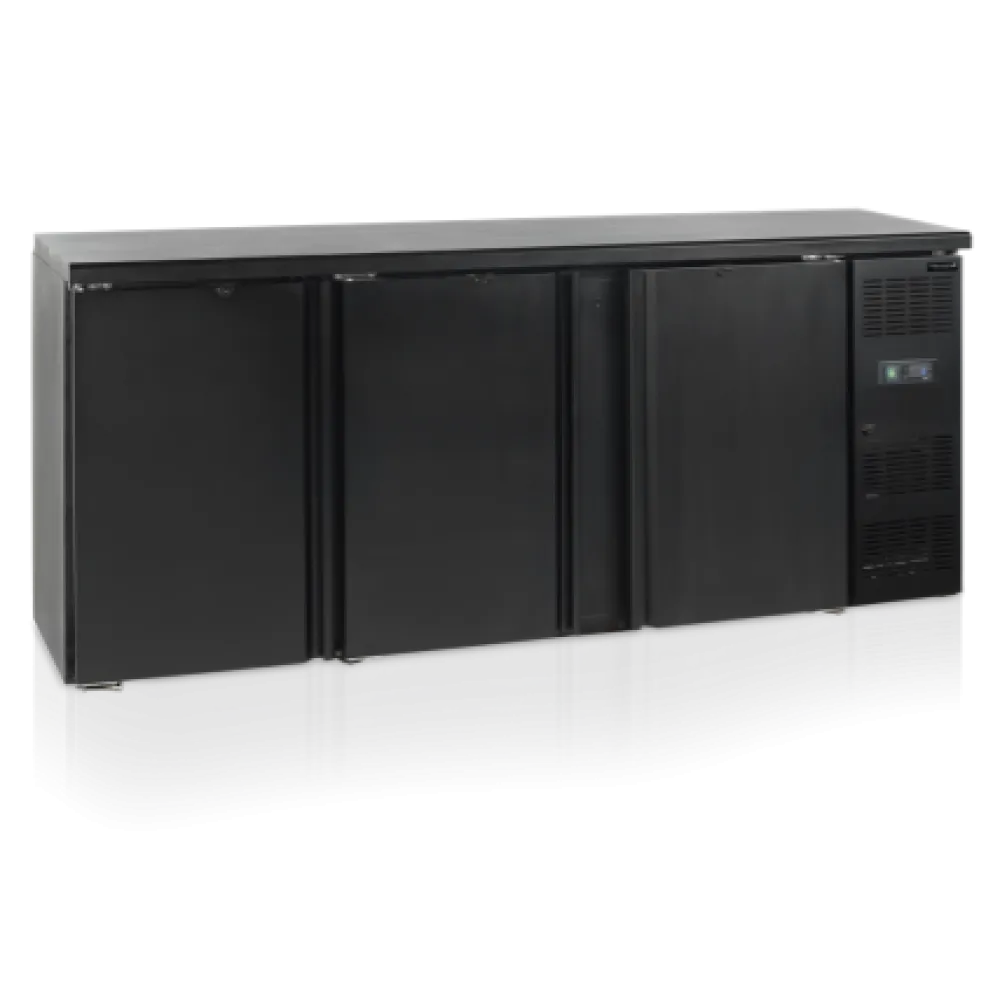
Stainless steel body, self-closing doors, 442 l, 6 adjustable SS304 shelves, R290.
€1,279.00 excl. VAT
View product →

Built-in module under the counter with glass doors, 260 l; the monoblock can be swapped in minutes.
€2,445.00 excl. VAT
View product →
Refrigerated counter for beer crates and bottles, −5…+8 °C, AISI 304, worktop 940×700 mm.
€2,538.40 excl. VAT
View product →
34 l minibar without a compressor, very quiet, +6…+8 °C, 0.236 kWh/24 h. For a hotel room.
€200.00 excl. VAT
View product →Prices excl. VAT, November 2026. Warranty 12 months from purchase; after that — BHS service, maintenance contracts and spare parts. Check the current price and specifications on the product page before buying.
11 Frequently asked questions
What temperature to set on a bar refrigerator
For bottles and cans usually +3…+5 °C. Ale and wine need more, so they need a separate zone. If milk or fruit is kept inside, the limit is set by your HACCP plan.
Glass or solid doors
Glass sells and lets you see the stock without opening the door. Solid doors hold cold better and suit reserve stock or food. Many bars have glass at the front and steel or drawers at the back.
Can a bar refrigerator be built into the counter
Yes, if the manufacturer allows it and the unit ventilates through the front. Otherwise it needs the clearance stated by the manufacturer. For built-in solutions choose cold modules or plan them into the counter design.
How fast does a refrigerator chill warm drinks
A bar refrigerator is not a blast chiller. A full crate of warm drinks can take several hours, and everything else warms up meanwhile. Load stock the evening before or use a reserve unit.
Can milk and fruit be kept in a bar refrigerator
Yes, if they have a separate zone, the temperature is checked and recorded, and they are in closed, labelled containers. This must be described in your HACCP plan.
Does BHS repair and maintain bar refrigerators
Yes. BHS service repairs bar refrigerators in its workshop in Riga and offers technical maintenance contracts with scheduled inspections, cleaning, adjustment and timely part replacement. Customer service 24/7: +371 25 522 233.
Are spare parts available
Yes. The BHS warehouse in Riga stocks compressors, evaporators, thermostats, fans, door seals and other parts, and there is a dedicated section with bar refrigerator spare parts, shipped across the Baltics and Europe.
When to call the service
If the temperature rises even though the condenser is clean and the doors close, if the compressor clicks but does not start, if ice builds up on the wall or the unit is unusually noisy. Call +371 25 522 233.
Let us choose your bar refrigerator together
Tell us what kind of bar you run, how many bottles you sell a night and how much space there is under the counter — we will suggest the type and size, build it into the counter if needed and then take care of maintenance, repairs and spare parts.
Call: +371 25 522 233Bar refrigeratorsWith drawersSpare partsService
Related articles
This article is for information only. Prices excl. VAT, November 2026; specifications from BHS product pages. The calculation is an example based on assumptions — use your own prices and tariff. Temperatures are guide values; the producer's label and your HACCP plan take precedence. The story describes a typical situation; the characters are fictional.