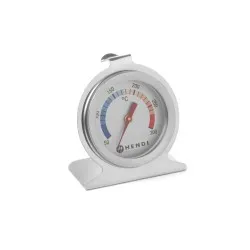
A thermometer for baristas and professional kitchens — precise temperature measuring devices for controlling milk frothing temperature, monitoring food preparation processes and recording HACCP temperature in cafés, restaurants, canteens and HoReCa businesses across Europe. The correct temperature is critical both in coffee preparation — milk frothing for 60–65°C cappuccino or precise sous-vide cooking — and in HACCP requirements, where recording food storage and serving temperatures is mandatory. BHS offers thermometers as part of the Barista Accessories and Supplies range.
The BHS range includes milk frothing thermometers, digital probe thermometers and infrared non-contact thermometers for various applications. BHS specialists help choose the right model based on the application and precision requirements. Also check out milk pitchers, tampers and other barista accessories.
Temperature measurement in professional kitchens and cafés is both a quality and hygiene tool. Precise milk temperature is the key to a perfect cappuccino — milk that is too hot loses sweetness and texture, while milk that is too cold does not create a good emulsion. Under HACCP requirements, food temperature recording is a documentation requirement checked by sanitary inspections. BHS offers thermometers to HoReCa businesses across Europe.
Types and applications of thermometers
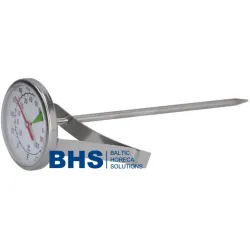
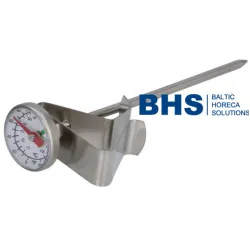
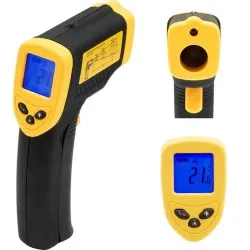
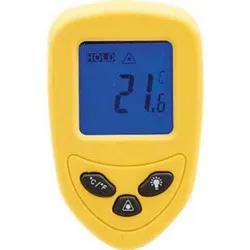
Milk frothing thermometers — attached to milk pitchers with a clip or magnet. They show the milk temperature during the frothing process. Usually with colour zones (green = optimal 60–65°C zone). Digital probe thermometers — a metal probe is inserted into food or liquid, and a digital display shows the temperature in 1–3 seconds. Widely used in HACCP temperature checks and sous-vide cooking. Infrared (IR) thermometers — measure surface temperature without contact with the product. Suitable for checking pan and grill surface temperatures and for quick inspections. Dataloggers — electronic recorders that automatically log temperature data over time. Essential for HACCP documentation in cold rooms and storage equipment. Pocket thermometers — compact and fast, popular with chefs and baristas for daily checks. BHS helps choose the right type of thermometer.
Precision and calibration
Professional thermometers provide ±0,5°C or ±1°C precision — important both in cafés (a 2°C difference in milk frothing temperature affects the flavour profile) and in HACCP (the minimum cooking temperature of 70°C requires precise measurement). Thermometer calibration: regular calibration with an ice-water standard (0°C) or boiling water (100°C) ensures measurement accuracy. In HACCP documentation, it is recommended to maintain a thermometer calibration log. Thermometers with a HOLD function — allow the measurement to be locked on the screen after removing the device from the product. BHS advises on thermometer calibration methods.
HACCP requirements for temperature control
Under HACCP requirements, food temperature measurement and documentation are critical control points: hot food serving temperature ≥63°C; cold food storage temperature ≤5°C; frozen product storage ≤ −18°C; food cooking temperature 70°C or higher. Regular measurements with a calibrated thermometer and documentation in a log are mandatory requirements checked by the Food and Veterinary Service. Digital thermometers with data memory functions simplify documentation. BHS helps choose HACCP compliant thermometers.
HoReCa application scenarios
In a specialty café, a barista uses a milk frothing thermometer to ensure that every cappuccino is prepared at the precise 62°C temperature, maintaining a consistent flavour profile regardless of the barista shift. In a restaurant kitchen, sous-vide cooking with a precise probe thermometer allows temperature control in the 60–65°C range for long-term thermal processing of meat. In a canteen, the temperature of HACCP control points is recorded every two hours with a digital thermometer and logged in a journal.
Frequently asked questions
What is the ideal temperature for frothing milk for a cappuccino? 60–65°C — at this temperature, milk is sweeter (lactose partially converts), foam is firm and the milk emulsion is at its best. Above 70°C, milk loses sweetness and texture. Barista thermometers with colour zone indicators allow visual control of the optimal range. BHS advises on optimising milk temperature.
How often should a thermometer be calibrated? The HACCP recommendation is once every 6 months or after a drop or mechanical impact. Daily calibration with an ice-water standard (0°C) is good practice. Thermometers with a worn probe or showing inaccurate readings should be replaced. BHS offers calibration consultations.
Why choose BHS?
BHS – Baltic HoReCa Solutions supplies professional equipment for restaurants, cafés, hotels and canteens: more than 20,000 products from many manufacturers. Our specialists help you choose the right equipment and spare parts for your kitchen or bar.
Delivery
We deliver across the European Union. Delivery time and cost depend on the order volume and destination — contact the BHS team for an exact price and lead time.