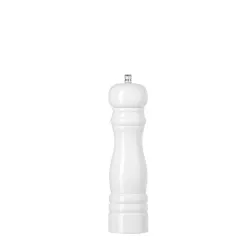
Wooden spice dishes are more than a functional tool — they are a table-setting design element with warmth and individual character. Each piece of wood is unique with its natural grain, and good wood treatment with oil or lacquer ensures a hygienic and durable surface even in professional use. BHS offers wooden spice dishes to HoReCa businesses across Europe.
Types and wood species of wooden spice dishes
Acacia wood mills — acacia is one of the hardest and most moisture-resistant wood species, ideal for making spice dishes. Natural brown colour with a pronounced grain. Oak wood mills — a classic, durable and elegant wood with the characteristic oak grain. Bamboo spice dishes — an ecological, rapidly renewable material with a smooth, light yellow surface. Fig or cherry wood mills — premium, more exotic woods with a unique colour and grain, suitable for fine dining tables. Wooden spice blocks with a ceramic mill mechanism — the wooden exterior combines aesthetics with the functionality of a high-quality ceramic mill. Wooden spice set on a wooden board — a set of salt, pepper and herb dishes on a coordinated wooden tray that serves as a decorative table element. BHS helps choose wooden spice dishes based on design.
Wood care and hygiene
Wooden spice dishes in a professional environment require proper care to maintain hygiene and appearance. Wooden dishes are not dishwasher-safe — high temperatures and aggressive detergents deform the wood and damage the finish. Hand washing with warm water and immediate drying is the standard. Oiling the wood with food-safe oil (such as mineral or linseed oil) every 1–2 months maintains the material’s moisture resistance and prevents cracks. Worn or damaged wooden surfaces with deep grooves must be replaced to meet HACCP requirements. Premium lacquered wood models are easier to maintain and more resistant to daily use. BHS helps understand the care requirements for wooden spice dishes.
Design and stylistic compatibility
Wooden spice dishes are an aesthetic element that best suits specific restaurant styles: rustic and country restaurants — natural wood harmoniously complements wooden tables, stone walls and linen textiles. Scandinavian or hygge style — light oak or birch wood matches white porcelain and fabric elements. Modern organic design — bamboo or acacia with a minimalist silhouette works well alongside ceramic dishes and greenery. Appropriate suitability: wooden dishes are not universal — they may clash with a fully modern or industrial restaurant aesthetic. BHS helps choose spice dishes based on the interior concept.
HoReCa usage scenarios
In a Scandinavian-style café, a pair of acacia wood salt and pepper mills on a marble table is a strong aesthetic signal — the guest immediately recognises a premium and carefully designed table setting. In a country restaurant, an oak wood spice set on a wooden board adds a touch of rural authenticity without excessive kitsch. In a hotel breakfast service, bamboo spice dishes are an ecological and modern solution that aligns with a green hotel positioning.
Frequently asked questions
Are wooden mills hygienic for restaurants? Yes — with proper care (hand washing, oiling, regular inspection). Wood contains natural antimicrobial substances, but deep cracks or damaged surfaces must be replaced. Wooden surfaces are permitted under HACCP requirements for serving and preparation stages if properly maintained. BHS provides advice on hygiene requirements.
Which wood species is the most durable? Acacia and oak are the hardest and most moisture-resistant woods for spice dishes. Bamboo is ecological and sufficiently durable for daily use. Softer woods (pine, spruce) are not suitable — they absorb moisture and spice aromas more quickly. BHS helps choose the right wood species.
Why choose BHS?
BHS – Baltic HoReCa Solutions supplies professional equipment for restaurants, cafés, hotels and canteens: more than 20,000 products from many manufacturers. Our specialists help you choose the right equipment and spare parts for your kitchen or bar.
Delivery
We deliver across the European Union. Delivery time and cost depend on the order volume and destination — contact the BHS team for an exact price and lead time.