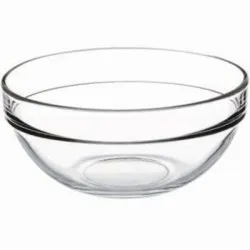
Glass bowls are an indispensable kitchen accessory for mixing, preparation, marinating and decorating — the transparent glass material allows constant monitoring of the mixing process without removing the utensil from the bowl, and provides a hygienic, odour-resistant surface in restaurants, pastry kitchens and HoReCa businesses across Europe. Tempered glass withstands a wide temperature range (from −30°C to +300°C) and is dishwasher-safe, retaining its transparency. BHS offers glass bowls as part of the Bowls, Buckets range for professional kitchens.
Glass bowls are available in various capacities (0.3–5 L) with a tempered glass construction and ergonomic design featuring a stabilising base. BHS helps choose the right size based on preparation needs and menu specifics. Also see Metal Bowls for more intensive professional use.
Glass bowls in a professional kitchen are particularly valued in pastry-making, dessert preparation and precise cooking tasks — transparency allows visual control of the process without lifting the utensil, and the glass surface does not affect the taste of food, even with acidic or aromatic ingredients. BHS supplies these accessories to HoReCa businesses.
Properties and advantages of glass bowls
Transparency is the main advantage over metal bowls. In pastry-making, cream, dough or gelatin are visually observable from all sides, allowing control of consistency. The glass surface does not retain odours or flavours — important when preparing delicate dessert creams, fruit purées and aromatic ingredients, where even minimal metal or plastic residue can affect subtle flavours. Tempered glass withstands temperatures from −30°C to +300°C — suitable as a microwave or oven bowl, as well as for freezing and cold processing. Glass bowls do not absorb food colourings or pigments, which is often observed in plastic and even metal bowls. Dishwasher cleaning is standard, and the glass retains its transparency even after many wash cycles. The main drawback — glass is heavier than plastic and more fragile than metal.
When and where to use glass bowls
In pastry kitchens, glass bowls are the standard — chocolate tempering, cream consistency control, glaze mixing and decorating take place in visually controlled processes. For waffle and crepe batter, a glass bowl allows visual control of gradual egg and batter mixing, assessing consistency. In marinating, glass does not retain flavours — meat or vegetables marinate in a clean glass bowl without the risk of foreign odours. For bain-marie preparation, placing a glass bowl over a pot of hot water allows precise melting of chocolate or tempering of creams.
HACCP and cleaning
Tempered glass bowls are HACCP compliant — the material is approved for food contact, and the smooth, non-porous surface prevents bacterial build-up. Dishwasher cleaning ensures complete disinfection. Regular visual inspection is important — cracks or chips in the bowl should be identified and the item discarded, as damaged glass may pose a risk of fragments entering food. BHS advises on the safe use of glass bowls in professional kitchens.
HoReCa use scenarios
In pastry kitchens, a 3 L glass bowl is used over a pot of hot water to melt chocolate at a precise temperature — transparency allows continuous monitoring of the melting process. In restaurants, vinaigrette is prepared in a glass bowl by emulsifying oil with vinegar — the glass allows control of the emulsion’s state. In cafés, glass bowls in planetary mixers allow chefs or pastry chefs to observe the state of whipped masses, saving time on consistency checks. Bain-marie chocolate melting in a glass bowl over a pot of hot water is a standard pastry technique. Also see Metal Bowls for more intensive daily use.
Frequently asked questions
Are glass bowls suitable for microwave ovens? Tempered glass is generally microwave-safe — check the manufacturer’s instructions. Bowls with metal rims or ornaments are not suitable for microwave ovens.
How durable are glass bowls? Tempered glass is significantly more durable than regular glass, but less durable than metal. Professional glass bowls are designed for intensive use, but drops onto hard floors may cause damage. BHS can provide specific durability parameters for individual models.
Why choose BHS?
BHS – Baltic HoReCa Solutions supplies professional equipment for restaurants, cafés, hotels and canteens: more than 20,000 products from many manufacturers. Our specialists help you choose the right equipment and spare parts for your kitchen or bar.
Delivery
We deliver across the European Union. Delivery time and cost depend on the order volume and destination — contact the BHS team for an exact price and lead time.