

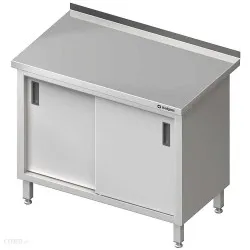
Article number: 612007
A stainless steel worktop with sliding doors beneath organises ingredients, utensils and small equip..
Is available
506.25€
with VAT: 612.56€
Article number: 616127
A stainless-steel worktop with full-length sliding doors creates an organised under-counter storage ..
Is available
506.25€
with VAT: 612.56€
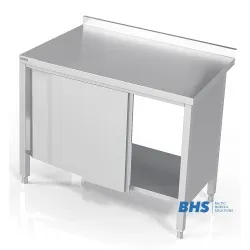
Article number: DP0-NLU-100/60/90
A stainless steel worktop with sliding doors organises under-counter storage without the swing of hi..
Is available
631.80€
with VAT: 764.48€
Article number: DPO-NLU-110/60/90
A stainless steel worktable with sliding doors organises kitchen storage directly beneath the work s..
Is available
648.00€
with VAT: 784.08€
Article number: DPO-NLU-120/60/90
A stainless steel worktable with sliding doors provides enclosed storage directly beneath the work s..
Is available
664.20€
with VAT: 803.68€
Article number: DPO-NLU-130/60/90
A stainless steel worktop table with sliding doors provides enclosed storage directly beneath the fo..
Is available
693.00€
with VAT: 838.53€
Article number: DPO-NLU-140/60/90
A stainless steel worktop table with sliding doors provides enclosed storage directly beneath the pr..
Is available
711.00€
with VAT: 860.31€
Article number: DPO-NLU-150/60/90
A stainless-steel worktable with sliding doors creates an enclosed storage space directly beneath th..
Is available
728.10€
with VAT: 881.00€
Article number: DPO-NLU-160/60/90
A stainless-steel worktop table that combines food-preparation space with enclosed storage accessed ..
Is available
745.20€
with VAT: 901.69€
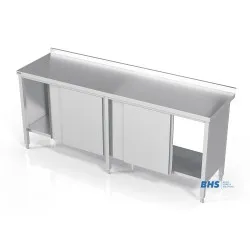
Article number: DPO-NLU-250/60/90
A stainless steel worktop table with sliding doors provides enclosed storage directly beneath the wo..
Is available
752.60€
with VAT: 910.65€
Article number: DPO-NLU-170/60/90
This stainless steel table features sliding doors to streamline under-counter storage in busy kitche..
Is available
764.10€
with VAT: 924.56€
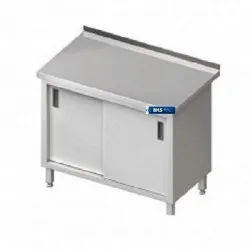
Article number: 980186160
A stainless-steel worktop table with enclosed cupboard storage provides a hygienic, organised surfac..
Is available
769.00€
with VAT: 930.49€
Article number: DPO-NLU-180/60/90
A stainless steel worktop with sliding cupboard doors provides a stable, hygienic surface for food p..
Is available
803.00€
with VAT: 971.63€
Article number: DPO-NLU-190/60/90
A stainless-steel worktop with full-length sliding cupboard doors creates an organised prep and stor..
Is available
803.00€
with VAT: 971.63€
Article number: DPO-NLU-200/60/90
A stainless steel worktop table with sliding doors provides organised under-counter storage directly..
Is available
819.90€
with VAT: 992.08€
Article number: DPO-NLU-210/60/90
A stainless-steel worktop 2100 mm wide gives a continuous run of preparation space without gaps or s..
Is available
963.00€
with VAT: 1,165.23€
Article number: DPO-NLU-220/60/90
A stainless steel worktable with sliding doors provides a stable, enclosed workspace in professional..
Is available
980.10€
with VAT: 1,185.92€
Article number: DPO-NLU-230/60/90
A stainless steel worktable with sliding doors provides enclosed storage directly beneath the work s..
Is available
998.10€
with VAT: 1,207.70€
Article number: DPO-NLU-240/60/90
A stainless steel worktop table with sliding doors provides organised storage directly beneath the f..
Is available
1,035.00€
with VAT: 1,252.35€
Article number: DPO-NLU-260/60/90
A stainless steel work table with sliding doors organises ingredients, utensils and small equipment ..
Is available
1,071.00€
with VAT: 1,295.91€
Article number: DPO-NLU-270/60/90
This stainless-steel worktop table offers a continuous preparation surface while concealing utensils..
Is available
1,089.00€
with VAT: 1,317.69€
Article number: DPO-NLU-280/60/90
A stainless steel catering table with sliding doors provides a secure, enclosed storage space direct..
Is available
1,107.00€
with VAT: 1,339.47€
Article number: DPO-NLU-290/60/90
A stainless steel worktop with sliding doors beneath provides organised storage and a stable surface..
Is available
1,124.10€
with VAT: 1,360.16€