

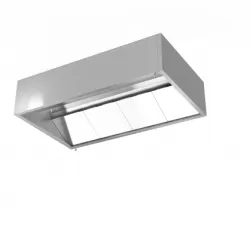
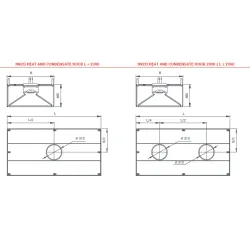
Article number: HKCD-100/100/48
A condensation hood draws hot, humid air from dishwashing zones, steam blocks and thermal processing..
Is available
1,159.00€
with VAT: 1,402.39€
Article number: HKCD-110/100/48
A condensation hood captures hot, humid air before it spreads through the kitchen. Instead of relyin..
Is available
1,179.00€
with VAT: 1,426.59€
Article number: HKCD-120/100/48
A condensation hood draws hot, humid air from dishwashing stations, pre-rinse tables and steam-gener..
Is available
1,199.00€
with VAT: 1,450.79€
Article number: HKCD-130/100/48
A condensation hood captures and cools hot, humid air before it spreads through the kitchen, prevent..
Is available
1,229.00€
with VAT: 1,487.09€
Article number: HKCD-140/100/48
A condensation hood designed for zones that produce intense hot steam rather than grease—dishwashing..
Is available
1,259.00€
with VAT: 1,523.39€
Article number: HKCD-150/100/48
The Novameta HKCD 1500 is a condensation hood designed for professional kitchens and food service ar..
Is available
1,389.00€
with VAT: 1,680.69€
Article number: HKCD-160/100/48
A condensation hood captures hot, humid air before it spreads through the kitchen. Instead of relyin..
Is available
1,419.00€
with VAT: 1,716.99€
Article number: HKCD-170/100/48
A condensation hood designed for kitchens where steam, not grease, is the challenge. The Novameta HK..
Is available
1,449.00€
with VAT: 1,753.29€
Article number: HKCD-180/100/48
A condensation hood engineered for kitchens where steam, not grease, is the challenge. Dishwashing z..
Is available
1,479.00€
with VAT: 1,789.59€
Article number: HKCD-190/100/48
A condensation hood designed for kitchens where steam, not grease, is the challenge. The Novameta HK..
Is available
1,509.00€
with VAT: 1,825.89€
Article number: HKCD-200/100/48
A condensation hood engineered for kitchens where steam, not grease, is the challenge. The Novameta ..
Is available
1,639.00€
with VAT: 1,983.19€
Article number: HKCD-210/100/48
A condensation hood draws hot, humid air from dishwashers, sinks and steam-heavy work areas, then co..
Is available
1,669.00€
with VAT: 2,019.49€
Article number: HKCD-220/100/48
A condensation hood draws hot, humid air from dishwashing zones, steam blocks and thermal processing..
Is available
1,699.00€
with VAT: 2,055.79€
Article number: HKCD-230/100/48
A condensation hood designed for kitchens where steam, not grease, is the challenge. The Novameta HK..
Is available
1,729.00€
with VAT: 2,092.09€
Article number: HKCD-240/100/48
A condensation hood captures and removes steam at source, stopping it from spreading through the kit..
Is available
1,759.00€
with VAT: 2,128.39€
Article number: HKCD-250/100/48
A condensation hood captures steam at its source, cooling it into water before it spreads through th..
Is available
1,899.00€
with VAT: 2,297.79€
Article number: HKCD-260/100/48
The Novameta HKCD 2600 is a condensation hood designed to manage high levels of humidity.
This type ..
Is available
1,929.00€
with VAT: 2,334.09€
Article number: HKCD-270/100/48
A condensation hood extracts hot, humid air from dishwashers, sinks and steam-heavy workstations, co..
Is available
1,959.00€
with VAT: 2,370.39€
Article number: HKCD-280/100/48
A condensation hood captures and removes steam at source, preventing it from spreading through the k..
Is available
1,989.00€
with VAT: 2,406.69€
Article number: HKCD-290/100/48
A condensation hood designed to capture and condense hot, humid air before it spreads through the wo..
Is available
1,999.00€
with VAT: 2,418.79€