Distinct requirements of a hospital kitchen
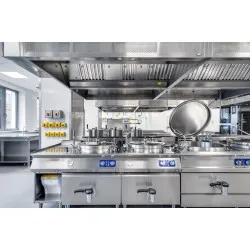
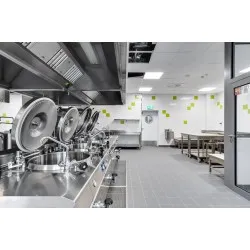
A Hospital Canteen Kitchen — a hospital kitchen has several requirements that distinguish it from a standard restaurant or café kitchen. Dietary meal preparation — a hospital kitchen must prepare various diets in parallel: regular diet, salt-free, sugar-free diabetic diet, soft diet, anti-inflammatory, liquid food, etc.; each diet requires a separate food preparation process and clear labelling. Number of portions — a hospital kitchen prepares hundreds or thousands of portions per day; large-capacity boiling pots, convection ovens, heat-retaining boxes and delivery trolleys are necessary. Allergen control — patients may have serious allergies or intolerances; allergen control is a mandatory part of the HACCP plan; see Canteen Projects. Staff hygiene — hygiene requirements in a hospital kitchen are higher than in a regular restaurant; handwashing stations every 5–10 metres, hygiene barriers between sectors. BHS provides hospital kitchen equipment.
Food delivery system to wards
A Hospital Canteen Kitchen — efficient food delivery from the kitchen to wards or the dining hall is a critical element of hospital logistics. Heat-retaining boxes and trolleys — food from the kitchen to the patient is usually transported in heat-retaining boxes or special trolleys that maintain a temperature above 65°C during transit; this standard complies with HACCP requirements for hot food temperature. Portion preparation system — individual portion boxes or GN trays are prepared in the kitchen and placed in trolleys; each box or tray is labelled with the patient’s name and diet type. Hygienic dishwashing — the dishwashing process in a hospital kitchen is stricter; disinfection temperature when washing dishes is at least 85°C.
HACCP and sanitary standards in a hospital kitchen
A Hospital Canteen Kitchen — a hospital kitchen operates under a stricter HACCP plan than a regular restaurant, as patients are a vulnerable group with reduced immunity. Critical control points — cooking temperature, rapid cooling process, storage temperature and food delivery temperature are all critical control points of HACCP; each is documented. Temperature recording — temperature recording in a hospital kitchen is mandatory; digital thermometers with automatic data storage provide auditing capability. Separation between clean and dirty zones — a hospital kitchen has a clear physical boundary between the unprocessed food zone and the ready-to-eat food zone, as well as between dishwashing and serving; see Cafe Turiba Serving Line.
Implementation of a hospital kitchen project with BHS
A Hospital Canteen Kitchen — BHS offers the full project cycle for hospital kitchen equipment. Technological project development — BHS can consult on space planning, equipment placement, compliance with HACCP requirements and technological project documentation; coordination with the building architect and sanitary engineer is necessary. Staff training; see Canteen Projects.
Frequently asked questions
How long does it take to implement a hospital kitchen project? A Hospital Canteen Kitchen — the full project implementation time for a hospital kitchen depends on the scope and need for renovation; equipment delivery usually takes 4–8 weeks; installation 1–3 weeks; coordination with builders may extend the timeline; contact BHS for a precise timeline offer; see Canteen Projects.
Can BHS also equip a social service canteen or kindergarten kitchen? A Hospital Canteen Kitchen — yes; BHS’s experience in institutional kitchen projects covers hospitals, kindergartens, schools and social service institutions; all have similar HACCP and portion preparation requirements; contact BHS; see Catering Kitchen.
Why choose BHS?
BHS – Baltic HoReCa Solutions supplies professional equipment for restaurants, cafés, hotels and canteens: more than 20,000 products from many manufacturers. Our specialists help you choose the right equipment and spare parts for your kitchen or bar.
Delivery
We deliver across the European Union. Delivery time and cost depend on the order volume and destination — contact the BHS team for an exact price and lead time.