

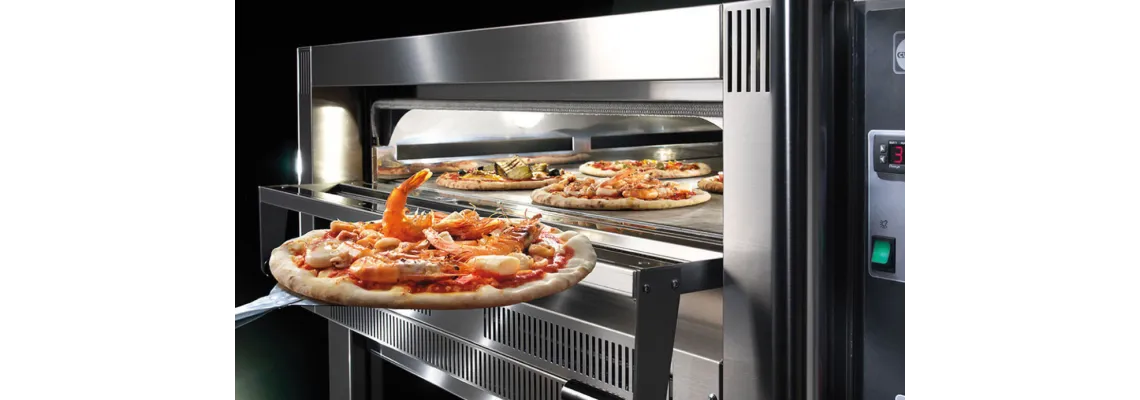
Equipping a pizzeria is simpler than it looks
Opening a pizzeria seems to many like a huge project with an endless equipment list. In reality, a pizza kitchen is one of the simplest HoReCa concepts: it's built around one main appliance and a comparatively small set of tools. In this guide, YOUR HORECA specialists explain step by step what you actually need — from choosing the oven to the peel, the stone and the dough container.
Contrary to the common belief, a pizzeria isn't the most complicated kitchen. Compared with an à la carte restaurant, which needs a stove, a convection oven, a fryer, a grill and ten more appliances, a pizza kitchen rests on one central appliance — the pizza oven — and a few correctly chosen tools. That's exactly why a pizzeria is one of the most popular and fastest-to-open HoReCa concepts.
In this article we explain how to choose a pizza oven to match your volume and concept, which tools you actually need, and how to equip a pizzeria so that you neither overpay for anything nor miss anything out.
The pizza oven — the pizzeria's heartbeat
The pizza oven is where the crisp crust forms, the flavours of the ingredients come together and that particular pizza aroma is born. Professional pizza ovens reach 300–500 °C — far more than a standard convection oven, and it's precisely this high temperature that's the key to the right crust texture. In an ordinary convection oven the pizza bakes longer, the dough dries out, and the result is a baked flatbread rather than a pizza.
The choice of oven determines everything else — from the room layout to the number of staff. So start with it and only then plan the rest of the equipment. And one more practical consideration: an electric oven needs no gas connection, which often decides how quickly and cheaply a pizzeria can be opened in a given space at all.
Three types of oven — and who each one suits
Electric pizza ovens
The most popular for compact and mid-volume pizzerias. Easy to install with no gas connection, precise temperature control, available with 1–3 decks. A single-deck model is the ideal start for a small pizzeria.
Gas pizza ovens
Higher output at lower running costs in large volumes. They heat up faster and hold the temperature better during continuous baking.
Wood-fired pizza ovens
Authentic Neapolitan pizza with a smoky crust character. Reaches 400–500 °C, the pizza bakes in 60–90 seconds. For premium pizzerias and open-kitchen concepts.
| Oven type | Heat-up time | Temperature | Suited to |
|---|---|---|---|
| Electric | 15–25 min | up to 300–350 °C | Compact and mid-volume pizzerias |
| Gas | 20–30 min | up to 300–350 °C | Large volumes, continuous baking |
| Wood-fired | 45–90 min | 400–500 °C | Authentic Neapolitan pizza, open kitchen |
The wood-fired oven is the only one that reliably reaches the VPN Neapolitan standard of 400–480 °C. Electric and gas deck ovens reach 300–350 °C — that's entirely enough for the majority of pizzerias, but not for the classic Neapolitan standard. That isn't a flaw but a deliberate choice: the concept dictates the oven, not the other way round.
Deck count and daily throughput
An oven's productivity depends primarily on the deck count and the size of each deck. This is the simple arithmetic to know before you go shopping:
| Deck count | Throughput | Deck size | Suited to |
|---|---|---|---|
| 1 deck | 20–30 pizzas/h | 60×60 cm — two 28–30 cm pizzas | Artisan pizzeria, 30–50 portions a day |
| 2 decks | 40–60 pizzas/h | 60×60 / 90×60 cm | Mid-size pizzeria, 100–200 portions a day |
| 3 decks | 60–90 pizzas/h | 90×60 cm — three pizzas per deck | Large pizzeria, canteen kitchen with pizza |
Many professional ovens are modular — you can start with one deck and later fit a second on top as the business grows. This is one of the strongest arguments in favour of a pizzeria: you don't have to buy maximum capacity on day one. Start with the volume you can realistically sell and expand when the queue becomes a problem.
Pizza peels — the most important tool after the oven
A pizza peel lets you put the pizza into a hot oven and take it out without burning your hands. It's a tool the pizzaiolo uses hundreds of times a day, so it isn't worth economising on. Peels differ by material, shape and handle length:
Aluminium peel
Light and easy to clean, slides well under the dough. Suits convection and electric ovens. Anodised aluminium is more durable and doesn't oxidise.
Wooden peel
The traditional Italian pizzeria peel — dough sticks to wood less. Suits wood-fired and charcoal ovens. Beech wood with a sharpened tip.
Stainless steel
Durable and hygienic, suited to professional baking volumes. Often used for turning peels and conveyor ovens.
Perforated peel
The holes let excess flour fall away, so flour doesn't burn in the oven and the crust stays clean. The professional standard in intensive work.
Turning peel
A small round peel (Ø 20–26 cm) for turning the pizza in the oven during baking — gives an even crust on all sides.
Telescopic handle
Lets you adjust the length for ovens of different depths. A shorter handle — better control; a longer one — more distance from the heat.
Handle length is chosen by oven depth and by the room: 60–150 cm is the standard range, while 1700 mm peels are meant for deep wood-fired ovens. In small spaces, short-handled peels (e.g. 300×600 or 350×710 mm) are more practical.
Baking surfaces — where the crust is made
The fireclay pizza stone
A fireclay (cordierite) stone accumulates heat and transfers it evenly to the dough, letting you imitate the conditions of a traditional stone oven. It's precisely the stone that gives that crisp base crust which convection air alone cannot create. Stones are compatible with every oven type — including electric and gas convection ovens.
Stainless steel screens and racks
Perforated plates and screens let hot air circulate around the dough — suited to convection ovens. Racks are also available for the screens (for example, for 96 screens), letting you store them tidily and dry them quickly.
Aluminium baking trays
Thin trays for a fast baking process, available in various sizes to match the oven's internal dimensions. A convenient solution for Roman-style pizza and the al taglio format.
Cutting and dough preparation
Pizza wheel
A round blade with a handle — the sharp edge cuts thin and thick dough safely without crumpling it. Available in various wheel sizes.
Pizza scissors
With a sliding wheel under the blade — they separate each slice as you cut. Popular in fast-service pizzerias.
Rolling pins
Aluminium or wooden pins for rolling dough to an even thickness. Professional models have an adjustable thickness stop.
Dough containers
Containers with lids (e.g. 18 L) for proving dough — they preserve the dough's properties, suit the fridge and carry over to the work table.
Dividing dough into portions of equal weight is what separates a consistent pizzeria from an inconsistent one. Equal dough weight = equal pizza size = a predictable portion, predictable costs and a satisfied customer. All it takes is accurate scales and discipline — expensive machinery isn't needed at the start.
Oven cleaning and safety
A pizza oven works at an extremely high temperature, which in itself provides the heat treatment and disinfection of the food. In the HACCP context, what matters most is safe work at a high-temperature appliance: protective gloves, peels with sufficiently long handles and a well-thought-out work organisation. For cleaning the oven's stone deck, special brushes with natural or brass bristles and a steel scraper are used — available from 150 mm to 1700 mm in length depending on oven depth.
The outside of gas and wood-fired ovens gets hot. These appliances need an adequate safety zone around them — and it must be planned into the room design, not after the appliance is delivered. Wood-fired ovens also require regular ash removal. The outside of electric ovens usually doesn't get as hot, which makes work in small rooms considerably easier — another argument in their favour if the space is tight.
What to buy depending on volume
| Format | Oven | Tools |
|---|---|---|
| Artisan pizzeria 30–50 portions a day | Compact single-deck electric oven | 1 peel + turning peel + brush, stone, wheel, dough containers |
| Mid-size pizzeria 100–200 portions a day | Two-deck gas or electric oven | A full tool set + spare peel, screens and rack, pizza bags |
| Large pizzeria / canteen 200+ portions a day | Multi-deck oven or several in parallel | Several sets, perforated peels, a rack, thermal bags for delivery |
| Fine dining with pizza | Wood-fired oven in an open kitchen | Wooden peels, long-handled tools, brass-bristle brush |
As you can see, the difference between a small and a large pizzeria isn't dramatic — mainly the oven's deck count and the number of tool sets change. The logic itself stays the same.
The YOUR HORECA pizza equipment range
YOUR HORECA offers a full range of pizzeria equipment in one place — ovens, oven accessories and pizza preparation tools from leading manufacturers: Gi.Metal, HENDI, Stalgast, ARAVEN and Neumarker. Technical consultants help choose the optimal oven type, deck count and output to match the pizzeria's concept and daily volume. Equipment rental is also available — get in touch and we'll advise you.
Electric pizza ovens
1–3 decks, precise temperature control, no gas connection — the easiest route to a first pizzeria.
View ovens →Gas pizza ovens
High output and lower running costs in continuous baking.
View ovens →Wood-fired pizza ovens
400–500 °C and a smoky crust — Neapolitan pizza in 60–90 seconds, and a design feature on top.
View ovens →Pizza preparation tools
Peels from €12, stones, wheels, dough containers and ready-made professional sets with a rack.
View tools →Equipping in 4 steps
Define the concept and volume
Neapolitan, Roman or American-style pizza? How many portions a day? These two answers determine the oven type and deck count.
Check what the space allows
Is there a gas connection? How powerful is the electrical supply? How much room around the oven for a safety zone and ventilation?
Choose an oven with room to grow
A modular oven lets you start with one deck and add a second later — without replacing all the equipment.
Assemble the tools
A peel to match the oven depth, a turning peel, a brush, a stone, a wheel and dough containers. A ready-made set is often better value than separate items.
Frequently asked questions
For an authentic Neapolitan pizza (VPN standard), the oven temperature must be 400–480 °C and the baking time 60–90 seconds. The wood-fired oven is the only one that reliably reaches these temperatures. Electric and gas deck ovens reach 300–350 °C — enough for the majority of pizzerias, but not for the classic Neapolitan standard.
Electric deck ovens — 15–25 minutes, gas deck ovens — 20–30 minutes, wood-fired ovens — 45–90 minutes. Before starting work, always make sure the deck stone is fully heated, not just the air in the oven.
With a compact single-deck electric oven: low running costs, easy installation with no gas connection and precise temperature control. It handles 20–30 pizzas an hour, which is entirely enough for 30–50 portions a day. If the oven is modular, a second deck can be added later.
The peel size must match the width of the oven opening — for standard convection pizza ovens with GN 1/1 plates, a peel 30–35 cm wide suits. Handle length is chosen by oven depth: 60–150 cm is the standard range, but for deep wood-fired ovens — up to 1700 mm.
Yes. Pizza stones are compatible with every oven type, including electric and gas convection ovens. A fireclay stone improves heat accumulation in a convection environment too and gives a crisper base crust.
Ready-made professional sets (peel + turning peel + brush, often with a rack or a bag) are usually better value than separate items and make sure nothing is forgotten. Buying separately is worth it if you already have some of the tools or need a non-standard size.
✓ Tools from stock
Peels, brushes and sets available immediately; standard electric models — within 5–10 working days.
✓ Delivery across the Baltics and Europe
Ovens by freight transport; free delivery in Latvia over €200 up to 30 kg.
✓ Consultation and service
Technical consultants help choose the oven; service with 25+ years of experience.
Let's equip your pizzeria together
YOUR HORECA offers a full range of pizzeria equipment in one place — electric, gas and wood-fired pizza ovens, oven accessories and pizza preparation tools. Our technical consultants will help choose the optimal oven type, deck count and output to match your concept and daily volume.