

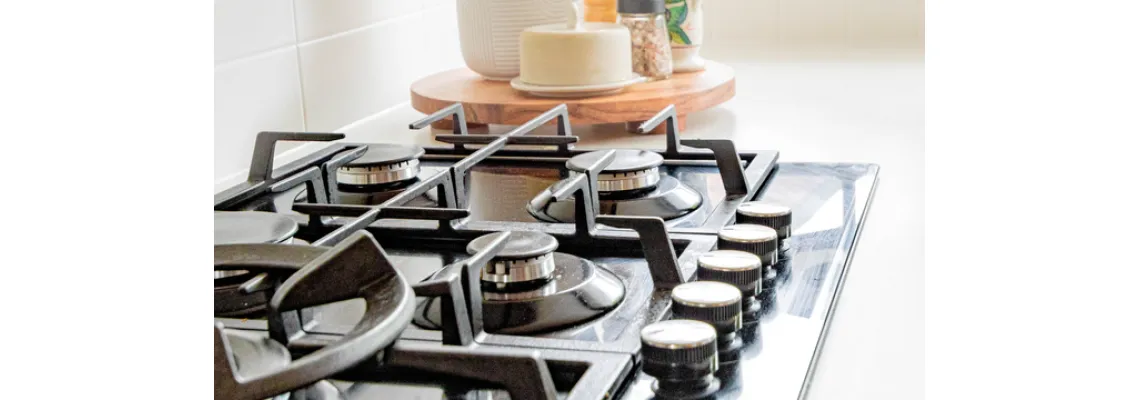
Electric or gas stove — which to choose? YOUR HORECA specialists answer
Gas or electricity is one of the first and most important decisions when equipping a professional kitchen — it determines monthly costs, cooking style, and even which permits will be needed. In this guide YOUR HORECA specialists compare the two technologies on the criteria that matter and help you see which cooker fits your kitchen.
Professional gas stoves, together with electric and induction cookers, have become the backbone of every production kitchen — and each technology has its convinced supporters. Chefs who want to see and feel the flame love gas; kitchens that value precision, safety and a simple connection choose electric. There is no right answer for everyone — there is the right answer for your kitchen.
In this article we compare the two technologies on the criteria that truly matter in a professional kitchen: costs, control, safety, cleaning and connection requirements.
Three technologies instead of two
Although the title promises a duel of two technologies, an honest comparison today includes three players: the gas stove with an open flame, the electric stove with hotplates or a smooth ceramic surface, and the induction hob — technically also electric, but heating the pan itself at 85–92 % efficiency. We've written a separate selection guide about induction — in this article we focus on the classic “gas vs electric” duel, mentioning induction where it changes the rules of the game.
Advantages of a gas stove
Economy
A kilowatt-hour of gas is usually considerably cheaper than electricity — under heavy loads that's a noticeable saving every month.
Instant flame control
The flame changes in an instant and is visible to the eye — the chef controls the process intuitively, without a display in between.
Convenient burner shape
The flame wraps around the pan's base and sides — ideal for WOK pans, sautéing and work with large pots.
Works with any cookware
Gas has no requirements for pan material or base shape — your entire existing cookware park works.
Independence from grid capacity
A gas stove doesn't load the electrical installation — important in older buildings with limited connection capacity.
Open-flame techniques
Flambéing, a grilled note, direct charring — techniques an electric surface simply doesn't offer.
What to reckon with
A gas stove requires a gas connection or a bottled-gas setup with all the approval requirements, more powerful ventilation (an open flame produces combustion products and more heat in the room) and more laborious cleaning — grates, burners and caps have to be washed separately. Safety discipline must also be higher: an open flame in a high-traffic kitchen demands an experienced team.
Advantages of an electric stove
Power and even heat
Hotplates deliver stable, even heat across the whole pan base — ideal for sauces, pastry work and long braising.
Precise temperature control
The set temperature is held with thermostat precision — a repeatable result regardless of the cook's experience.
A high level of safety
No open flame and no gas-leak risk; a control-lock function and residual-heat indicators protect the team.
“Smart” functions
Timers, cooking programmes and system settings let you cook to a script — switch on, set, and get on with other work.
Simple connection
No gas permits or projects needed — just a suitable electrical connection. Faster installation and less bureaucracy.
Easy cleaning
The smooth surface without grates and burners wipes clean in a minute; modern solutions even offer self-cleaning options.
What to reckon with
Electric hotplates heat up and cool down with inertia — the instant response of gas is out of reach (a problem induction solves completely). A kilowatt-hour of electricity costs more, and powerful professional stoves need a three-phase 400 V connection that must be planned before purchase.
Comparison by criteria
| Criterion | Gas stove | Electric stove |
|---|---|---|
| Response speed | Instant — the flame changes in a blink | With inertia — heats and cools gradually |
| Temperature precision | “By eye”, by the cook's experience | Thermostat precision, repeatable result |
| Running costs | Lower — a gas kW is cheaper | Higher, but greater efficiency |
| Connection | Gas project, approvals, ventilation | Electrical connection (400 V for powerful units) |
| Safety | Open flame, gas-leak risk | No flame; lock and indicators |
| Cleaning | Grates, burners, caps — laborious | Smooth surface — wiped in a minute |
| Cookware | Anything works | A flat, thick base is preferable |
| Heat in the room | A lot — hotter kitchen, bigger ventilation | Less waste heat |
Which stove for which kitchen
Choose gas if…
…the building already has a gas connection, the menu is dominated by WOK, grilling, flambéing and work with large pots, the team is experienced and running costs are the main criterion. Gas is the choice of the traditional “live fire” kitchen.
Choose electric if…
…there is no gas connection or installing one is expensive and slow, the kitchen values precision and repeatability (pastry, sauces, processes complementing sous-vide), staff rotates and safety is a priority. Electric is also the logical choice in premises where an open flame is prohibited.
Consider a combined model or induction if…
…you don't want to choose. Combined models let you connect both gas and electricity at once — for example, gas burners above an electric oven — and unite the best of both worlds in one body. And if you're planning a new kitchen from scratch and speed, economy and hygiene come first, look at induction hobs — they combine the response speed of gas with the safety of electric.
Formats and sizes
Regardless of the energy type, stoves come in three basic formats: free-standing cookers with an oven — the classic, where most models combine a hob and an oven in one body and are simple to install; countertop hobs mounted on a prepared worktop or stand, with a cooking surface only; and modular lines, where stoves, fry-tops and fryers join into a single technological line.
The standard module width of professional stoves is 60 cm — it lets you freely combine units in lines and later replace one module with another (for example, a gas stove with an induction one) without rebuilding the whole line. Any other size depends on the chef's individual needs and the room — our specialists will help plan the line at the project stage.
Entrust the connection only to certified specialists. Connecting a gas stove without the proper qualification is not just illegal but life-threatening — a gas leak in a professional kitchen endangers the whole building. The 400 V three-phase connection of powerful electric stoves likewise requires a qualified electrician and an assessment of the electrical installation before purchase.
Service and spare parts
A stove in a professional kitchen works every day for years — and sooner or later some part's time comes. For gas stoves it's most often burners, ignition plugs, thermocouples and gas taps; for electric ones — hotplates, thermostats, switches and indicator lamps. The YOUR HORECA spare-parts department supplies these parts for all leading manufacturers' equipment, while the YOUR HORECA service with over 25 years of experience handles warranty and post-warranty repairs and preventive maintenance.
The YOUR HORECA range — all three technologies in one place
YOUR HORECA offers the full spectrum of professional hot equipment from the world's leading manufacturers — all products come with a warranty, and our specialists will help choose a solution for needs of any scale.
Gas stoves
From compact countertop hobs to cookers with ovens and modular lines — the economical solution for kitchens with a gas connection.
View the range →Electric stoves
Hotplate and ceramic models with precise temperature control, safety functions and a simple connection.
View the range →Induction hobs
85–92 % efficiency, instant response and a cool surface — read our separate guide on choosing induction.
Read the guide →Combined stoves
Gas and electricity in one unit — for example, gas burners above an electric oven for maximum flexibility.
View the range →Spare parts for stoves
Burners, thermocouples, hotplates, thermostats and switches — so your stove keeps working after the warranty ends.
View spare parts →You'll find the full range in the YOUR HORECA hot-equipment catalogue.
Choosing in 4 steps
Start with the connection
Does the building have gas? What electrical capacity is available? Infrastructure often decides the choice before the menu does.
Walk through the menu
WOK, grilling and flambéing lean towards gas; pastry, sauces and repeatability — towards electric or induction.
Calculate the total costs
Not just the unit price: energy tariff, ventilation, connection works and cleaning labour — all together over a 5-year horizon.
Think about service
Choose a supplier who will provide spare parts, repairs and advice years from now — the stove will outlive more than one menu.
✓ Products from stock
The most popular stove models are available immediately — no long waiting.
✓ Fast delivery across the Baltics and Europe
Courier or freight transport, flexible logistics solutions on request.
✓ Service with 25+ years of experience
Consultations, installation, repairs and spare parts in one place.
We'll help you choose the stove for your kitchen
YOUR HORECA offers gas, electric, induction and combined stoves from the world's leading manufacturers — together with installation, service and spare parts from a single supplier. Our specialists will advise on every question and help make the right equipment choice for your premises, menu and budget.