
More from this brand
Technical data
| Attributes | |
| ARTICLE | NIC401SC |
| POWER | 0.141 kW |
| SIZE L/W/H | 1320/ 650/ 885 mm |
| VOLTAGE | 220-240/50Hz |
| Temperature | -24/ -14 °C |
| VOLUME | 298 l |
| WEIGHT | 72 l |
| COLOR | white |
| NOTES | refrigerant R290/ 105 g |
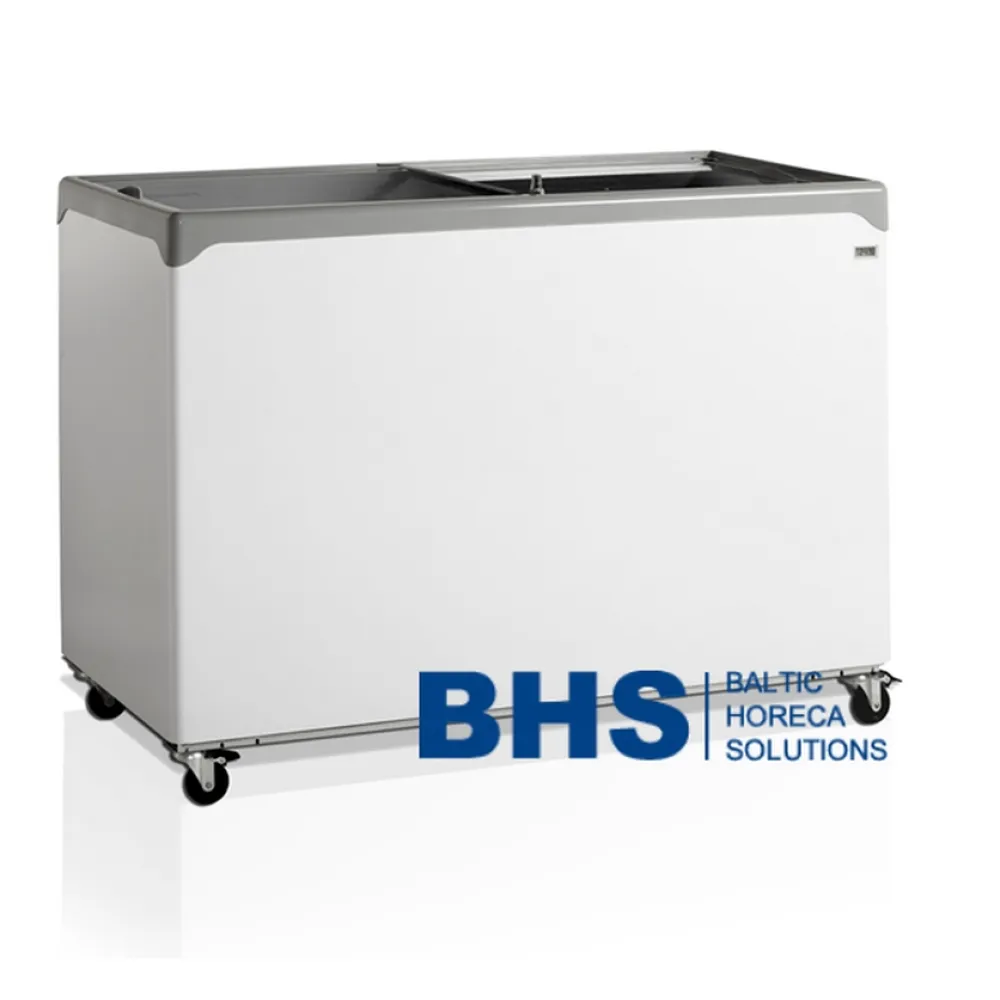
This ice cream freezer keeps contents at a consistently low temperature, transforming liquid mixtures into frozen desserts. A compressor circulates refrigerant through internal coils, removing heat from inside and expelling it externally. The system operates continuously to maintain temperatures that keep ice cream firm yet scoopable for a smooth texture every time.
Tubs of mix are placed on shelves or in baskets before closing the flat sliding lids. A digital thermometer on the front displays the current temperature, enabling quick checks to confirm the unit holds the desired setting. The lids lock to secure stock during closing hours or service periods.
The interior features a white powder-coated liner that resists moisture and stains. Four castors, two equipped with brakes, allow the freezer to be repositioned easily and then secured in place. Baskets help organise tubs, preventing them from settling in the coldest air at the bottom and simplifying stock rotation.
With a 298 L capacity, the freezer accommodates multiple tubs. Its dimensions of 1320 mm by 650 mm fit neatly against a standard worktop or wall, while the 885 mm height ensures the top shelf remains within easy reach. Though the 72 kg weight typically requires two people to lift, the castors make moving the unit across tiled floors straightforward.
The temperature range of -24 to -14 °C suits ice cream, sorbet, and frozen yoghurt storage. The unit uses R290 refrigerant, a hydrocarbon with a low environmental impact, in a 105 g charge. Power consumption is 0.141 kW, making it suitable for a 220-240 V single-phase electrical circuit.
Maintenance involves removing baskets and wiping the interior with a damp cloth and mild detergent. The digital thermometer should stay dry to prevent damage, and castors require occasional checks to ensure brakes function properly.