More from this brand
Technical data
| Attributes | |
| ARTICLE | 535424 |
| SIZE L/W/H | 390/315/120 mm |
| WEIGHT | 0.376 kg |
| Material | Nerūsējošais tērauds |
| DIAMETER | 315 mm |
| NOTES | Handle length: 55 mm Thickness: 9.5 mm |
ø315x(H)120mm
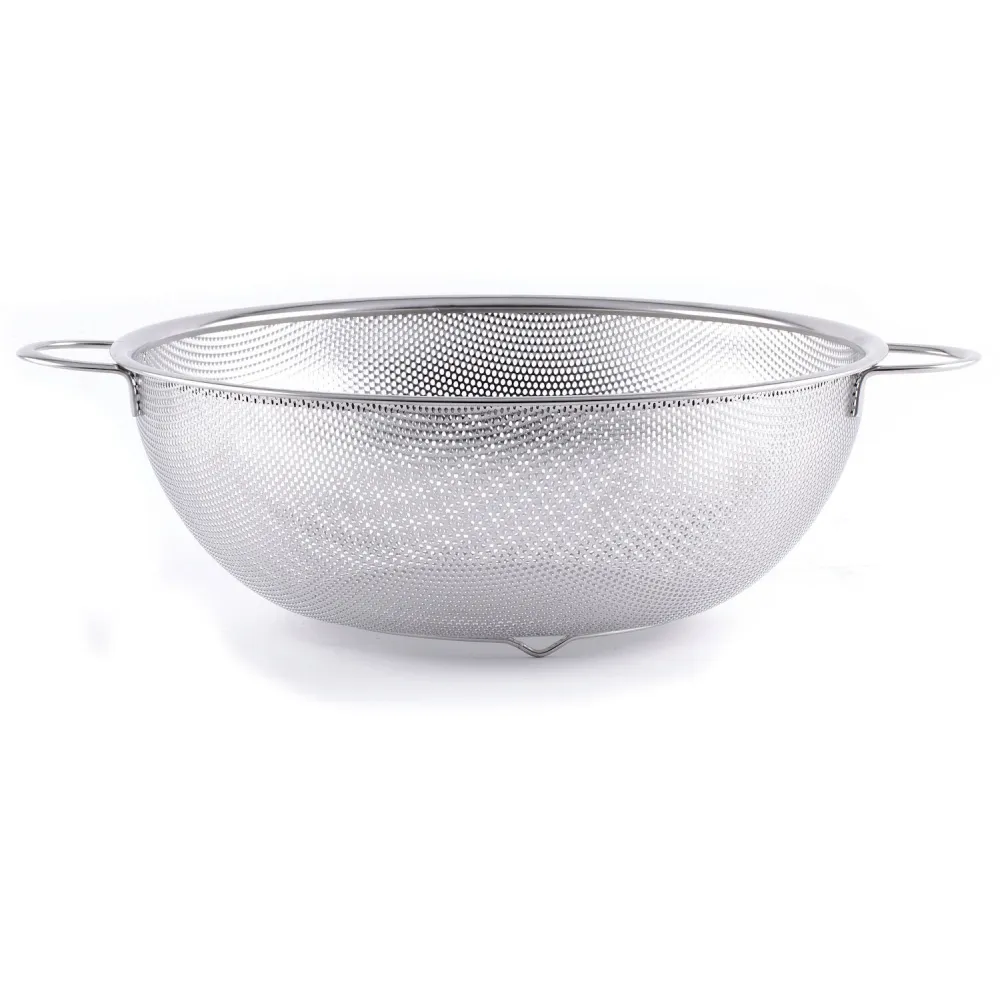
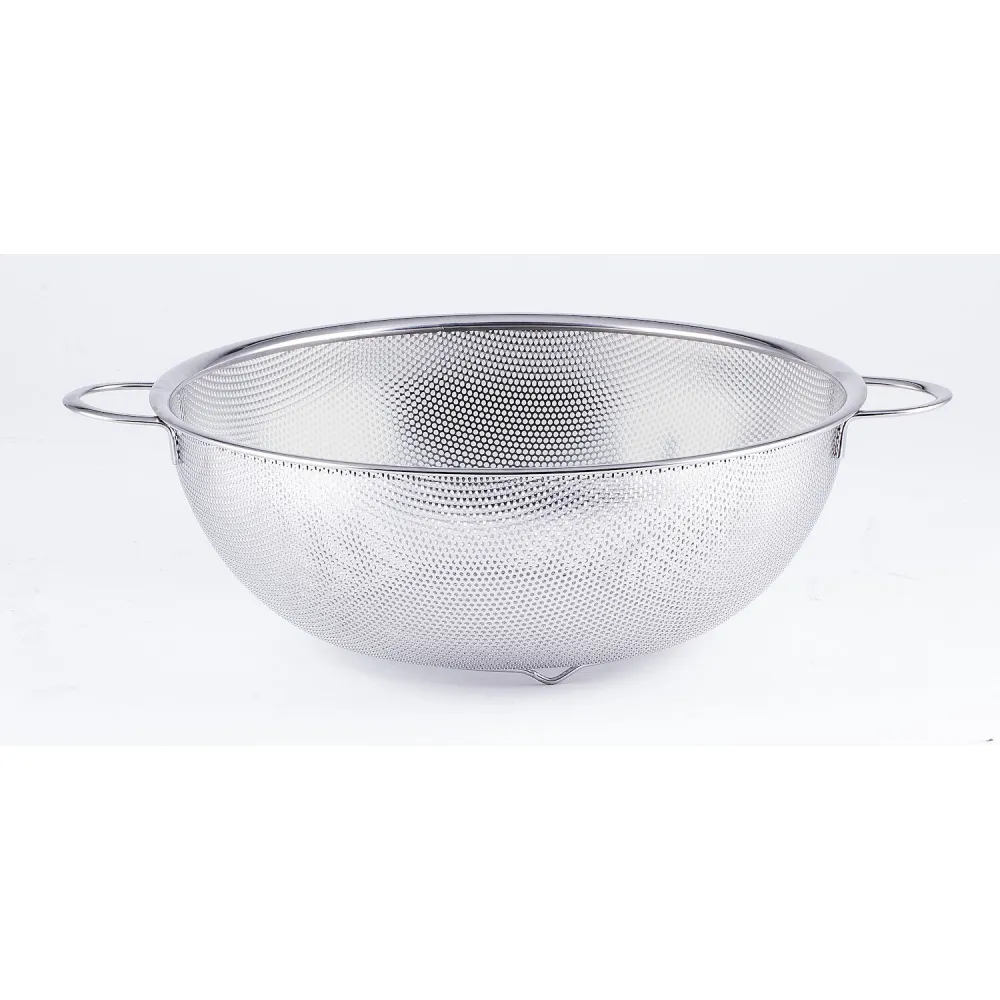
A colander strains liquids from solids by allowing water or stock to drain through perforations while holding food in the bowl. The holes are sized so that small particles pass but larger pieces remain, making it the standard tool for rinsing vegetables, draining pasta or blanched greens, and separating stocks from bones or herbs. The open mesh speeds the process compared with a solid bowl, and the raised base keeps the colander clear of the worktop so that liquid can flow freely.
To use the colander, place it in a sink or over a larger container. Load the food into the bowl, then run water over it or tip the contents from a pan. The handles allow the operator to lift the colander without touching the hot or wet sides, and the short extension keeps the grip close to the rim for better control. Once the liquid has drained, the food can be tipped into a serving dish or tray.
The bowl and handles are made from stainless steel, which resists corrosion and staining from acids, salts and moisture. The metal is formed into a single piece with a smooth finish, so there are no seams or welds to trap food or harbour bacteria. The thickness of the steel gives the colander enough rigidity to hold its shape under the weight of wet food without bending or warping.
The 315 mm diameter provides a wide surface for straining large batches, while the 390 mm overall length includes the handles. The 120 mm height keeps the base clear of the worktop, and the 0.376 kg weight makes the colander light enough to lift with one hand when full. The dishwasher-safe construction allows the colander to be cleaned at high temperatures with detergents, removing grease and food residues without manual scrubbing.
This colander is placed in the catalogue under kitchen utensils and straining equipment, alongside sieves, perforated spoons and draining baskets.