

Bar equipment · Glass & cutlery polishers
Glass and cutlery polishers: how to use, maintain and care for them
A detailed step-by-step guide — how glasses and cutlery become flawlessly shiny without spots, the most common mistakes, how to care for brushes and granulate, and why BHS service and spare parts matter just as much as the machine itself.
Glass and cutlery polishers are among the most incorrectly used pieces of HoReCa equipment. The result — broken glasses, streaky surfaces, greasy brushes and quickly worn-out granulate, even though the machine itself is excellent. This is a detailed guide: how both machine types actually work, how to use them step by step, which mistakes to avoid, and how the right maintenance and timely service keep the machine running for years. A polisher does not replace a dishwasher — it's the final, finishing step that makes a glass or a piece of cutlery ready to serve: free of water spots, fingerprints and detergent traces.
Why a professional service standard needs a polisher
Even a perfectly washed glass often comes out of the dishwasher with water spots, limescale streaks or fingerprints — especially in hard-water regions. In an upmarket restaurant or bar this is noticeable and leaves a poor impression, even when the food and drink are flawless.
A professional polisher solves this systematically. The benefits are tangible: a flawless shine on every glass and piece of cutlery; speed — seconds per item instead of manual wiping; hygiene, since warm air or steam and a UVC lamp (on some models) additionally disinfect the surface; and fewer glass breakages, because a correctly used machine is gentler on stemware than wiping by hand with a cloth.
Two machine types — glass polishers and cutlery polishers
The BHS range has two distinct groups of machines with different operating principles. It's important not to confuse them, because their use and care differ.
Glass polishers
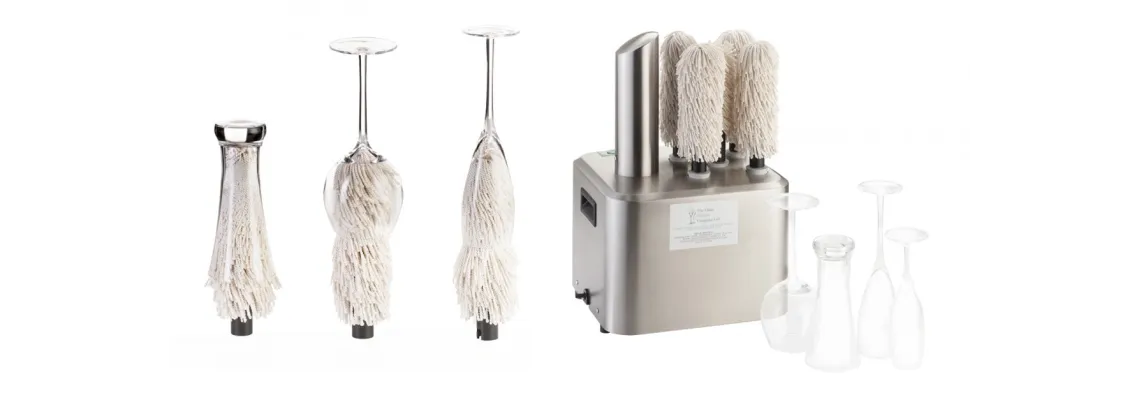
A machine with rotating brushes and a warm-air flow. The glass is placed onto the brushes and is simultaneously dried and polished inside and out. Examples: FRUCOSOL FSV-1000, FSV-2000, AP2091.
Cutlery polishers
A machine with a rotating tank filled with heated natural corn granulate. The granulate dries and polishes knives, forks and spoons through friction. Examples: FRUCOSOL FSH-3000, FSH-7000, SAMMIC SAS/SAM series.
BHS recommendation
If your bar is dominated by glasses and mugs, start with a glass polisher. If a restaurant with a high table count needs to prepare knife-fork-spoon sets quickly before service, choose a cutlery polisher. Many large venues use both. Our specialists help you choose for free.
How a glass polisher works
A glass polisher has several soft, vertical rotating brushes (natural fibre or microfibre) driven by an electric motor, together with a warm-air flow. When you place a glass onto the brushes and turn it slowly, the brushes physically wipe away moisture and residue, while the warm air dries off any remaining moisture. The result within seconds — a dry, shiny glass with no streaks.
The flexible brushes adapt to glasses and mugs of different sizes and shapes, so a single machine handles stemmed wine glasses, beer mugs and cocktail glasses alike. More powerful models (e.g. FSV-2000) offer greater autonomy and capacity for intensive work, while automatic ones (AP2091) reduce manual work even further.
How a cutlery polisher works
In a cutlery polisher the working medium is natural corn granulate (made from the corn cob) — a biological, absorbent material. The machine heats the granulate and makes it rotate or vibrate. When cutlery is placed into the granulate, the friction of the warm grains simultaneously dries off moisture and polishes the surface, removing water spots and light residue.
Hygienic models (SAMMIC SAM/SAS, ALP-3000) additionally have a built-in UVC germicidal lamp that sterilises both the cutlery and the granulate — especially important since the granulate is reused. The body and tank are usually AISI 304 stainless steel.
BHS recommendation
Granulate is a consumable, not a permanent part of the machine. Budget for regular top-ups and full replacement — just like coffee beans for a coffee machine. You can order it from us together with the machine.
Step by step: how to use a glass polisher correctly
This is the correct sequence that ensures a flawless result and protects glasses from breaking. Walk your staff through it — this is where mistakes most often happen.
- Switch on and let it warm up. Before the first glass, switch on the machine and let the brushes and airflow reach working temperature (usually a few minutes). A cold machine dries poorly and leaves streaks.
- Prepare the glasses correctly. Glasses should be cleanly washed and just out of the dishwasher — still warm but not scalding, and drained so they don't drip. A polisher is not a washer: if there's lipstick, limescale or deposits, wash the glass first.
- Hold the glass correctly. Hold a stemmed glass by the base or stem, not by the bowl. This way you won't snap the stem or leave fingerprints on the drinking rim.
- Place the glass onto the brushes without force. Slide the glass onto the vertical brushes until the inside and outside touch them. Don't push — excessive pressure is the main cause of broken glasses and snapped stems.
- Turn slowly 2–3 times. Let the brushes and warm air work the whole surface. 3–5 seconds per glass is usually enough.
- Check against the light. Take the glass out and check it against the light. If a spot or streak remains, the usual culprits are dirty brushes or a cold machine; see the relevant section below.
- Store without touching the rim. Place the finished glass on a tray or shelf, holding it by the stem or base so you don't leave fingerprints on the drinking area again.
BHS recommendation
Glasses warm from the dishwasher polish best, since their own heat helps dry off moisture. But let the excess water drain first — dripping glasses leave streaks and soil the brushes faster.
Step by step: how to use a cutlery polisher correctly
A cutlery polisher's result depends on the state of the granulate and correct loading. Follow this sequence.
- Fill with granulate up to the mark. Pour the specified amount of corn granulate into the tank (see the manufacturer's mark). Too little granulate — weak polishing; too much — overload and an uneven result.
- Switch on and heat the granulate. Let the machine run until the granulate reaches working temperature (usually 10–15 minutes). Cold granulate doesn't dry — the cutlery stays wet and spotty.
- Wash and drain the cutlery first. The cutlery must be cleanly washed with no food residue. Shake off excess water — wet cutlery clumps the granulate and sharply reduces its life.
- Load in portions, sorted. Add cutlery in moderate portions, not all in one heap. Don't overload the tank — too many pieces at once worsens the friction and polishing quality.
- Let the machine process. The rotating granulate dries and polishes the surface through friction; on UVC models sterilisation happens at the same time. The cycle is usually short — seconds to a minute.
- Remove and shake off the granulate. Lift the cutlery out and gently shake the granulate back into the tank. Hold the cutlery by the handle, not the working part.
- Check and store protected. Check the shine; if granulate dust remains, wipe it off lightly. Store the cutlery in a closed or covered container so it doesn't pick up dust and fingerprints again.
Never do this
Don't pour water into the granulate tank and don't load dripping, just-rinsed cutlery — the granulate absorbs moisture, clumps and loses its ability to polish. Don't insert items with glued hollow handles or plastic parts unless the manufacturer allows it — the heat can loosen the glue or deform them.
The most common mistakes users make
Most polisher problems aren't equipment faults but usage mistakes. Here are the ones the service team sees most often:
Avoid these mistakes
- Polishing dirty glasses/cutlery. A polisher is the final step, not a washer — it "polishes in" dirt rather than removing it.
- Pushing the glass onto the brushes too hard. The main cause of snapped stems and breakages. Slide it on gently.
- Holding a stemmed glass by the bowl. Snaps the stem and leaves marks on the rim. Hold by the base/stem.
- A cold machine or cold granulate. Result — wet, streaky surfaces.
- Dirty or worn brushes. Transfer grease and odour onto glasses; worn brushes can scratch.
- Old, greasy granulate. Loses absorbency, polishes badly and creates a hygiene risk.
- Overloading the granulate tank. Worsens friction and polishing.
- Not using or not replacing the UVC lamp. The sterilisation benefit is lost.
Brush care and replacement (glass polishers)
Brushes are a glass polisher's most important wearing part. Their condition directly determines polishing quality.
Regular cleaning
Remove and wash the brushes regularly (many models are dishwasher-safe), then dry them fully. Dirty, greasy brushes leave streaks and odour on glasses.
Timely replacement
Replace brushes when they become flattened, thinned or worn. Worn brushes polish poorly and can scratch delicate glasses. Keep spare brushes in stock.
The right size
Different glass shapes suit different brush configurations. If you polish both small cocktail glasses and large mugs, make sure the brush size fits your most-used glasses.
Hygiene per shift
At least once per shift, check the brushes for cleanliness and smell. Clean brushes are as important for hygiene as washing the glasses themselves.
Granulate care and replacement (cutlery polishers)
Corn granulate is a consumable, and its condition determines both polishing quality and hygiene.
| Action | When and how |
|---|---|
| Top up | Add granulate regularly, since its volume gradually decreases in use (it clings to cutlery and spills out) |
| Full replacement | When the granulate turns grey, greasy or damp — depending on volume, usually every 1–2 weeks in intensive use |
| Storage | In a dry, sealed container; never let the granulate get wet or absorb moisture from the air |
| Hygiene | On UVC models, let the lamp run; old granulate is a breeding ground for bacteria, so timely replacement is a hygiene requirement |
BHS recommendation
Don't skimp on granulate replacement. Old, greasy granulate doesn't polish but smears the surface and creates an unpleasant smell — one of the most common "the machine doesn't work" call-outs that a simple granulate change fixes. You can order granulate from us for regular delivery.
Hygiene, UVC and HACCP
The visual quality of cutlery and glasses is part of the service standard, but hygiene is a verifiable requirement. A polisher complements, it does not replace, dishwashing.
UVC sterilisation
In hygienic cutlery polishers, a UVC germicidal lamp sterilises both the cutlery and the granulate — extra protection against the risk of cross-contamination.
Stainless steel
An AISI 304 stainless steel body and baskets are easy to clean and meet the requirements for food-contact surfaces.
Clean brushes and fresh granulate
Hygiene depends on the state of the wearing parts: clean brushes and timely-replaced granulate are as important as the machine itself.
Regular machine cleaning
Clean the machine's exterior and accessible parts regularly; never wash the motor block with a water jet and don't put electrical parts in a dishwasher.
Model range and prices in the BHS catalogue
BHS offers glass and cutlery polishers from recognised manufacturers — FRUCOSOL (the widest range), SAMMIC, VEMA and FIMAR. Below are real models with prices (incl. VAT); for exact prices and specifications see the category page.
| Model | Type / feature | Price (incl. VAT) |
|---|---|---|
| Glass polisher 1000 (FSV-1000) | Glass polisher, 240–360 pcs/h, 1.1 kW | €1,729 |
| Glass polisher 2000 (FSV-2000) | Greater autonomy and capacity | €2,298 |
| Glass polisher AP2091/E | Stainless steel, baskets | €2,661 |
| Automatic glass polisher AP2091 | Automatic loading | €4,839 |
| Cutlery polisher 3000 (FSH-3000) | Compact cutlery polisher | €2,903 |
| Cutlery polisher 7000 (FSH-7000) | High hygiene, larger volume | €3,931 |
| Dryer-polisher SAM-3001 | UVC lamp, sterilisation | €4,040 |
| Dryer-polisher 3000 (ALP-3000) | AISI 304, UV lamp | €4,439 |
| Dryer-polisher SAS-5001 / SAS-6001 | UVC germicidal lamp, high capacity | €6,170 / €6,642 |
BHS recommendation
Choose a model by real volume and hygiene requirements. A bar with glasses is fine with the FSV series; a restaurant with high cutlery turnover and a strict sanitary regime is worth choosing a UVC model (SAM/SAS/ALP). The category also includes glass chillers for quickly cooling glasses.
Maintenance and cleaning — schedule
Regular maintenance is what separates a machine that lasts for years from one that breaks down quickly. Follow a simple schedule:
| Frequency | What to do |
|---|---|
| After each shift | Glass polisher — check and, if needed, wash the brushes; cutlery polisher — check the granulate condition; wipe down the machine exterior |
| Daily | Check brush/granulate cleanliness and smell; make sure heating and rotation work correctly |
| Weekly | Fully wash the brushes; assess whether the granulate needs replacing; check UVC lamp operation |
| Monthly | Assess brush/granulate wear; check motor, fan and switch operation; plan spare-part replacement |
BHS recommendation
Never wash the motor block with a water jet and don't put electrical parts in a dishwasher. Clean stainless steel surfaces with professional chemicals and a soft cloth; a UVC lamp has a limited service life, so plan to replace it in good time.
BHS service, maintenance and repairs
A polisher is a long-term investment, and keeping it running is just as important as choosing it well. BHS provides professional service and technical maintenance with over 25 years of experience in the HoReCa and B2B sector — fast response, quality repairs and long-term solutions across the Baltics and Europe.
What BHS service covers
Diagnostics, repair and preventive maintenance right at your site, plus scheduled maintenance contracts that make costs predictable and prevent unplanned downtime during service.
- On-site service at the customer
- Replacement of faulty parts on the spot
- Certified, experienced technicians
- Scheduled technical maintenance
- Brush, granulate and UVC lamp replacement
- Long-term maintenance contracts
BHS recommendation
Regular prevention is cheaper than an emergency repair at peak time or mid-event. A maintenance contract ensures the machine is checked and adjusted before a problem arises. Learn more in the Service section.
Spare parts — fast and on hand
To keep a polisher running without interruption, timely availability of spare parts and consumables is decisive. BHS keeps a wide spare-parts range that lets you quickly replace the most frequently worn parts and return the machine to work in minimal time.
Brushes and microfibre
Spare brushes for various glass shapes and sizes for glass polishers — the main wearing part.
Corn granulate
Natural granulate for cutlery polishers — a consumable for regular top-ups and replacement.
UVC lamps
Replacement germicidal lamps for SAM/SAS/ALP series models to preserve the sterilisation function.
Motors, heating elements, switches
Drive assemblies, fans/heating elements, thermostats and switches to restore the machine's operation.
Delivery across the Baltics and Europe
We work with manufacturers' official warehouses to ensure original parts are available in the shortest possible time.
- Baltics — usually 1–3 business days
- Europe — usually 2–5 business days
- Original and alternative parts
- Advice on the right part
BHS recommendation
Keep a spare brush set (for a glass polisher) and a granulate stock (for a cutlery polisher) if the machine is critical to daily service. That way you avoid downtime if a part needs urgent replacement. Contact our specialists in the contact section.
Related bar and service equipment
A polisher is part of a wider service preparation area. See the full bar equipment range — including glass chillers for quickly cooling glasses and more powerful glass polishers that work alongside your polisher.
Frequently asked questions
Does a polisher replace a dishwasher?
No. A polisher is the final, finishing step after washing — it dries and polishes already-clean glasses or cutlery, removing water spots, residue and fingerprints. Dirty glasses or cutlery must first be washed in a dishwasher.
Why do glasses stay streaky after polishing?
The most common reasons: dirty or greasy brushes, a machine that hasn't warmed up, dripping glasses or worn brushes. First wash and dry the brushes, let the machine warm up and let glasses drain excess water. If the problem persists, replace the brushes.
How often should corn granulate be changed?
Granulate is topped up regularly and fully replaced when it turns grey, greasy or damp — depending on volume, usually every 1–2 weeks in intensive use. Old granulate doesn't polish but smears the surface and creates a hygiene risk.
Does a polisher suit all cutlery materials?
Steam and granulate polishers suit stainless steel cutlery, the HoReCa standard. For silver-plated or special cutlery, and items with glued hollow handles, follow the manufacturer's recommendations, since heat can affect them.
What does the UVC lamp do in a cutlery polisher?
A UVC germicidal lamp sterilises both the cutlery and the granulate, which is reused. It's an extra layer of hygiene against cross-contamination. The lamp has a limited service life, so it must be replaced periodically.
Does BHS provide service and spare parts?
Yes. BHS offers on-site service, technical maintenance and maintenance contracts with 25+ years of experience, plus a wide range of spare parts and consumables (brushes, granulate, UVC lamps, motors) with fast delivery across the Baltics (1–3 business days) and Europe (2–5 business days).
We'll help you choose and maintain the right polisher
BHS offers a wide range of glass and cutlery polishers from leading manufacturers — with service and fast spare-parts delivery across the Baltics and Europe. Our specialists will help you choose a model to match your volume, service standard and budget.